Edicola votiva San Pasquale Baylon
IT
- Location
- IT
- Category
- heritage historic sites
- Coordinates
- 40.7334022, 17.5789799
- Best time
- Morning or early afternoon
- Weather tip
- Check the local forecast before visiting.
Overview
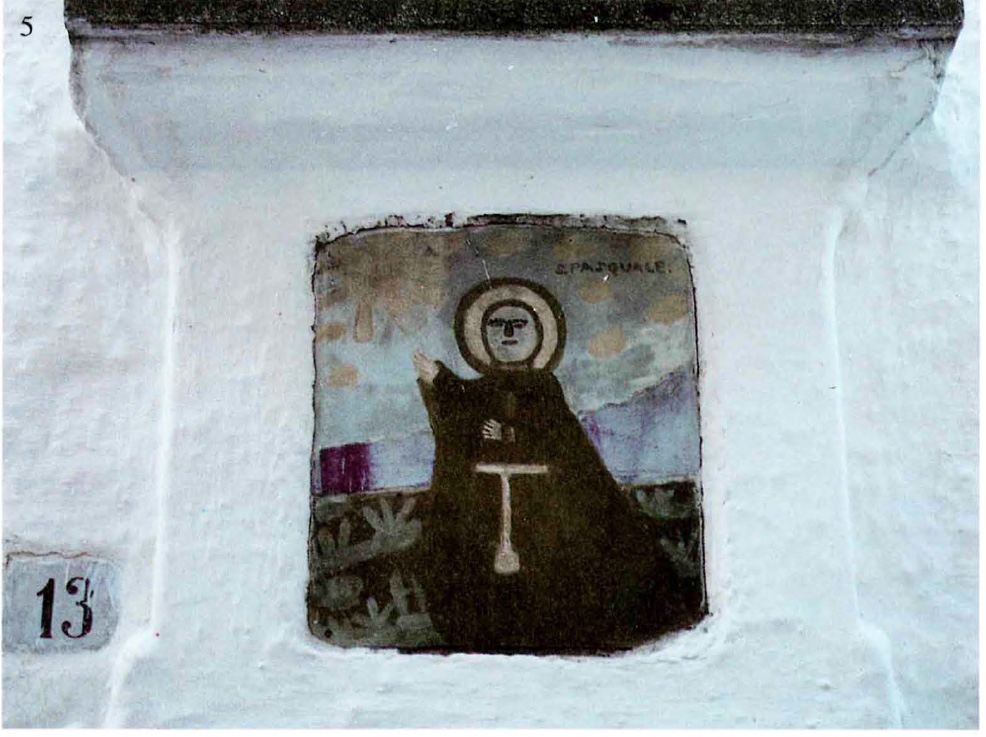
The Edicola Votiva San Pasquale Baylon is a traditional devotional niche, identified as niche number five, which serves as a testament to the long-standing Italian practice of public religious art. These street-side shrines were historically commissioned by local communities or private families to provide a focal point for prayer and to invoke divine protection for the neighborhood. This specific edicola houses a tempera-on-copper painting depicting Saint Paschal Baylon, a 16th-century Spanish Franciscan friar known for his profound devotion to the Eucharist. The use of copper as a substrate was a deliberate choice during the period of its creation, favored for its durability and the smooth surface it provided for fine, detailed brushwork. Visitors exploring urban historical routes often encounter these hidden gems, which offer a quiet, reflective pause amidst the bustle of daily life. As you plan your itinerary, consider incorporating these smaller heritage sites into your list of places to visit to gain a deeper understanding of the local spiritual and artistic traditions. While the exact date of the painting's installation is not public record, the architectural form of the niche follows the classic vernacular style found throughout Italy. These structures are vital components of the country's cultural landscape, preserving the intersection of popular piety and local craftsmanship. Whether you are seeking unique trip ideas or simply wandering through historic districts, the Edicola Votiva San Pasquale Baylon offers a glimpse into the enduring legacy of Italian devotional art.
General information
The Edicola Votiva San Pasquale Baylon is a traditional devotional niche, identified as niche number five, which serves as a testament to the long-standing Italian practice of public religious art. These street-side shrines were historically commissioned by local communities or private families to provide a focal point for prayer and to invoke divine protection for the neighborhood. This specific edicola houses a tempera-on-copper painting depicting Saint Paschal Baylon, a 16th-century Spanish Franciscan friar known for his profound devotion to the Eucharist. The use of copper as a substrate was a deliberate choice during the period of its creation, favored for its durability and the smooth surface it provided for fine, detailed brushwork. Visitors exploring urban historical routes often encounter these hidden gems, which offer a quiet, reflective pause amidst the bustle of daily life. As you plan your itinerary, consider incorporating these smaller heritage sites into your list of places to visit to gain a deeper understanding of the local spiritual and artistic traditions. While the exact date of the painting's installation is not public record, the architectural form of the niche follows the classic vernacular style found throughout Italy. These structures are vital components of the country's cultural landscape, preserving the intersection of popular piety and local craftsmanship. Whether you are seeking unique trip ideas or simply wandering through historic districts, the Edicola Votiva San Pasquale Baylon offers a glimpse into the enduring legacy of Italian devotional art.
Did you know
- Saint Paschal Baylon is the patron saint of Eucharistic congresses and societies.
- Tempera on copper was a popular technique for small devotional images because it resisted the humidity of outdoor environments better than wood panels.
- The term 'edicola' derives from the Latin 'aedicula', meaning a small temple or shrine.
History
The history of the Edicola Votiva San Pasquale Baylon is rooted in the tradition of votive shrines, which became particularly prominent in Italy from the 17th century onwards. These structures were often built at street corners or integrated into the facades of residential buildings to mark the boundaries of a parish or to offer a site for communal prayer. The choice of Saint Paschal Baylon as the subject reflects the saint's popularity in the post-Tridentine era, where his image served as a model for Eucharistic adoration. The painting itself, executed in tempera on copper, represents a specialized form of devotional art that required skilled craftsmanship, often commissioned by patrons seeking to fulfill a vow or provide spiritual comfort to their local community.
Cultural significance
These devotional niches are essential to the cultural fabric of Italian towns, acting as 'open-air museums' of popular piety. They represent a bridge between the ecclesiastical hierarchy and the everyday life of the common people. By placing such an image in a public space, the community transformed the street into a sacred geography, where the divine was present in the mundane. The preservation of the Edicola Votiva San Pasquale Baylon is significant because it maintains the link to these historical social practices, where the neighborhood was not just a place of residence, but a space shared with the saints and the traditions of the past.
Geography and landscape
The Edicola Votiva San Pasquale Baylon is situated within an urban context, typically integrated directly into the wall of a historical building or a street-side structure. Its placement is deliberate, usually positioned at a height that allows for visibility and accessibility for passersby. The landscape surrounding such an edicola is characterized by the traditional architecture of Italian historic centers—narrow streets, stone or masonry facades, and a dense urban layout. These niches are often found in areas that have retained their medieval or Renaissance street patterns, contributing to the atmospheric and historical character of the city.
More facts
- Imported from OSM batch
Visitor links
Nearby attractions
- Edicola votiva (Via Pompeo Patrelli) 24 m
- Edicola votiva della Madonna del Carmine o di Sant’Oronzo (?) 25 m
- Edicola votiva Madonna con Bambino 28 m
- Edicola votiva Cuore di Gesù 45 m
- Edicola votiva San Biagio, Deposizione dalla Croce, Sant’Oronzo, Colomba dello Spirito Santo 49 m
- Edicola votiva San Biagio, Madonna del Carmine e Anime Purganti, Sant’Oronzo 56 m
- Edicola votiva Santi Medici 61 m
- Edicola votiva San Giovannino 66 m