Edicola votiva Madonna con Bambino
IT
- Location
- IT
- Category
- heritage historic sites
- Coordinates
- 40.7335851, 17.57921
- Best time
- Morning or early afternoon
- Weather tip
- Check the local forecast before visiting.
Overview
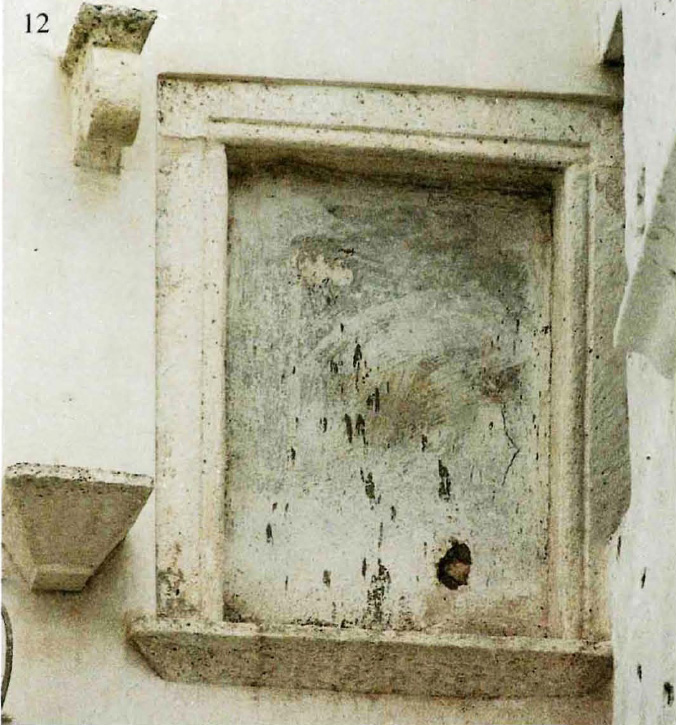
The Edicola votiva (n.12) is a historic votive shrine, a characteristic element of the Italian urban landscape that serves as a testament to local religious devotion. This specific shrine features a tempera painting on plaster depicting the Madonna and Child. A notable, if somber, detail of the artwork is that the face of the Madonna is currently obscured by lime splashes, an occurrence often associated with the slow decay or past maintenance interventions of historical street-side shrines. These edicole were traditionally commissioned by local families or guilds to provide a spiritual focal point for the community, often placed at street corners or intersections to offer protection to passersby. Visitors interested in heritage and historic sites will find this shrine to be a poignant example of the minor religious art that dots the Italian countryside and urban centers. While it is a modest structure, it represents a vital piece of the cultural fabric, offering a glimpse into the daily lives and pious traditions of past generations. Those planning their trip ideas should consider that these shrines are best viewed in the morning or early afternoon when natural light allows for the best inspection of the remaining pigments. As you explore the area, these quiet corners provide a unique opportunity to connect with the authentic, lived history of Italy, far from the crowds of major tourist attractions.
General information
The Edicola votiva (n.12) is a historic votive shrine, a characteristic element of the Italian urban landscape that serves as a testament to local religious devotion. This specific shrine features a tempera painting on plaster depicting the Madonna and Child. A notable, if somber, detail of the artwork is that the face of the Madonna is currently obscured by lime splashes, an occurrence often associated with the slow decay or past maintenance interventions of historical street-side shrines. These edicole were traditionally commissioned by local families or guilds to provide a spiritual focal point for the community, often placed at street corners or intersections to offer protection to passersby. Visitors interested in heritage and historic sites will find this shrine to be a poignant example of the minor religious art that dots the Italian countryside and urban centers. While it is a modest structure, it represents a vital piece of the cultural fabric, offering a glimpse into the daily lives and pious traditions of past generations. Those planning their trip ideas should consider that these shrines are best viewed in the morning or early afternoon when natural light allows for the best inspection of the remaining pigments. As you explore the area, these quiet corners provide a unique opportunity to connect with the authentic, lived history of Italy, far from the crowds of major tourist attractions.
Did you know
- Votive shrines like this one were often built at intersections to offer protection to travelers.
- The use of tempera on plaster was a common technique for outdoor street art in historical Italy.
- Lime splashes on historical paintings are often the result of building maintenance work performed on nearby walls in previous centuries.
History
The Edicola votiva (n.12) dates back to a period when the commissioning of religious street shrines was a widespread practice among Italian communities. These shrines served as markers of faith and community identity, often maintained by neighborhood groups. The specific technique of tempera on plaster indicates a tradition of utilizing local materials to create accessible devotional art. While the exact date of construction for this specific shrine is not documented in available records, its style and placement are consistent with the proliferation of such sites between the 17th and 19th centuries. The presence of lime splashes suggests that the shrine has remained in its original location throughout various urban modifications and building repairs, surviving as a silent witness to the passage of time.
Cultural significance
The Edicola votiva represents the 'minor' religious heritage of Italy, which is essential to understanding the social and spiritual history of the country. These shrines were not just decorative; they functioned as communal altars where individuals would pause for a brief prayer during their daily routines. The Madonna and Child motif is the most common theme in such shrines, reflecting the central role of maternal intercession in local folk religion. By preserving these sites, the community maintains a link to the past, reminding visitors that history is not only found in grand cathedrals but also in the humble, weathered images found on street corners.
Geography and landscape
The shrine is situated in an urban or semi-rural context, integrated into the existing wall structure of a building or a boundary wall. Its placement at an intersection or along a path is typical for these structures, designed to be visible to those traversing the area. The surrounding landscape is defined by the architectural history of the site, where the shrine acts as an anchor point within the streetscape. It is exposed to the elements, which has contributed to the current state of the tempera painting, including the noted lime damage. The site is best accessed on foot, allowing for a close-up examination of the masonry and the artwork.
More facts
- Imported from OSM batch
Visitor links
Nearby attractions
- Edicola votiva Cuore di Gesù 18 m
- Edicola votiva San Pasquale Baylon 28 m
- Edicola votiva San Biagio, Deposizione dalla Croce, Sant’Oronzo, Colomba dello Spirito Santo 35 m
- Edicola votiva Santi Medici 40 m
- Edicola votiva (Via Pompeo Patrelli) 46 m
- Edicola votiva San Giovannino 51 m
- Edicola votiva della Madonna del Carmine o di Sant’Oronzo (?) 53 m
- Edicola votiva Madonna della Stella 74 m