Edicola votiva Immacolata
IT
- Location
- IT
- Category
- heritage historic sites
- Coordinates
- 40.7310564, 17.5780494
- Best time
- Morning or early afternoon
- Weather tip
- Check the local forecast before visiting.
Overview
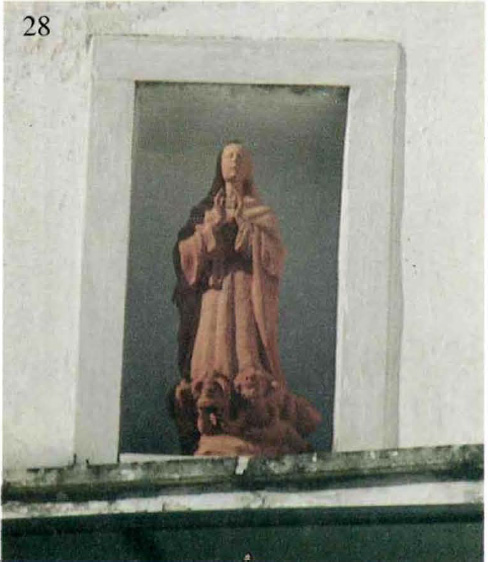
The Edicola votiva Immacolata, cataloged as number 28, represents a traditional form of Italian religious folk art. These votive shrines, or 'edicole,' are architectural niches typically embedded into the exterior walls of private residences or public buildings, serving as street-side devotional focal points. This specific example houses a painted terracotta statuette depicting the Immaculate Conception. Historically, these shrines served as landmarks for the local community and offered a space for brief prayer or reflection for passersby. Today, they remain significant examples of minor historical heritage, preserving a tradition that dates back centuries. Visitors interested in exploring the micro-history of Italian urban landscapes will find these shrines to be fascinating places to visit, as they provide a window into the daily religious life of past generations. While the exact location is part of a larger historical inventory, the preservation of this painted terracotta figure offers a tangible connection to the artisan craft of the period. For those planning a trip, these small-scale monuments are often found tucked away in historic districts, serving as quiet reminders of traditional local culture. As you wander through the streets, keep an eye out for these hidden gems, which are essential components of what to do in the area if you appreciate authentic, non-monumental historical artifacts that define the character of Italian neighborhoods.
General information
The Edicola votiva Immacolata, cataloged as number 28, represents a traditional form of Italian religious folk art. These votive shrines, or 'edicole,' are architectural niches typically embedded into the exterior walls of private residences or public buildings, serving as street-side devotional focal points. This specific example houses a painted terracotta statuette depicting the Immaculate Conception. Historically, these shrines served as landmarks for the local community and offered a space for brief prayer or reflection for passersby. Today, they remain significant examples of minor historical heritage, preserving a tradition that dates back centuries. Visitors interested in exploring the micro-history of Italian urban landscapes will find these shrines to be fascinating places to visit, as they provide a window into the daily religious life of past generations. While the exact location is part of a larger historical inventory, the preservation of this painted terracotta figure offers a tangible connection to the artisan craft of the period. For those planning a trip, these small-scale monuments are often found tucked away in historic districts, serving as quiet reminders of traditional local culture. As you wander through the streets, keep an eye out for these hidden gems, which are essential components of what to do in the area if you appreciate authentic, non-monumental historical artifacts that define the character of Italian neighborhoods.
Did you know
- Edicole were historically used to light the streets at night, as the votive lamp provided illumination for the public.
- The term 'edicola' derives from the Latin 'aedicula,' meaning a small temple or shrine.
- Terracotta was a preferred material for these figures due to its durability and affordability for local artisans.
History
The tradition of the 'edicola votiva' dates back to Roman times, when small shrines (lararia) were dedicated to household gods. In the Christian era, these evolved into street-side shrines dedicated to the Virgin Mary or local saints. The specific use of terracotta statuettes in these niches became particularly popular between the 18th and 19th centuries across Italy. These shrines were often commissioned by local guilds, wealthy families, or neighborhood associations as a way to seek divine protection for the immediate area. They reflect the intersection of private piety and public space, acting as witnesses to the social and religious evolution of the urban fabric over hundreds of years.
Cultural significance
Culturally, the Edicola votiva Immacolata acts as a bridge between high religious art and the lived experience of the common people. These shrines were not merely decorative; they functioned as communal anchors, defining the identity of a street or a neighborhood. The presence of the Immaculate Conception figure highlights the deep-seated Marian devotion prevalent in Italian culture. By maintaining these sites, communities preserved a sense of continuity and shared identity. They represent a 'minor' history that is often overlooked in favor of grand cathedrals, yet they are essential for understanding the psychological and cultural landscape of the Italian population throughout history.
Geography and landscape
The Edicola votiva Immacolata is an integrated architectural element, typically situated within the dense urban fabric of historic Italian city centers. These shrines are usually found at street corners or facade niches, designed to be visible to pedestrians navigating the narrow, winding alleys characteristic of medieval and Renaissance town planning. Their placement is strategic, often positioned at intersections to provide a spiritual focal point for the neighborhood. The landscape here is characterized by stone masonry, weathered plaster, and the intimate scale of traditional residential architecture, where the boundary between the private home and the public street is softened by these shared devotional spaces.
More facts
- Imported from OSM batch
Visitor links
Nearby attractions
- Edicola votiva Cristo spirante 25 m
- Edicola votiva Madonna della Grata 42 m
- Edicola votiva Santi Medici 78 m
- Edicola votiva Immacolata 83 m
- Edicola votiva San Biagio, Madonna del Carmine, Sant’Oronzo, Colomba dello Spirito Santo 93 m
- Edicola votiva Cuore di Gesù 128 m
- Edicola votiva Maria Immacolata 132 m
- Edicola votiva Madonna del Carmine e San Simone Stock 133 m