Edicola votiva Cristo spirante
IT
- Location
- IT
- Category
- heritage historic sites
- Coordinates
- 40.7312804, 17.5780676
- Best time
- Morning or early afternoon
- Weather tip
- Check the local forecast before visiting.
Overview
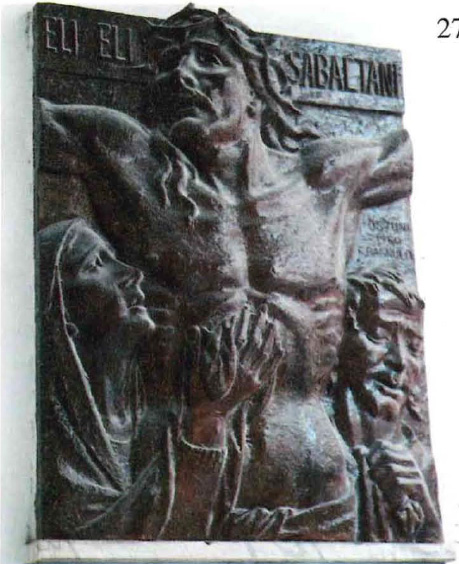
The Edicola votiva Cristo spirante is a unique example of popular religious iconography found within the Italian urban landscape. Unlike traditional votive shrines, which are typically recessed into a wall to form a niche, this specific site features a cast concrete slab directly mounted onto the surface of a wall. This architectural choice highlights the adaptability of devotional art, where the absence of a formal structural niche did not prevent the installation of a sacred image. For those exploring local history and the vernacular traditions of Italy, such sites offer a glimpse into the grassroots religious practices that have historically punctuated the streets of many Italian towns. Visitors interested in what to do in the area will find these small, often overlooked markers to be essential components of the historical urban fabric. While these installations may appear modest, they serve as significant evidence of the intersection between private devotion and public space. As you navigate the winding streets of older districts, keep an eye out for these cast-relief elements, as they represent a distinct category of heritage historic sites. Whether you are planning a comprehensive tour of regional religious art or simply seeking unique trip ideas, the Cristo spirante provides a quiet, reflective moment of historical connection. It is recommended to visit during the morning or early afternoon to ensure the best natural lighting for observing the details of the cast concrete.
General information
The Edicola votiva Cristo spirante is a unique example of popular religious iconography found within the Italian urban landscape. Unlike traditional votive shrines, which are typically recessed into a wall to form a niche, this specific site features a cast concrete slab directly mounted onto the surface of a wall. This architectural choice highlights the adaptability of devotional art, where the absence of a formal structural niche did not prevent the installation of a sacred image. For those exploring local history and the vernacular traditions of Italy, such sites offer a glimpse into the grassroots religious practices that have historically punctuated the streets of many Italian towns. Visitors interested in what to do in the area will find these small, often overlooked markers to be essential components of the historical urban fabric. While these installations may appear modest, they serve as significant evidence of the intersection between private devotion and public space. As you navigate the winding streets of older districts, keep an eye out for these cast-relief elements, as they represent a distinct category of heritage historic sites. Whether you are planning a comprehensive tour of regional religious art or simply seeking unique trip ideas, the Cristo spirante provides a quiet, reflective moment of historical connection. It is recommended to visit during the morning or early afternoon to ensure the best natural lighting for observing the details of the cast concrete.
Did you know
- Unlike traditional shrines, this piece is a flat cast concrete slab rather than a recessed niche.
- The term 'Edicola' usually implies a small architectural structure or alcove, making this installation a departure from the norm.
- These sites often served as points of prayer for local residents in the absence of nearby parish churches.
History
The history of the Edicola votiva Cristo spirante is rooted in the tradition of popular devotional art in Italy. Such installations were frequently commissioned or created by local community members to mark specific locations with sacred significance. Because this is a cast concrete slab rather than a traditional stone or ceramic sculpture, it reflects the industrialization of religious art in the 19th and 20th centuries, where mass-produced or locally cast materials allowed for the democratization of public religious expression. While specific archival dates for this individual piece are not widely documented, its form is consistent with mid-20th-century vernacular practices.
Cultural significance
This site represents the intersection of private piety and public accessibility. In the traditional Italian urban context, votive shrines acted as 'street-level' sanctuaries, allowing individuals to pause for a moment of prayer during their daily routines. The Cristo spirante exemplifies the persistence of this tradition; even when architectural conditions—such as the lack of a pre-existing niche—prevented the construction of a traditional alcove, the community utilized innovative methods like cast concrete to ensure the presence of a sacred image in the public sphere.
Geography and landscape
The Edicola is situated directly on a vertical wall surface, integrated into the existing urban architecture rather than standing as a separate structure. This placement is characteristic of dense, historic Italian town centers where space is at a premium and every available wall surface was historically utilized for social or religious communication. The surrounding environment is typically characterized by high-density masonry buildings, narrow alleys, and a lack of formal green space, placing the shrine in a strictly human-made, historical context.
More facts
- Imported from OSM batch
Visitor links
Nearby attractions
- Edicola votiva Immacolata 25 m
- Edicola votiva Immacolata 60 m
- Edicola votiva Madonna della Grata 66 m
- Edicola votiva Santi Medici 74 m
- Edicola votiva Cuore di Gesù 104 m
- Edicola votiva San Biagio, Madonna del Carmine, Sant’Oronzo, Colomba dello Spirito Santo 111 m
- Edicola votiva Madonna del Carmine e San Simone Stock 126 m
- Edicola votiva Maria Immacolata 137 m