Rodin Museum
Philadelphia, US

- Location
- Philadelphia, US
- Category
- museums galleries
- Coordinates
- 39.961910844, -75.173947173
- Best time
- Morning or early afternoon
- Weather tip
- Check the local forecast before visiting.
Overview
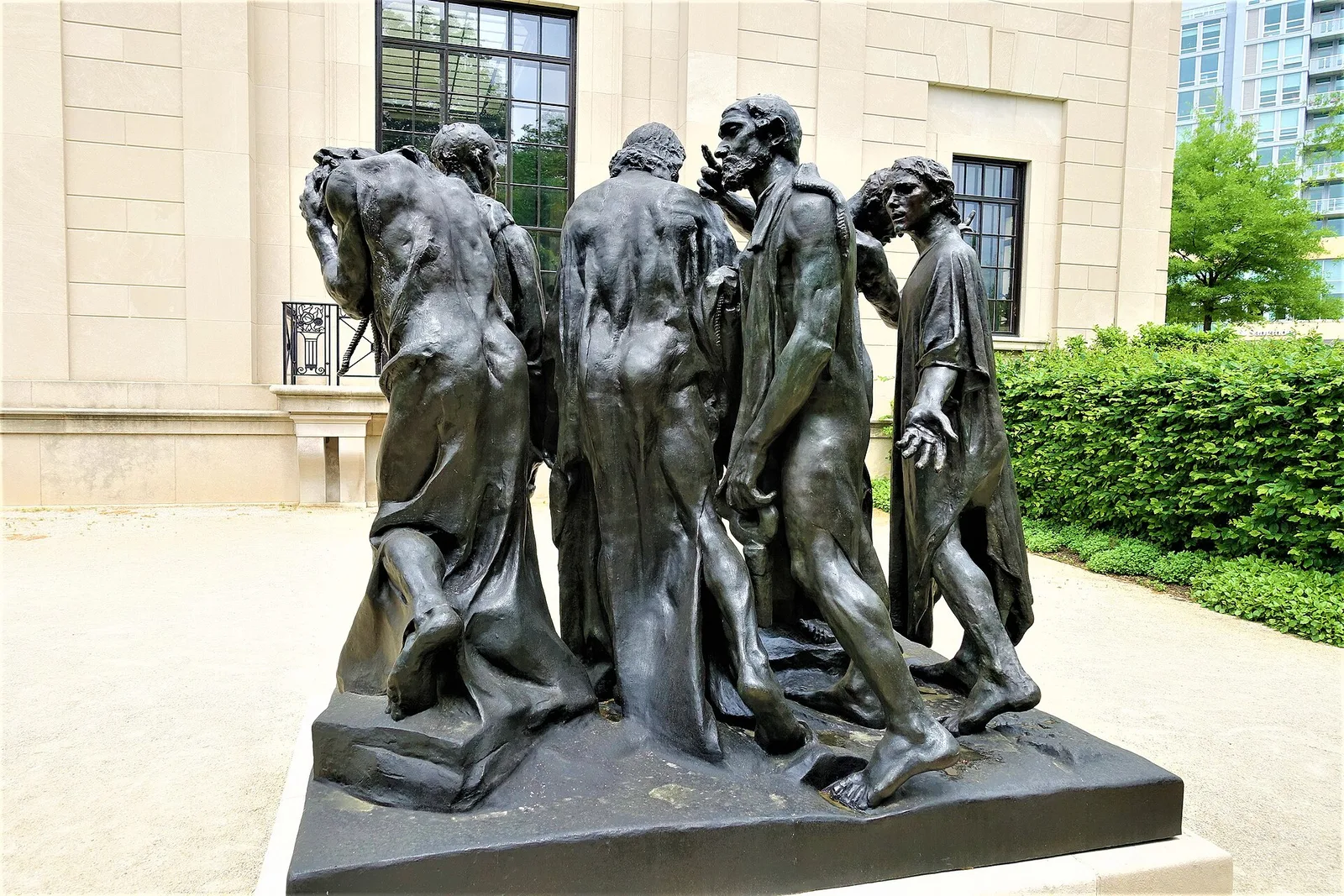
The Rodin Museum, located on the Benjamin Franklin Parkway in Philadelphia, Pennsylvania, houses one of the largest and most significant collections of works by the French sculptor Auguste Rodin outside of Paris. Opened in 1929, the museum serves as a specialized institution dedicated to the preservation and exhibition of Rodin’s bronze, marble, and plaster sculptures, alongside his drawings and sketches. Visitors to this site are greeted by the iconic 'The Thinker,' which sits prominently in the museum's forecourt, immediately establishing the artistic caliber of the collection. The museum's neoclassical architecture, designed by Paul Cret and Jacques Gréber, provides a formal and contemplative environment that mirrors the classical influences found in Rodin’s work. As one of the premier places to visit in Philadelphia, the museum offers a unique opportunity to study the evolution of 19th-century sculpture. The facility is managed by the Philadelphia Museum of Art, ensuring a high standard of curation and historical documentation. For those seeking meaningful trip ideas in the city, the Rodin Museum offers an intimate experience compared to larger municipal galleries, focusing specifically on the depth and emotional range of Rodin’s creative output. Guests can expect a quiet, immersive atmosphere perfect for appreciating the intricate textures and dynamic forms of the artist's most celebrated pieces, including 'The Gates of Hell' and 'The Kiss.'
General information
The Rodin Museum, located on the Benjamin Franklin Parkway in Philadelphia, Pennsylvania, houses one of the largest and most significant collections of works by the French sculptor Auguste Rodin outside of Paris. Opened in 1929, the museum serves as a specialized institution dedicated to the preservation and exhibition of Rodin’s bronze, marble, and plaster sculptures, alongside his drawings and sketches. Visitors to this site are greeted by the iconic 'The Thinker,' which sits prominently in the museum's forecourt, immediately establishing the artistic caliber of the collection. The museum's neoclassical architecture, designed by Paul Cret and Jacques Gréber, provides a formal and contemplative environment that mirrors the classical influences found in Rodin’s work. As one of the premier places to visit in Philadelphia, the museum offers a unique opportunity to study the evolution of 19th-century sculpture. The facility is managed by the Philadelphia Museum of Art, ensuring a high standard of curation and historical documentation. For those seeking meaningful trip ideas in the city, the Rodin Museum offers an intimate experience compared to larger municipal galleries, focusing specifically on the depth and emotional range of Rodin’s creative output. Guests can expect a quiet, immersive atmosphere perfect for appreciating the intricate textures and dynamic forms of the artist's most celebrated pieces, including 'The Gates of Hell' and 'The Kiss.'
Did you know
- The museum was a gift to the city of Philadelphia from film mogul Jules E. Mastbaum.
- The site features a formal French-style garden that enhances the display of outdoor sculptures.
- The bronze cast of 'The Thinker' at the entrance is one of the most recognizable sculptures in the world.
History
The Rodin Museum was established through the philanthropy of Jules E. Mastbaum, a successful theater owner who began collecting Rodin's work in 1923. Upon his death in 1926, his widow fulfilled his vision of donating the collection to the city of Philadelphia. The museum building was designed by architect Paul Cret and landscape architect Jacques Gréber, with construction completed in 1929. The design was intended to evoke the spirit of 18th-century French classicism. In 2011, the Philadelphia Museum of Art completed a comprehensive restoration of the museum, which included the cleaning of the building’s limestone facade and the restoration of the formal gardens to their original 1929 appearance, ensuring the site remains a faithful representation of its historical inception.
Cultural significance
The Rodin Museum holds immense cultural importance as a dedicated repository for the works of Auguste Rodin, a pivotal figure in the transition from classical to modern sculpture. By housing such a vast collection, the museum allows scholars and the public alike to trace Rodin's move away from academic tradition toward a more expressive, psychologically complex style. The museum serves as a critical bridge between European artistic heritage and American public education. Its presence on the Benjamin Franklin Parkway reinforces Philadelphia's status as a major cultural hub, providing a focused, scholarly space that emphasizes the enduring influence of Rodin on modern art movements. It remains a primary destination for those interested in the history of Western art and the specific techniques of bronze casting and stone carving popularized by Rodin.
Geography and landscape
The museum is situated along the Benjamin Franklin Parkway, a grand boulevard modeled after the Champs-Élysées in Paris. This location places the museum within the city's 'Museum District,' surrounded by other significant cultural institutions. The physical landscape of the museum is characterized by its distinct neoclassical building, which is set back from the street to accommodate a formal, symmetrical garden. This garden is a deliberate landscape design, featuring manicured hedges, gravel paths, and reflecting pools that frame the outdoor bronze sculptures. The surrounding urban context is open and airy, contrasting with the dense city blocks nearby, providing a structured, tranquil environment that acts as an aesthetic transition between the busy city thoroughfare and the contemplative interior galleries.
More facts
- Imported from OSM batch
- Imported from Wikidata
Visitor links
Nearby attractions
- Barnes Foundation Philadelphia - 171 m
- Calder Gardens Philadelphia - 207 m
- Benjamin Franklin National Memorial Philadelphia - 407 m
- Franklin Institute Philadelphia - 429 m
- Academy of Natural Sciences of Drexel University Philadelphia - 596 m
- Eastern State Penitentiary Philadelphia - 724 m
- Philadelphia Museum of Art Philadelphia - 771 m
- Mütter Museum Philadelphia - 983 m