Mütter Museum
Philadelphia, US

- Location
- Philadelphia, US
- Category
- museums galleries
- Coordinates
- 39.953263, -75.176389
- Best time
- Morning or early afternoon
- Weather tip
- Check the local forecast before visiting.
- Opening hours
- Mo,We-Su 10:00-17:00
Overview
The Mütter Museum, located in Philadelphia, Pennsylvania, serves as a unique repository of medical history, anatomical specimens, and pathological curiosities. Administered by the College of Physicians of Philadelphia, this institution offers a compelling exploration into the evolution of medicine and the human body. Visitors encounter a diverse collection ranging from skeletal preparations and preserved organs to antique medical instruments and wax models illustrating various conditions. The museum's exhibits are meticulously curated to educate the public about anatomy, disease, and the historical practice of medicine. For those seeking distinctive places to visit in Philadelphia, the Mütter Museum provides an unparalleled and often thought-provoking experience, shedding light on the complexities of health and illness through centuries of medical inquiry and discovery. It is an essential stop for anyone interested in the history of science and human biology.
General information
The Mütter Museum, located in Philadelphia, Pennsylvania, serves as a unique repository of medical history, anatomical specimens, and pathological curiosities. Administered by the College of Physicians of Philadelphia, this institution offers a compelling exploration into the evolution of medicine and the human body. Visitors encounter a diverse collection ranging from skeletal preparations and preserved organs to antique medical instruments and wax models illustrating various conditions. The museum's exhibits are meticulously curated to educate the public about anatomy, disease, and the historical practice of medicine. For those seeking distinctive places to visit in Philadelphia, the Mütter Museum provides an unparalleled and often thought-provoking experience, shedding light on the complexities of health and illness through centuries of medical inquiry and discovery. It is an essential stop for anyone interested in the history of science and human biology.
Did you know
- The museum houses the Hyrtl Skull Collection, comprising 139 human skulls collected by Viennese anatomist Joseph Hyrtl, meticulously prepared to showcase anatomical variations.
- Among its most famous exhibits is the "Soap Lady," a human cadaver whose fatty tissues have undergone a chemical transformation into adipocere, a waxy, soap-like substance.
- The Mütter Museum displays the fused liver of Chang and Eng Bunker, the original "Siamese Twins," along with their death cast.
- It contains a 7-foot-long human colon, distended from Hirschsprung's disease, which once contained 40 pounds of fecal matter.
History
The Mütter Museum originated from the substantial donation of Dr. Thomas Dent Mütter, a prominent Philadelphia surgeon and professor, to the College of Physicians of Philadelphia in 1858. Mütter bequeathed his collection of anatomical and pathological specimens, surgical instruments, and medical books, along with a $30,000 endowment for its maintenance and expansion. His primary motivation was to establish a teaching museum for medical students and the public. The collection was initially housed within the College's library building. Over the subsequent decades, the museum continued to acquire notable collections, including the Hyrtl Skull Collection in 1874 and the remains of the "Soap Lady" in 1875, solidifying its status as a significant institution for medical education and public engagement.
Cultural significance
The Mütter Museum holds significant cultural importance as both a historical archive and a public educational institution. Its collection provides invaluable insight into the historical understanding and treatment of disease, anatomy, and human variation, challenging conventional perspectives on the body and medical practice. By presenting often confronting yet scientifically significant exhibits, the museum fosters a deeper appreciation for the complexities of human biology and the advancements in medical science. It serves as a unique bridge between the medical profession and the general public, demystifying conditions and historical procedures. This approach encourages dialogue about ethics, mortality, and the human condition, positioning the Mütter Museum as a vital cultural landmark in the discourse of science and society.
Geography and landscape
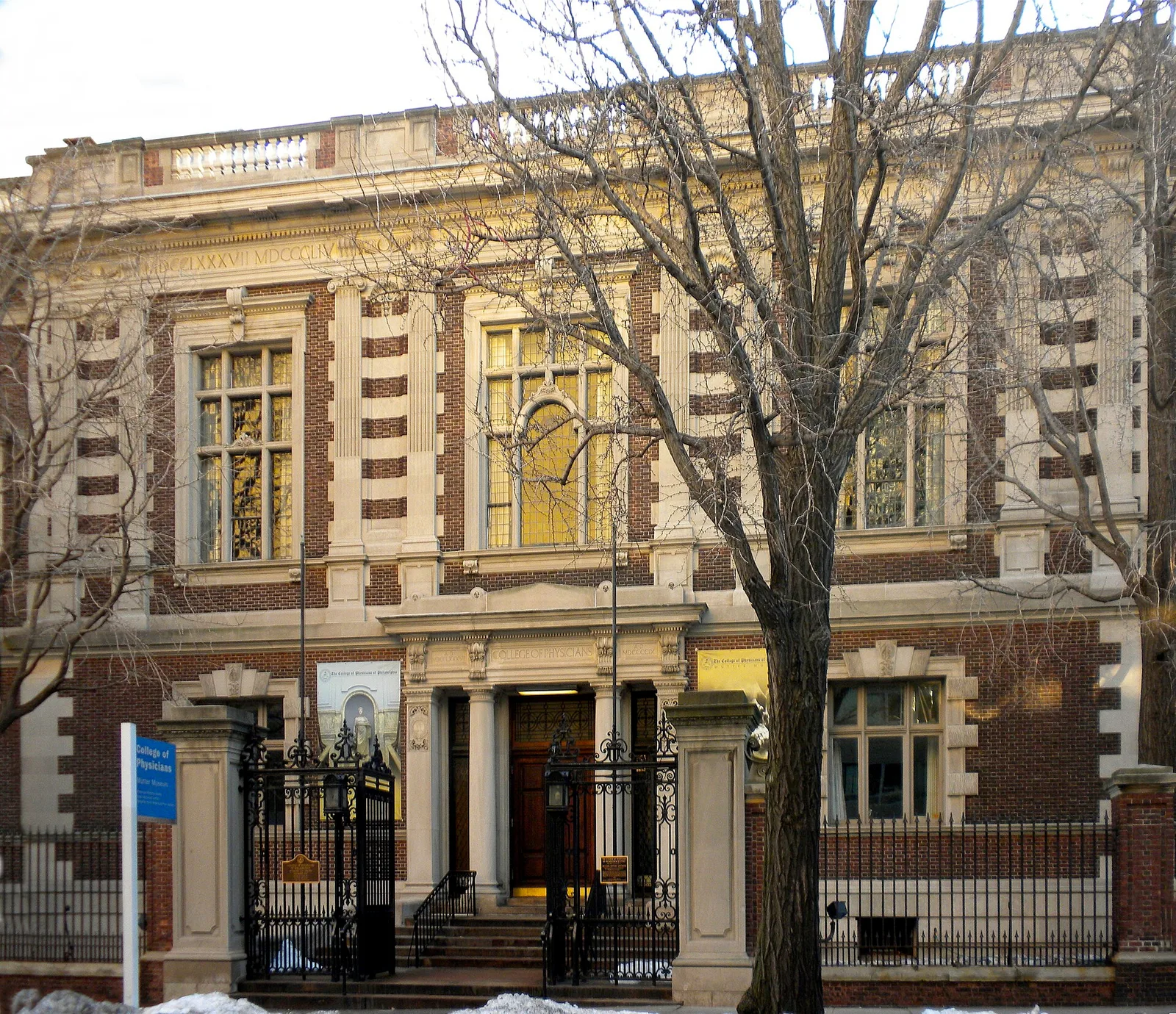
The Mütter Museum is situated within the historic College of Physicians of Philadelphia building, located in the Center City district of Philadelphia, Pennsylvania. This area is characterized by a blend of historical architecture and modern urban development, reflecting Philadelphia's long-standing role as a center for education, medicine, and culture. The museum itself occupies a portion of the College's stately edifice, which contributes to its academic and venerable atmosphere. Its position within this urban environment makes it accessible to both local residents and visitors exploring the city's numerous historical and cultural attractions. The immediate surroundings are defined by other institutional buildings, contributing to a scholarly and contemplative setting for the museum's unique collections.
More facts
- Imported from OSM batch
- Imported from Wikidata
Visitor links
Nearby attractions
- Franklin Institute Philadelphia - 583 m
- Pennsylvania Railroad World War II Memorial Philadelphia - 586 m
- Academy of Natural Sciences of Drexel University Philadelphia - 600 m
- Benjamin Franklin National Memorial Philadelphia - 626 m
- Calder Gardens Philadelphia - 776 m
- Barnes Foundation Philadelphia - 875 m
- Rodin Museum Philadelphia - 983 m
- Pennsylvania Academy of the Fine Arts Philadelphia - 1157 m