Barnes Foundation
Philadelphia, US
.jpg)
- Location
- Philadelphia, US
- Category
- museums galleries
- Coordinates
- 39.960643, -75.172808
- Best time
- Morning or early afternoon
- Weather tip
- Check the local forecast before visiting.
- Opening hours
- Th-Sa,Su, Mo 11:00-17:00
Overview
The Barnes Foundation, located in Philadelphia, Pennsylvania, houses one of the world's most significant collections of Impressionist, Post-Impressionist, and early Modern art. Established by Albert C. Barnes, a pharmaceutical magnate and art collector, the foundation is renowned for its unique pedagogical approach to art appreciation and its distinctive display method. Visitors exploring places to visit in Philadelphia will discover an unparalleled array of works by masters such as Renoir, Cézanne, Matisse, Picasso, and Van Gogh, presented in 'ensembles' alongside African sculpture, Native American ceramics, and decorative arts. This unconventional arrangement, meticulously curated by Barnes himself, is designed to foster a direct, unmediated engagement with art, emphasizing formal relationships and universal aesthetic principles rather than historical chronology. The foundation offers a distinctive experience for those seeking what to do in the area, inviting deep observation and reflection within a carefully constructed environment dedicated to visual education.
General information
The Barnes Foundation, located in Philadelphia, Pennsylvania, houses one of the world's most significant collections of Impressionist, Post-Impressionist, and early Modern art. Established by Albert C. Barnes, a pharmaceutical magnate and art collector, the foundation is renowned for its unique pedagogical approach to art appreciation and its distinctive display method. Visitors exploring places to visit in Philadelphia will discover an unparalleled array of works by masters such as Renoir, Cézanne, Matisse, Picasso, and Van Gogh, presented in 'ensembles' alongside African sculpture, Native American ceramics, and decorative arts. This unconventional arrangement, meticulously curated by Barnes himself, is designed to foster a direct, unmediated engagement with art, emphasizing formal relationships and universal aesthetic principles rather than historical chronology. The foundation offers a distinctive experience for those seeking what to do in the area, inviting deep observation and reflection within a carefully constructed environment dedicated to visual education.
Did you know
- The Barnes Foundation houses 181 works by Pierre-Auguste Renoir, making it the largest collection of his paintings in the world.
- Albert C. Barnes, the founder, acquired his wealth through the development of the antiseptic drug Argyrol.
- The art collection is displayed in 'ensembles,' arrangements of paintings, metalwork, furniture, and textiles, intended to highlight formal connections rather than historical periods.
- For decades, public access to the collection was severely restricted, a condition stipulated in Barnes's will.
History
The Barnes Foundation was established in 1922 by Albert C. Barnes, a physician, chemist, and art collector. Barnes amassed his extensive collection of modern art and diverse cultural artifacts through shrewd acquisitions, often directly from artists and dealers in Europe. Initially located in Merion, Pennsylvania, the foundation was conceived as an educational institution, not a public museum, with a focus on teaching art appreciation through direct engagement with original works. Barnes's will, upon his death in 1951, stipulated strict conditions regarding the collection's display and accessibility. Following protracted legal battles and financial challenges, the foundation controversially relocated its entire collection and operations to a new facility on the Benjamin Franklin Parkway in Philadelphia, opening to the public in 2012.
Cultural significance
The cultural significance of the Barnes Foundation stems primarily from its founder's revolutionary approach to art education and display. Albert C. Barnes rejected traditional art historical methodologies, instead advocating for a direct, experiential engagement with art based on universal aesthetic principles. His 'ensembles'—carefully arranged groupings of paintings, decorative arts, and cultural artifacts—were designed to encourage viewers to perceive formal relationships, such as line, color, and light, independent of historical context or narrative. This pedagogical method influenced generations of artists and educators. The foundation's original restrictive access policies, and subsequent relocation, have also sparked significant debate regarding philanthropic intent, public access to cultural assets, and institutional stewardship, underscoring its enduring impact on art world discourse.
Geography and landscape
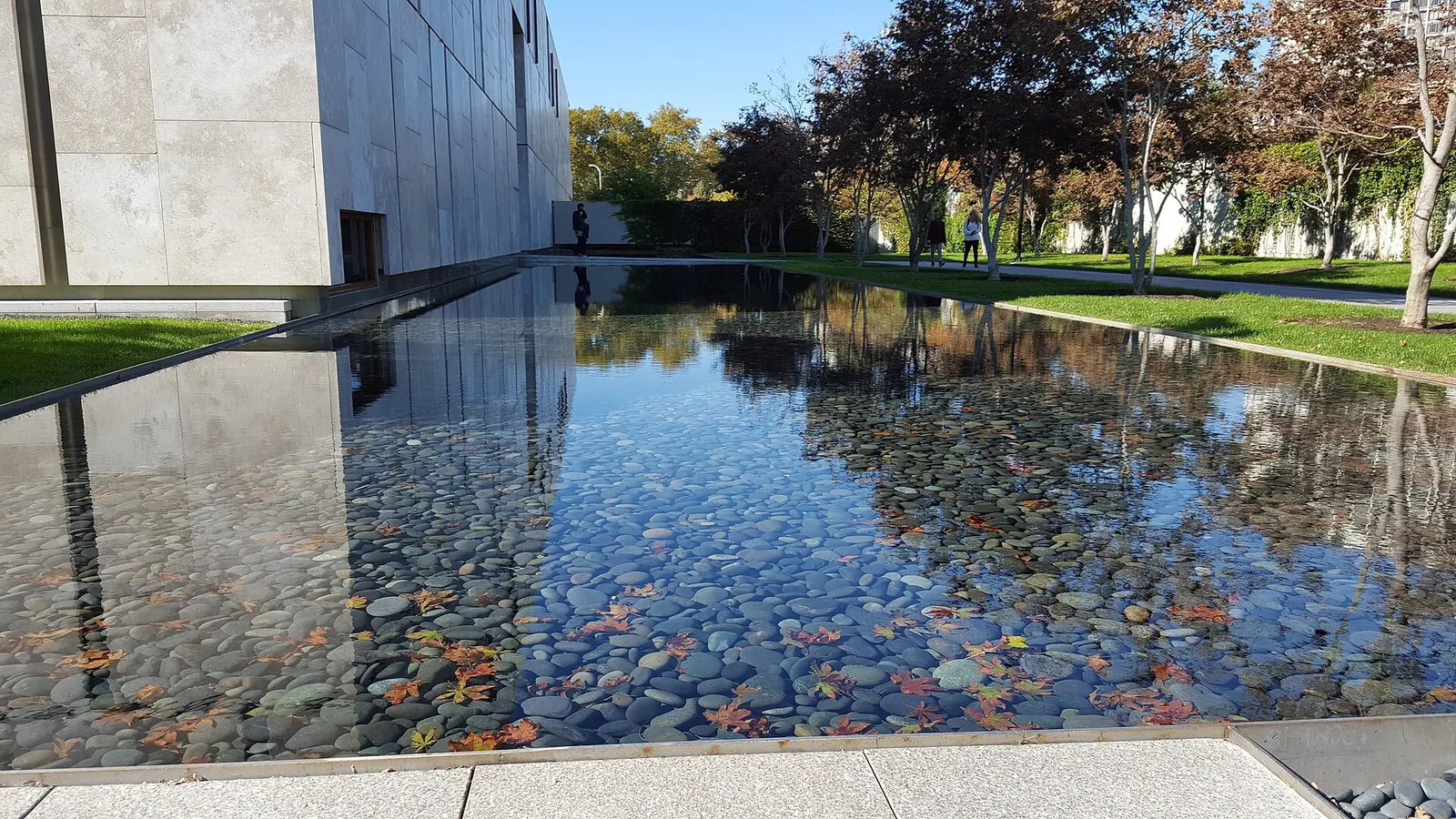
The Barnes Foundation's current location is on the Benjamin Franklin Parkway in Philadelphia, Pennsylvania, a grand boulevard designed in the style of the Champs-Élysées. This placement situates the institution within Philadelphia's 'Museum Mile,' a prominent cultural corridor that also includes the Philadelphia Museum of Art, the Rodin Museum, and the Franklin Institute. The building itself, designed by Tod Williams Billie Tsien Architects, is a modern structure that incorporates elements of the original Merion gallery while providing state-of-the-art facilities. Its urban setting, characterized by wide avenues and monumental architecture, contrasts with the foundation's original suburban, residential context, yet places it centrally within the city's vibrant cultural and educational landscape.
More facts
- Imported from OSM batch
- Imported from Wikidata
Visitor links
Nearby attractions
- Calder Gardens Philadelphia - 157 m
- Rodin Museum Philadelphia - 171 m
- Benjamin Franklin National Memorial Philadelphia - 261 m
- Franklin Institute Philadelphia - 295 m
- Academy of Natural Sciences of Drexel University Philadelphia - 430 m
- Eastern State Penitentiary Philadelphia - 854 m
- Mütter Museum Philadelphia - 875 m
- Philadelphia Museum of Art Philadelphia - 933 m