Edicola votiva Madonna del Carmine
IT
- Location
- IT
- Category
- heritage historic sites
- Coordinates
- 40.7342101, 17.5802814
- Best time
- Morning or early afternoon
- Weather tip
- Check the local forecast before visiting.
Overview
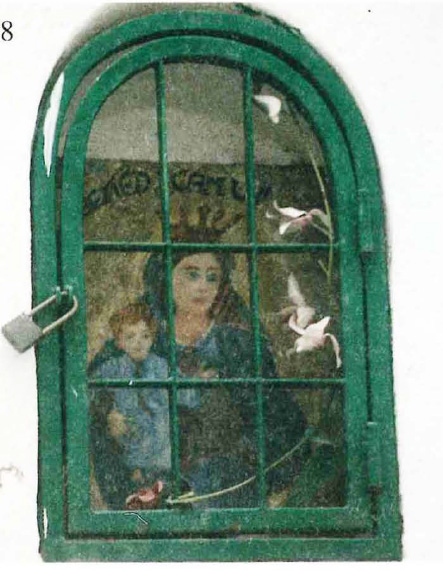
The Edicola votiva Madonna del Carmine is a traditional Italian votive shrine, specifically identified as niche number eight. These structures, often found embedded in the facades of historic buildings or along urban pathways, served as essential focal points for popular piety and communal devotion. The centerpiece of this specific shrine is an oil painting on tin depicting the Madonna del Carmine, an iconographic representation of the Virgin Mary associated with the Carmelite Order. Such shrines were historically commissioned by local families or guilds to provide a spiritual presence within the public sphere, often acting as markers of protection for the neighborhood. Visitors interested in exploring the evolution of local religious art will find this site a compelling example of how faith was integrated into the everyday architecture of Italian towns. When planning your itinerary, this shrine serves as a quiet point of reflection, often found while wandering through historic centers. It is a prime example of the small-scale heritage sites that define the character of Italian streets, offering a glimpse into the devotional practices of the past. If you are looking for unique trip ideas that move beyond the major monuments, these votive niches provide a fascinating look at the intersection of art and daily life. They remain vital markers of cultural continuity, inviting passersby to pause and observe the intricate details of traditional religious craftsmanship preserved in an outdoor setting.
General information
The Edicola votiva Madonna del Carmine is a traditional Italian votive shrine, specifically identified as niche number eight. These structures, often found embedded in the facades of historic buildings or along urban pathways, served as essential focal points for popular piety and communal devotion. The centerpiece of this specific shrine is an oil painting on tin depicting the Madonna del Carmine, an iconographic representation of the Virgin Mary associated with the Carmelite Order. Such shrines were historically commissioned by local families or guilds to provide a spiritual presence within the public sphere, often acting as markers of protection for the neighborhood. Visitors interested in exploring the evolution of local religious art will find this site a compelling example of how faith was integrated into the everyday architecture of Italian towns. When planning your itinerary, this shrine serves as a quiet point of reflection, often found while wandering through historic centers. It is a prime example of the small-scale heritage sites that define the character of Italian streets, offering a glimpse into the devotional practices of the past. If you are looking for unique trip ideas that move beyond the major monuments, these votive niches provide a fascinating look at the intersection of art and daily life. They remain vital markers of cultural continuity, inviting passersby to pause and observe the intricate details of traditional religious craftsmanship preserved in an outdoor setting.
Did you know
- Votive shrines like this one were often illuminated by oil lamps, which were maintained by the local residents.
- The use of tin as a support for religious paintings was common in the 18th and 19th centuries due to its durability against humidity.
- The Madonna del Carmine is traditionally depicted with the Scapular, a hallmark of the Carmelite devotional tradition.
History
Votive shrines, or 'edicole votive', became widespread in Italy between the 17th and 19th centuries. They were established as a form of 'popular religion' to provide spiritual comfort to the urban population. The commissioning of such works was often a private act of devotion, intended to seek protection or express gratitude for a miracle or survival from plague or disaster. The specific use of oil on tin became a standard method for these outdoor shrines because the metal substrate resisted the environmental degradation that would destroy canvas or wood in an exposed, unconditioned outdoor environment. These niches were frequently integrated into the construction of homes and alleyway walls, becoming permanent fixtures of the urban fabric.
Cultural significance
The Edicola votiva Madonna del Carmine represents the intimate connection between Catholic liturgy and public life in Italy. These shrines functioned as small, outdoor chapels where people who could not reach a cathedral could pray during their daily commute or chores. The Madonna del Carmine is a deeply significant figure in Italian culture, often invoked as a protector of the souls in Purgatory. The presence of these shrines helped to sanctify the streets, turning mundane public spaces into sites of sacred interaction. Today, they are recognized as important elements of intangible cultural heritage, reflecting the historical social fabric of the community.
Geography and landscape
This shrine is located within an urban environment, typically integrated into the masonry of a historic building facade. Such shrines are usually situated at street corners or along narrow pedestrian paths, designed to be visible to those passing by. The landscape is characterized by the dense, historical architecture of an Italian town center, where the shrine acts as a vertical interruption in the horizontal line of the street. The orientation is generally chosen to maximize visibility from the primary thoroughfare, ensuring the image of the Madonna serves as a constant, protective witness to the daily activities of the residents.
More facts
- Imported from OSM batch
Visitor links
Nearby attractions
- Edicola votiva Crocifissione 55 m
- Edicola votiva Madonna della Stella 63 m
- Edicola votiva (Via Agrippino Rossetti) 81 m
- Edicola votiva Santi Medici 90 m
- Edicola votiva Cuore di Gesù 97 m
- Edicola votiva Madonna con Bambino 114 m
- Edicola votiva San Giovannino 115 m
- Edicola votiva San Biagio, Deposizione dalla Croce, Sant’Oronzo, Colomba dello Spirito Santo 118 m