Edicola votiva Madonna del Carmine
IT
- Location
- IT
- Category
- heritage historic sites
- Coordinates
- 40.7310008, 17.5801979
- Best time
- Morning or early afternoon
- Weather tip
- Check the local forecast before visiting.
Overview
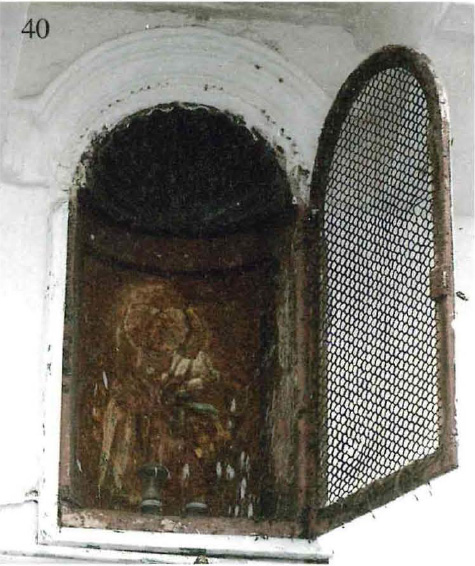
The Edicola votiva Madonna del Carmine is a traditional votive shrine located within a street-level niche, specifically identified as niche number 40. These small urban shrines, common throughout Italian towns and cities, served as focal points for popular devotion, offering a place for passersby to pause for a moment of prayer or reflection. The central feature of this site is an oil-on-copper painting depicting the Madonna del Carmine, a significant iconographic representation of the Virgin Mary under the title of Our Lady of Mount Carmel. As a piece of heritage, it reflects the deep-rooted tradition of placing sacred images in public spaces to protect the neighborhood and provide spiritual comfort to the community. Visitors interested in historical urban artifacts will find this a fascinating example of how religious art was integrated into the daily fabric of Italian life. While these shrines are often overlooked by casual tourists, they are essential components of the local historical landscape, representing centuries of community faith. If you are planning your trip ideas and looking for authentic, lesser-known cultural markers, this votive shrine offers a glimpse into the devotional practices that shaped the social identity of the area. It stands as a testament to the preservation of local heritage, inviting observers to appreciate the artistic and spiritual dedication of past generations.
General information
The Edicola votiva Madonna del Carmine is a traditional votive shrine located within a street-level niche, specifically identified as niche number 40. These small urban shrines, common throughout Italian towns and cities, served as focal points for popular devotion, offering a place for passersby to pause for a moment of prayer or reflection. The central feature of this site is an oil-on-copper painting depicting the Madonna del Carmine, a significant iconographic representation of the Virgin Mary under the title of Our Lady of Mount Carmel. As a piece of heritage, it reflects the deep-rooted tradition of placing sacred images in public spaces to protect the neighborhood and provide spiritual comfort to the community. Visitors interested in historical urban artifacts will find this a fascinating example of how religious art was integrated into the daily fabric of Italian life. While these shrines are often overlooked by casual tourists, they are essential components of the local historical landscape, representing centuries of community faith. If you are planning your trip ideas and looking for authentic, lesser-known cultural markers, this votive shrine offers a glimpse into the devotional practices that shaped the social identity of the area. It stands as a testament to the preservation of local heritage, inviting observers to appreciate the artistic and spiritual dedication of past generations.
Did you know
- Votive shrines like this were often commissioned by local guilds or wealthy families to provide spiritual protection for the street.
- Oil on copper was a preferred medium for small devotional paintings because it was highly durable and resistant to the humidity of outdoor urban environments.
- The Madonna del Carmine is traditionally depicted holding the scapular, a symbol of her promise of protection to the faithful.
History
Votive shrines, or 'edicole votive', began appearing in Italian urban centers as early as the medieval period, gaining significant popularity during the Counter-Reformation. These structures were intended to bring the sacred into the secular space of the street, acting as silent witnesses to the daily lives of residents. The use of copper as a support for oil paintings became particularly common in the 17th and 18th centuries due to its stability. This specific niche, designated as number 40, indicates that it was part of a broader urban cataloging or devotional network, likely maintained by local residents or religious confraternities over several generations.
Cultural significance
The Edicola votiva Madonna del Carmine represents the intersection of private faith and public space. In Italian culture, these shrines functioned as 'open-air churches,' allowing those who could not attend mass to maintain a connection with the divine. The image of the Madonna del Carmine specifically holds deep significance, as she is viewed as a protector of souls and a mediator. Today, these shrines are recognized as vital elements of cultural heritage that maintain the historical character of Italian streetscapes, serving as reminders of a time when religious iconography was an omnipresent part of the urban experience.
Geography and landscape
The shrine is situated within an urban context, embedded directly into the masonry of a building facade. This placement is characteristic of Italian historical centers, where architecture and religious expression are inextricably linked. The niche is positioned at eye level, designed to engage directly with the pedestrian flow of the street. Its surroundings typically include narrow cobblestone alleys or dense residential blocks, which amplify the sense of intimacy and history. The physical condition of the niche is often influenced by the surrounding microclimate, necessitating the protective nature of the recessed structure to shield the painting from the elements.
More facts
- Imported from OSM batch
Visitor links
Nearby attractions
- Edicola votiva (Via Cesare Beccaria) 5 m
- Edicola votiva Maria Immacolata 54 m
- Edicola votiva Madonna del Carmine e San Simone Stock 75 m
- Edicola votiva Cuore di Gesù 134 m
- Edicola votiva (Via Alfonso Pomes) 139 m
- Edicola Votiva San Biagio, Madonna del Carmine, Sant’Oronzo, Colomba dello Spirito Santo 164 m
- Edicola votiva Madonna della Grata 173 m
- Edicola votiva Immacolata 175 m