Edicola votiva (Via Alfonso Pomes)
IT
- Location
- IT
- Category
- heritage historic sites
- Coordinates
- 40.7298684, 17.5808854
- Best time
- Morning or early afternoon
- Weather tip
- Check the local forecast before visiting.
Overview
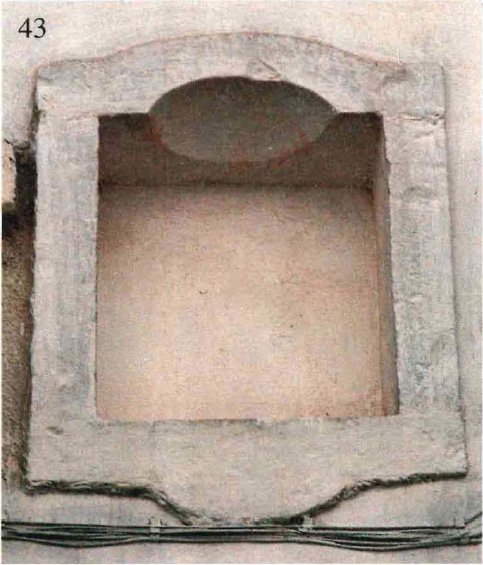
The Edicola votiva located on Via Alfonso Pomes, cataloged as niche number 43, represents a specific typology of Italian urban street shrines. Historically, these structures served as focal points for communal religious expression, often housing icons, frescoes, or statues intended to provide spiritual protection to the neighborhood. However, this particular niche is notable for its current lack of devotional imagery, standing as an empty architectural element within the streetscape. For those interested in urban heritage and historical documentation, this site serves as a curious study in the evolution of street-level religious architecture. While many similar shrines across Italy remain active places of worship, the vacancy of this specific niche invites reflection on the shifting landscape of local traditions. Visitors walking through the area may appreciate the structure as a remnant of historical urban planning, offering a glimpse into the past when such niches were integral to the social fabric of the community. As you explore, consider this site as part of your broader trip ideas for documenting vernacular architecture. While it does not contain the traditional artistic elements one might expect, it remains a tangible piece of the city's built environment, providing a quiet, contemplative stop for those mapping the historical remnants of the street. It is best visited during the morning or early afternoon to take advantage of natural light for photography.
General information
The Edicola votiva located on Via Alfonso Pomes, cataloged as niche number 43, represents a specific typology of Italian urban street shrines. Historically, these structures served as focal points for communal religious expression, often housing icons, frescoes, or statues intended to provide spiritual protection to the neighborhood. However, this particular niche is notable for its current lack of devotional imagery, standing as an empty architectural element within the streetscape. For those interested in urban heritage and historical documentation, this site serves as a curious study in the evolution of street-level religious architecture. While many similar shrines across Italy remain active places of worship, the vacancy of this specific niche invites reflection on the shifting landscape of local traditions. Visitors walking through the area may appreciate the structure as a remnant of historical urban planning, offering a glimpse into the past when such niches were integral to the social fabric of the community. As you explore, consider this site as part of your broader trip ideas for documenting vernacular architecture. While it does not contain the traditional artistic elements one might expect, it remains a tangible piece of the city's built environment, providing a quiet, contemplative stop for those mapping the historical remnants of the street. It is best visited during the morning or early afternoon to take advantage of natural light for photography.
Did you know
- The niche is officially cataloged as number 43 in local urban surveys.
- Unlike many traditional Italian street shrines, this edicola currently contains no religious iconography.
- These structures were historically placed at street corners to offer protection to passersby.
History
Street shrines, or edicole votive, have been a fixture of Italian urban design since the medieval period. They were traditionally commissioned by local guilds, wealthy families, or neighborhood collectives to mark public spaces with religious significance. The niche on Via Alfonso Pomes is a structural example of this tradition. While the specific date of its construction remains undocumented in public records, its presence follows the standard architectural pattern of recessed wall shrines found throughout Italian towns. The absence of current imagery suggests a potential loss of original contents over time or a change in the management of local devotional sites.
Cultural significance
The edicola represents the intersection of private piety and public space. Culturally, these niches acted as the 'living room' of the street, where neighbors would gather to pray or light candles. Even in its current empty state, the niche serves as a cultural marker of how communities once organized their daily lives around visible symbols of faith. It stands as a silent witness to the changing social and religious habits of the residents who have occupied this street over the decades.
Geography and landscape
The niche is situated directly on the wall of a building along Via Alfonso Pomes. It is an outdoor, street-level architectural feature integrated into the existing urban fabric. The immediate surroundings are characterized by typical residential or mixed-use street architecture. The site is easily accessible to pedestrians walking along the thoroughfare. Because it is an integrated wall element, it does not possess a distinct landscape of its own but rather contributes to the historical density of the urban environment.
More facts
- Imported from OSM batch
Visitor links
Nearby attractions
- Edicola votiva Cuore di Gesù 5 m
- Edicola votiva Sant’Oronzo (?), Madonna del Carmine, San Francesco di Paola, Colomba dello Spirito Santo 87 m
- Edicola votiva (Corso Vittorio Emanuele II) 116 m
- Edicola votiva (Via Cesare Beccaria) 137 m
- Edicola votiva Madonna del Carmine 139 m
- Edicola votiva Immacolata 150 m
- Edicola votiva Maria Immacolata 155 m
- Edicola votiva Madonna del Carmine e San Simone Stock 209 m