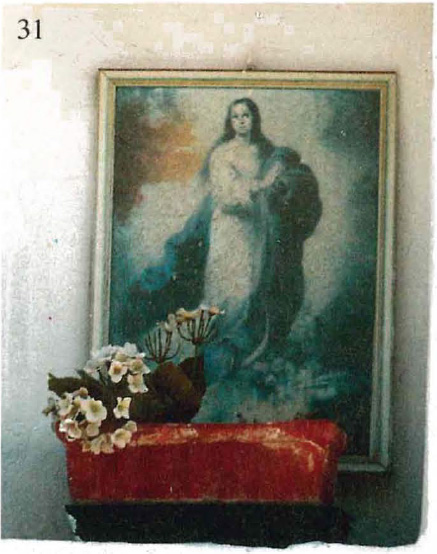
Edicola votiva Immacolata
IT
- Location
- IT
- Category
- heritage historic sites
- Coordinates
- 40.7296077, 17.576145
- Best time
- Morning or early afternoon
- Weather tip
- Check the local forecast before visiting.
Overview
The Edicola votiva Immacolata, identified as niche number 31, serves as a significant example of Italy's widespread tradition of street-side devotional art. This specific structure houses a plaster statue dedicated to the Sacred Heart of Jesus, functioning as a focal point for local piety and historical urban reflection. Visitors interested in the architectural details of minor religious landmarks will find these niches represent a unique intersection of faith and public space, often found integrated into the facades of historic buildings throughout the country. When planning your trip ideas in Italy, these small-scale shrines offer a quiet, contemplative look at the religious heritage that has shaped the aesthetic of urban neighborhoods for centuries. While the exact date of installation for this specific niche is part of a broader catalog of local heritage, the presence of such votive art provides a window into the communal history of the area. Visitors can expect to see a well-preserved example of devotional plasterwork, which remains a testament to the enduring cultural practices of the region. As you explore local attractions, take a moment to observe the craftsmanship of these street-side shrines, which continue to serve as silent witnesses to the passage of time in the Italian landscape.
General information
The Edicola votiva Immacolata, identified as niche number 31, serves as a significant example of Italy's widespread tradition of street-side devotional art. This specific structure houses a plaster statue dedicated to the Sacred Heart of Jesus, functioning as a focal point for local piety and historical urban reflection. Visitors interested in the architectural details of minor religious landmarks will find these niches represent a unique intersection of faith and public space, often found integrated into the facades of historic buildings throughout the country. When planning your trip ideas in Italy, these small-scale shrines offer a quiet, contemplative look at the religious heritage that has shaped the aesthetic of urban neighborhoods for centuries. While the exact date of installation for this specific niche is part of a broader catalog of local heritage, the presence of such votive art provides a window into the communal history of the area. Visitors can expect to see a well-preserved example of devotional plasterwork, which remains a testament to the enduring cultural practices of the region. As you explore local attractions, take a moment to observe the craftsmanship of these street-side shrines, which continue to serve as silent witnesses to the passage of time in the Italian landscape.
Did you know
- The term 'Edicola' originates from the Latin 'aedicula', meaning a small temple or shrine.
- Votive niches were often commissioned by local families or guilds to protect the neighborhood.
- These shrines frequently served as the only source of light on dark streets before the advent of electricity.
History
Street-side shrines like the Edicola votiva Immacolata have been a fixture of Italian urban design since the Middle Ages. Historically, these niches were placed at street corners or building facades to provide spiritual protection to the neighborhood and to guide travelers. During the 18th and 19th centuries, the tradition saw a resurgence, with many families commissioning plaster or terracotta statues to replace older, weathered icons. These structures often reflect the artistic trends of their time, serving as a historical record of the community's devotion and its integration into the daily life of the city.
Cultural significance
The cultural significance of the Edicola votiva lies in its role as a bridge between private faith and public space. In many Italian cities, these niches are not merely decorative but are active sites of devotion where locals still leave fresh flowers or small offerings. They represent a tangible connection to the past, reflecting the social and religious values of generations who lived and worked in the immediate vicinity. The preservation of these shrines ensures that the traditional character of the urban landscape remains intact against the pressures of modern development.
Geography and landscape
The Edicola votiva Immacolata is integrated directly into the urban fabric, typically found embedded within the exterior walls of historical buildings. These sites are usually located along traditional pedestrian routes, often at intersections or near historic squares. The surrounding environment is characterized by the dense, historical architecture typical of Italian town centers, where the proximity of the niche to the street level allows for direct interaction with passersby. The landscape is predominantly man-made, reflecting the evolution of residential and commercial spaces over several centuries.
More facts
- Imported from OSM batch
Visitor links
Nearby attractions
- Edicola votiva San Biagio, Madonna del Carmine e Anime Purganti, Sant’Oronzo, Colomba dello Spirito Santo 39 m
- Edicola votiva Deposizione dalla Croce 69 m
- Edicola votiva San Biagio, Madonna del Carmine, Sant’Oronzo, Colomba dello Spirito Santo 110 m
- Edicola votiva Cuore di Gesù 114 m
- Edicola votiva Crocifissione 128 m
- Edicola votiva San Biagio, Madonna del Carmine, Sant’Oronzo, Colomba dello Spirito Santo 135 m
- Edicola votiva San Biagio, Madonna del Carmine, Sant’Oronzo, Colomba dello Spirito Santo 207 m
- Edicola votiva Santi Medici 209 m