Edicola votiva Cristo spirante
IT
- Location
- IT
- Category
- heritage historic sites
- Coordinates
- 40.7323549, 17.5748696
- Best time
- Morning or early afternoon
- Weather tip
- Check the local forecast before visiting.
Overview
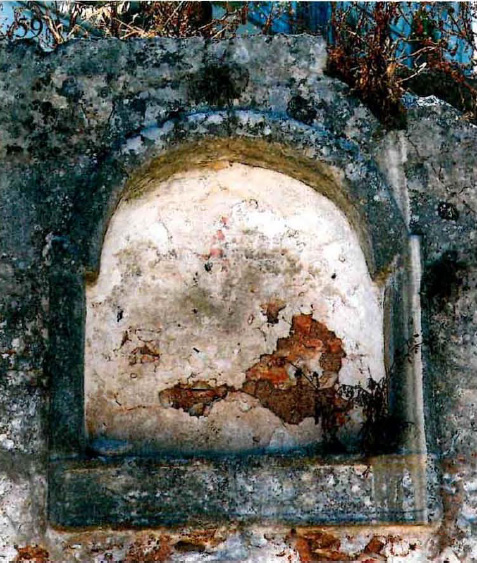
The Edicola votiva Cristo spirante, cataloged as niche number 59, is a poignant example of Italian folk religious art. This small, street-side shrine features a relief sculpture crafted from painted cement, depicting the figure of the dying Christ. Such votive niches are a characteristic element of the Italian urban landscape, traditionally serving as sites for private devotion and public intercession. Visitors interested in the intersection of local history and religious heritage will find this piece a compelling subject of study, reflecting the deep-rooted tradition of placing sacred imagery within the fabric of daily life. While it is a modest structure, its preservation offers insight into the devotional practices that once defined neighborhood identity. For those planning a trip, this site serves as an excellent point of interest when exploring the historical layers of the urban environment. It is one of many local attractions that provide a glimpse into the spiritual life of past generations. When considering what to do in the area, taking a moment to observe these small monuments allows for a deeper appreciation of the architectural and cultural nuances that often go unnoticed by casual passersby. The site is best visited during the morning or early afternoon to take advantage of natural light, which highlights the details and textures of the painted cement relief. As always, it is recommended to check the local forecast before visiting to ensure a comfortable experience while walking through the area.
General information
The Edicola votiva Cristo spirante, cataloged as niche number 59, is a poignant example of Italian folk religious art. This small, street-side shrine features a relief sculpture crafted from painted cement, depicting the figure of the dying Christ. Such votive niches are a characteristic element of the Italian urban landscape, traditionally serving as sites for private devotion and public intercession. Visitors interested in the intersection of local history and religious heritage will find this piece a compelling subject of study, reflecting the deep-rooted tradition of placing sacred imagery within the fabric of daily life. While it is a modest structure, its preservation offers insight into the devotional practices that once defined neighborhood identity. For those planning a trip, this site serves as an excellent point of interest when exploring the historical layers of the urban environment. It is one of many local attractions that provide a glimpse into the spiritual life of past generations. When considering what to do in the area, taking a moment to observe these small monuments allows for a deeper appreciation of the architectural and cultural nuances that often go unnoticed by casual passersby. The site is best visited during the morning or early afternoon to take advantage of natural light, which highlights the details and textures of the painted cement relief. As always, it is recommended to check the local forecast before visiting to ensure a comfortable experience while walking through the area.
Did you know
- The Edicola is cataloged specifically as niche number 59 in local heritage surveys.
- The relief is constructed from painted cement, a durable medium often used for outdoor votive art.
- Votive niches were historically placed on street corners to offer protection to travelers and residents.
History
Votive niches like the Edicola votiva Cristo spirante have historical roots dating back centuries in Italy. They were traditionally commissioned by private citizens or neighborhood guilds as acts of piety or gratitude. The use of cement for such reliefs became more common in the late 19th and early 20th centuries, as it offered a cost-effective and weather-resistant alternative to stone or terracotta. These shrines often served as landmarks in the urban grid, acting as focal points for communal processions and daily prayers. While the specific date of this niche's construction is not widely documented, its presence reflects a tradition that has persisted through shifting architectural trends, maintaining the spiritual legacy of the community.
Cultural significance
The cultural significance of the Edicola votiva lies in its role as a bridge between private faith and public space. By placing the image of the dying Christ in a public thoroughfare, the creators of the niche sought to sanctify the street, turning a transit point into a place of reflection. This practice was integral to the social fabric of Italian neighborhoods, where the sacred and the secular were inextricably linked. The preservation of niche number 59 acts as a cultural marker, reminding contemporary society of the values, anxieties, and hopes of the people who inhabited these streets in previous eras. It is a testament to the enduring human desire to find solace in religious iconography during times of hardship.
Geography and landscape
The Edicola votiva Cristo spirante is integrated into the urban landscape, typically embedded within the exterior walls of buildings or positioned at street corners. Its location is defined by the dense, historical layout of the city, where narrow passages and traditional architecture provide the backdrop for these small shrines. The environment is characterized by its pedestrian-friendly nature, allowing visitors to encounter these heritage sites while navigating the city's older quarters. The relief itself is positioned to catch the eye of passersby, strategically placed at a height that encourages a moment of pause. The surrounding area often features traditional masonry, which complements the weathered texture of the cement shrine.
More facts
- Imported from OSM batch
Visitor links
Nearby attractions
- Edicola votiva San Biagio, Madonna del Carmine, Sant’Oronzo, Colomba dello Spirito Santo 118 m
- Edicola votiva Cuore di Gesù 143 m
- Edicola votiva Crocifissione 206 m
- Edicola votiva Cuore di Gesù 212 m
- Edicola votiva Immacolata 222 m
- Edicola votiva Santi Medici 228 m
- Immacolata 229 m
- Edicola votiva Madonna della Stella 244 m