Wilhelm Bermann
DE
- Location
- DE
- Category
- heritage historic sites
- Coordinates
- 49.2229802, 6.8098523
- Best time
- Morning or early afternoon
- Weather tip
- Check the local forecast before visiting.
Overview
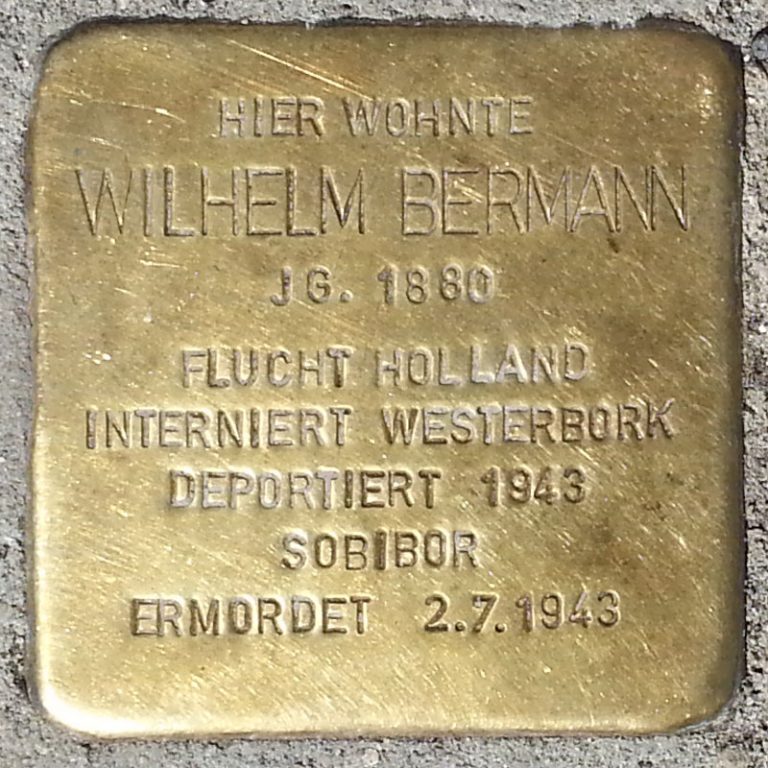
The site of Wilhelm Bermann serves as a solemn memorial, marking the former location of his business and home. Wilhelm Bermann operated a tailoring shop here before his life was irrevocably altered by the rise of the Nazi regime. Following a period of 'protective custody' (Schutzhaft), he was interned in the Dachau concentration camp. In 1939, Bermann and his wife managed to flee Germany, seeking refuge in the Netherlands. However, their escape was short-lived; they were subsequently deported from Holland to the Sobibor extermination camp, where they were murdered. Today, this location is marked by a Stolperstein—a 'stumbling stone'—which acts as a physical anchor for historical memory within the urban fabric. It serves as a poignant reminder of the individual lives destroyed by the Holocaust. Visitors often come to this site to pay their respects and engage with the local history of persecution and resistance. As you explore various heritage sites, this location provides a necessary moment of reflection on the human cost of the era. It is one of many essential places to visit for those seeking to understand the deep, often painful historical layers of German towns. Whether you are planning a dedicated historical tour or looking for meaningful trip ideas, this site offers a quiet, profound connection to the past.
General information
The site of Wilhelm Bermann serves as a solemn memorial, marking the former location of his business and home. Wilhelm Bermann operated a tailoring shop here before his life was irrevocably altered by the rise of the Nazi regime. Following a period of 'protective custody' (Schutzhaft), he was interned in the Dachau concentration camp. In 1939, Bermann and his wife managed to flee Germany, seeking refuge in the Netherlands. However, their escape was short-lived; they were subsequently deported from Holland to the Sobibor extermination camp, where they were murdered. Today, this location is marked by a Stolperstein—a 'stumbling stone'—which acts as a physical anchor for historical memory within the urban fabric. It serves as a poignant reminder of the individual lives destroyed by the Holocaust. Visitors often come to this site to pay their respects and engage with the local history of persecution and resistance. As you explore various heritage sites, this location provides a necessary moment of reflection on the human cost of the era. It is one of many essential places to visit for those seeking to understand the deep, often painful historical layers of German towns. Whether you are planning a dedicated historical tour or looking for meaningful trip ideas, this site offers a quiet, profound connection to the past.
Did you know
- The Stolperstein project is the world's largest decentralized memorial, consisting of over 75,000 stones across Europe.
- Each Stolperstein is handmade and installed in the pavement in front of the victim's last known freely chosen residence.
- The term 'Schutzhaft' (protective custody) was a Nazi euphemism used to justify the detention of political opponents and others without judicial oversight.
History
Wilhelm Bermann was a local tailor whose life was dismantled by the state-sponsored antisemitism of the 1930s. After being subjected to 'protective custody,' he was sent to Dachau, one of the first concentration camps established by the Nazi regime. Upon his release, he and his wife attempted to secure their safety by emigrating to the Netherlands in 1939. Following the German occupation of the Netherlands in 1940, the couple was caught in the net of the Holocaust. They were eventually deported to the Sobibor extermination camp in occupied Poland, where they were killed as part of the systematic genocide of European Jews.
Cultural significance
This site represents the broader movement of 'Gedenkkultur' (culture of remembrance) in Germany. By installing memorial stones at the exact locations where victims lived and worked, the project forces the public to confront the Holocaust in their daily lives rather than sequestering history in museums. It honors the individuality of the victims, transforming them from statistics into named members of the local community. The site serves as a vital educational tool, ensuring that the legacy of those who were persecuted is preserved against the erosion of time, fostering a culture of active remembrance and social responsibility.
Geography and landscape
The site is located within an urban environment, integrated into the existing streetscape of a German town. As a Stolperstein memorial, it is embedded directly into the sidewalk, typically found at the threshold of where the Bermann tailoring business once operated. The surrounding area consists of residential or commercial buildings that have likely undergone significant changes since the 1930s. The site does not feature a large monument or park, but rather relies on its inconspicuous placement to catch the attention of passersby, encouraging them to stop, look down, and read the inscription on the brass plate.
More facts
- Imported from OSM batch
Visitor links
Nearby attractions
- Samuel Bermann 124 m
- Gertrude Bermann geb. Hirsch 125 m
- Kanalstollen 3149 m
- Zwangsarbeiter-Stolperschwelle 3860 m
- Robert Kahn 4405 m
- Tagesstrecke C 4549 m
- Abraham Kaiser 4603 m
- Fritz Lieser 4970 m