Abraham Kaiser
DE
- Location
- DE
- Category
- heritage historic sites
- Coordinates
- 49.2438404, 6.8644415
- Best time
- Morning or early afternoon
- Weather tip
- Check the local forecast before visiting.
Overview
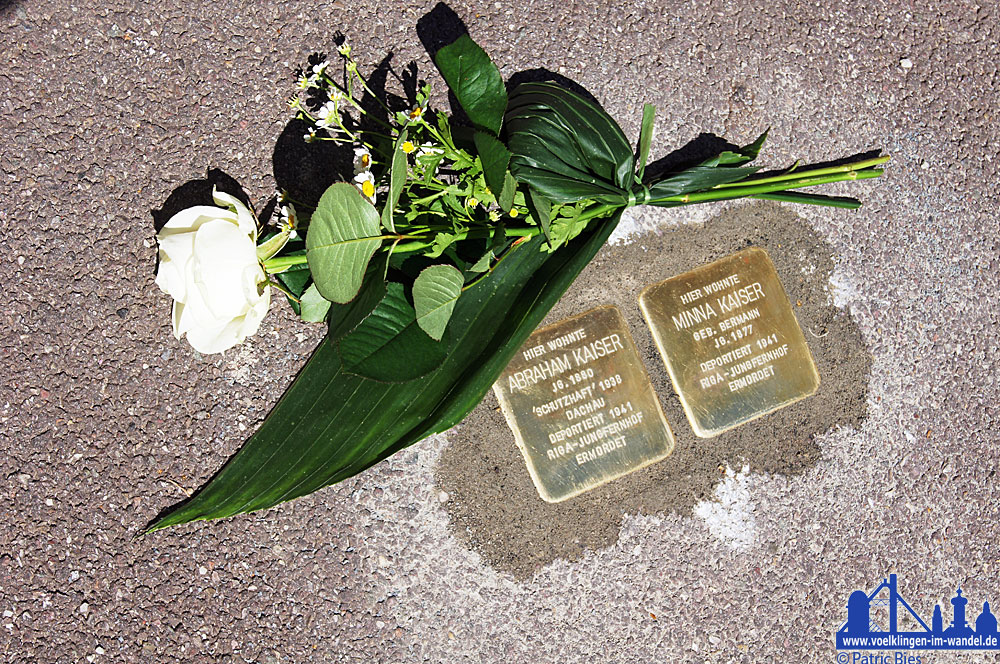
The site associated with Abraham Kaiser in Völklingen-Fürstenhausen serves as a somber memorial to the life and persecution of a local Jewish business owner during the National Socialist era. Until 1938, this location operated as a laundry shop and tailoring business, reflecting Kaiser's contribution to the local economy. Following the events of the Reichspogromnacht in November 1938, Kaiser was arrested and imprisoned in the Dachau concentration camp for approximately two weeks. His subsequent forced relocation to a 'Judenhaus' in Cologne in 1939 and his eventual move to Nuremberg represent the systematic dismantling of Jewish life in Germany. In 1941, he was deported to the Riga-Jungfernhof concentration camp, where he became one of the millions of victims of the Holocaust. Today, the site stands as a place of remembrance, offering visitors a poignant opportunity to engage with local history and the personal stories behind the statistics of the era. Understanding these individual narratives is essential for those seeking meaningful trip ideas when exploring the complex history of the Saarland region. By visiting such sites, travelers can pay their respects and gain a deeper understanding of the human cost of the Nazi regime, making it a significant stop for those interested in historical reflection and educational tourism.
General information
The site associated with Abraham Kaiser in Völklingen-Fürstenhausen serves as a somber memorial to the life and persecution of a local Jewish business owner during the National Socialist era. Until 1938, this location operated as a laundry shop and tailoring business, reflecting Kaiser's contribution to the local economy. Following the events of the Reichspogromnacht in November 1938, Kaiser was arrested and imprisoned in the Dachau concentration camp for approximately two weeks. His subsequent forced relocation to a 'Judenhaus' in Cologne in 1939 and his eventual move to Nuremberg represent the systematic dismantling of Jewish life in Germany. In 1941, he was deported to the Riga-Jungfernhof concentration camp, where he became one of the millions of victims of the Holocaust. Today, the site stands as a place of remembrance, offering visitors a poignant opportunity to engage with local history and the personal stories behind the statistics of the era. Understanding these individual narratives is essential for those seeking meaningful trip ideas when exploring the complex history of the Saarland region. By visiting such sites, travelers can pay their respects and gain a deeper understanding of the human cost of the Nazi regime, making it a significant stop for those interested in historical reflection and educational tourism.
Did you know
- Abraham Kaiser operated a successful laundry and tailoring shop in Fürstenhausen until the forced closure of his business in 1938.
- He was held in the Dachau concentration camp for two weeks following the state-sponsored violence of the November Pogroms.
- His final deportation occurred in 1941 to the Riga-Jungfernhof camp.
History
Abraham Kaiser's history is inextricably linked to the systematic persecution of Jewish citizens in Germany. His life in Völklingen-Fürstenhausen was interrupted in 1938, a pivotal year of escalating state-sanctioned anti-Semitism. Following the Reichspogromnacht, he suffered initial incarceration at Dachau. His trajectory mirrors that of many German Jews, involving forced displacement to 'Judenhaus' (Jewish houses) in Cologne and Nuremberg as the regime sought to isolate and eventually deport Jewish populations. His 1941 deportation to Riga-Jungfernhof marked the final stage of this process, as part of the broader 'Final Solution' implemented by the Nazi authorities across occupied territories.
Cultural significance
This site serves as a vital anchor for local culture of remembrance (Erinnerungskultur). By marking the former location of a Jewish-owned business, the community acknowledges the erasure of Jewish life from the local fabric of Völklingen. It challenges visitors to confront the reality that the Holocaust was not merely a distant event but one that occurred in local neighborhoods, involving neighbors and local shop owners. It acts as a moral compass for the town, ensuring that the names and fates of those persecuted are not lost to the passage of time.
Geography and landscape
The site is located in Völklingen-Fürstenhausen, an area historically characterized by its industrial and residential development within the Saarland. The landscape here is typical of the region's urban-industrial transition, where historic residential structures sit alongside the remnants of the area's coal and steel heritage. While the physical shop structure has changed over the decades, the location remains a quiet, residential part of the town. Visitors should note that this is a site of historical reflection rather than a traditional tourist attraction, set within the everyday urban environment of the modern-day community.
More facts
- Imported from OSM batch
Visitor links
Nearby attractions
- Fritz Lieser 1060 m
- Robert Kahn 1193 m
- Zwangsarbeiter-Stolperschwelle 1413 m
- Kanalstollen 1898 m
- Tagesstrecke C 3228 m
- Juliusschacht 3248 m
- Wilhelm Bermann 4603 m
- Samuel Bermann 4716 m