St. Thomas Church
DE
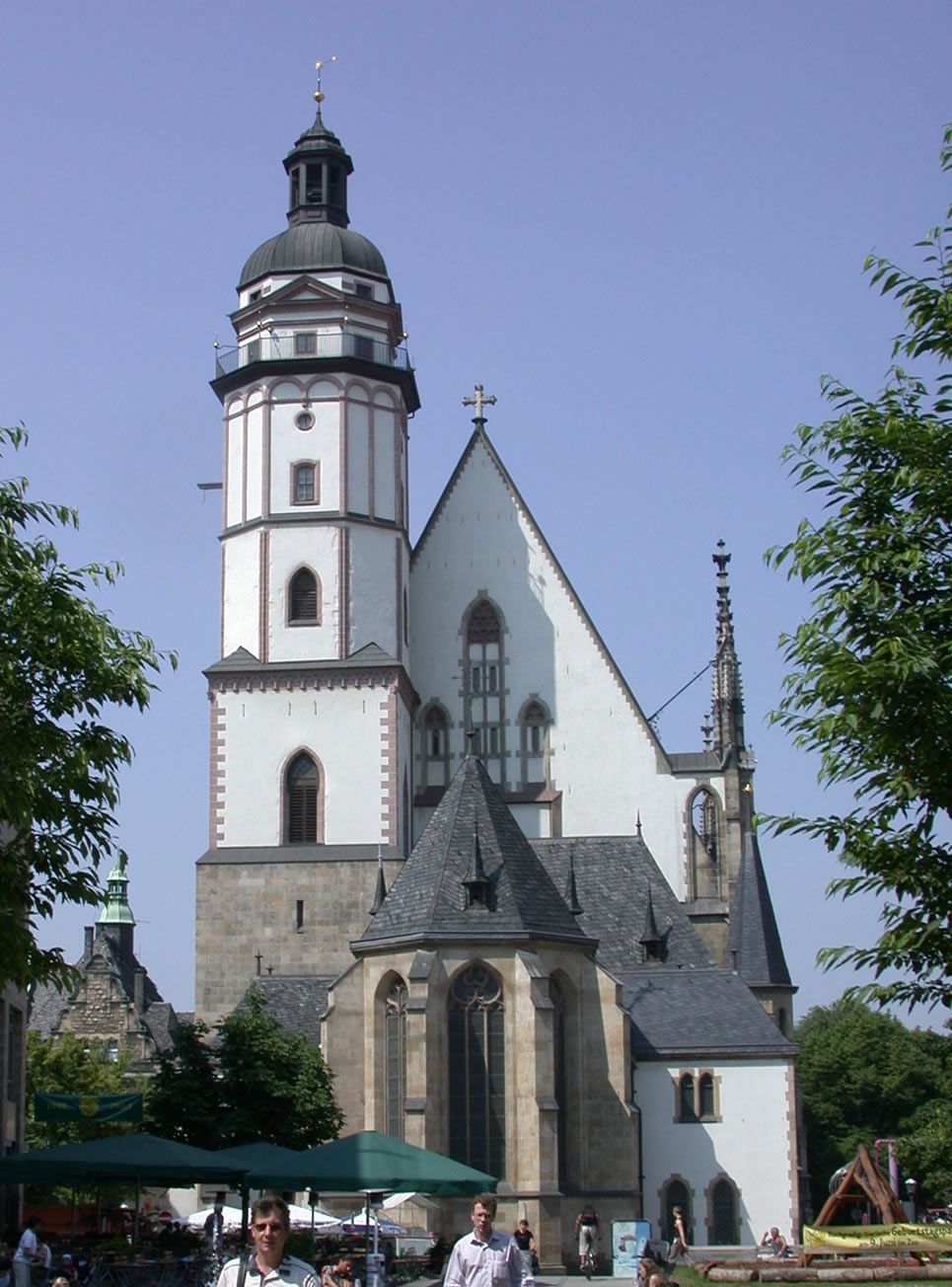
- Location
- DE
- Category
- iconic bucket list
- Coordinates
- 51.339336, 12.37256
- Best time
- Morning or early afternoon
- Weather tip
- Check the local forecast before visiting.
Overview
St. Thomas Church, known historically as Thomaskirche, stands as a monumental landmark in the heart of Leipzig, Germany. Renowned primarily for its deep-rooted association with Johann Sebastian Bach, who served as the Cantor here from 1723 until his death in 1750, the church serves as a pilgrimage site for music lovers and history enthusiasts alike. Visitors to this architectural marvel can expect to explore a structure that blends late Gothic and neo-Gothic elements, featuring an impressive nave and the final resting place of the legendary composer. Beyond its musical heritage, the church remains an active place of worship and the home of the world-famous St. Thomas Boys Choir, or Thomanerchor, which has been performing for over 800 years. When planning your trip ideas to this region, the church offers a profound glimpse into the intersection of German ecclesiastical history and the evolution of Western classical music. Whether you are interested in attending a motet performed by the choir or simply admiring the stained glass and the Bach memorial, the site provides a serene and historically charged atmosphere. As one of the most significant local attractions in Saxony, it is highly recommended to visit during the morning or early afternoon to avoid the largest crowds and fully appreciate the intricate details of the interior. Checking the local weather forecast before visiting ensures a comfortable experience as you navigate the surrounding historical square.
General information
St. Thomas Church, known historically as Thomaskirche, stands as a monumental landmark in the heart of Leipzig, Germany. Renowned primarily for its deep-rooted association with Johann Sebastian Bach, who served as the Cantor here from 1723 until his death in 1750, the church serves as a pilgrimage site for music lovers and history enthusiasts alike. Visitors to this architectural marvel can expect to explore a structure that blends late Gothic and neo-Gothic elements, featuring an impressive nave and the final resting place of the legendary composer. Beyond its musical heritage, the church remains an active place of worship and the home of the world-famous St. Thomas Boys Choir, or Thomanerchor, which has been performing for over 800 years. When planning your trip ideas to this region, the church offers a profound glimpse into the intersection of German ecclesiastical history and the evolution of Western classical music. Whether you are interested in attending a motet performed by the choir or simply admiring the stained glass and the Bach memorial, the site provides a serene and historically charged atmosphere. As one of the most significant local attractions in Saxony, it is highly recommended to visit during the morning or early afternoon to avoid the largest crowds and fully appreciate the intricate details of the interior. Checking the local weather forecast before visiting ensures a comfortable experience as you navigate the surrounding historical square.
Did you know
- Johann Sebastian Bach served as the cantor at St. Thomas Church for 27 years.
- The St. Thomas Boys Choir, or Thomanerchor, was founded in 1212.
- Bach's remains were moved to the interior of the church in 1950.
History
The history of St. Thomas Church dates back to the late 12th century, though the current late Gothic structure was largely completed between 1482 and 1496. It underwent significant renovations in the 19th century, which added its distinct neo-Gothic facade. The church gained global historical prominence during the Reformation when Martin Luther preached here on Whitsunday in 1539. However, its most defining historical chapter began in 1723, when Johann Sebastian Bach assumed the position of Kantor. For nearly three decades, Bach composed and performed numerous cantatas and passions within these walls, cementing the church's status as a central pillar of liturgical music history. Following the destruction of the Second World War, the church underwent extensive restoration to preserve its architectural and cultural integrity.
Cultural significance
St. Thomas Church is arguably one of the most culturally significant ecclesiastical sites in Germany due to its role as the cradle of the St. Thomas Boys Choir. This institution has maintained a continuous musical tradition for over eight centuries, influencing generations of composers and musicians. The church is synonymous with the legacy of J.S. Bach; his tomb within the sanctuary serves as a site of constant reverence. The church acts as a bridge between the medieval history of Leipzig and the modern appreciation of classical music, hosting regular concerts that keep the Baroque tradition alive. It stands as a testament to the enduring power of sacred music in shaping German cultural identity.
Geography and landscape
The church is situated in the city center of Leipzig, Germany, positioned prominently on the Thomaskirchhof square. The urban landscape surrounding the church is characterized by a mix of historical buildings and modern pedestrian zones, creating a dense, walkable city core. The terrain is relatively flat, typical of the North German Plain, which allows for easy access from the nearby Market Square. The immediate vicinity of the church features open cobblestone spaces, which provide a clear vantage point of the building's exterior architecture, including its steep roof and distinctive tower. The site is well-integrated into the city's transport network, making it a focal point for visitors exploring the historic heart of Leipzig.
More facts
- Imported from OSM batch
Visitor links
Nearby attractions
- St. Thomas Church
- Robert Blum 225 m
- Goethedenkmal 248 m
- Old Stock Exchange 265 m
- Fürstenerker 369 m
- Richard-Wagner-Denkmal 384 m
- Hahnemann-Denkmal 466 m
- Albrecht-Thaer-Denkmal 468 m