Sühnekreuz Waltersdorf
DE
- Location
- DE
- Category
- iconic bucket list
- Coordinates
- 50.8172353, 11.7483694
- Best time
- Morning or early afternoon
- Weather tip
- Check the local forecast before visiting.
Overview
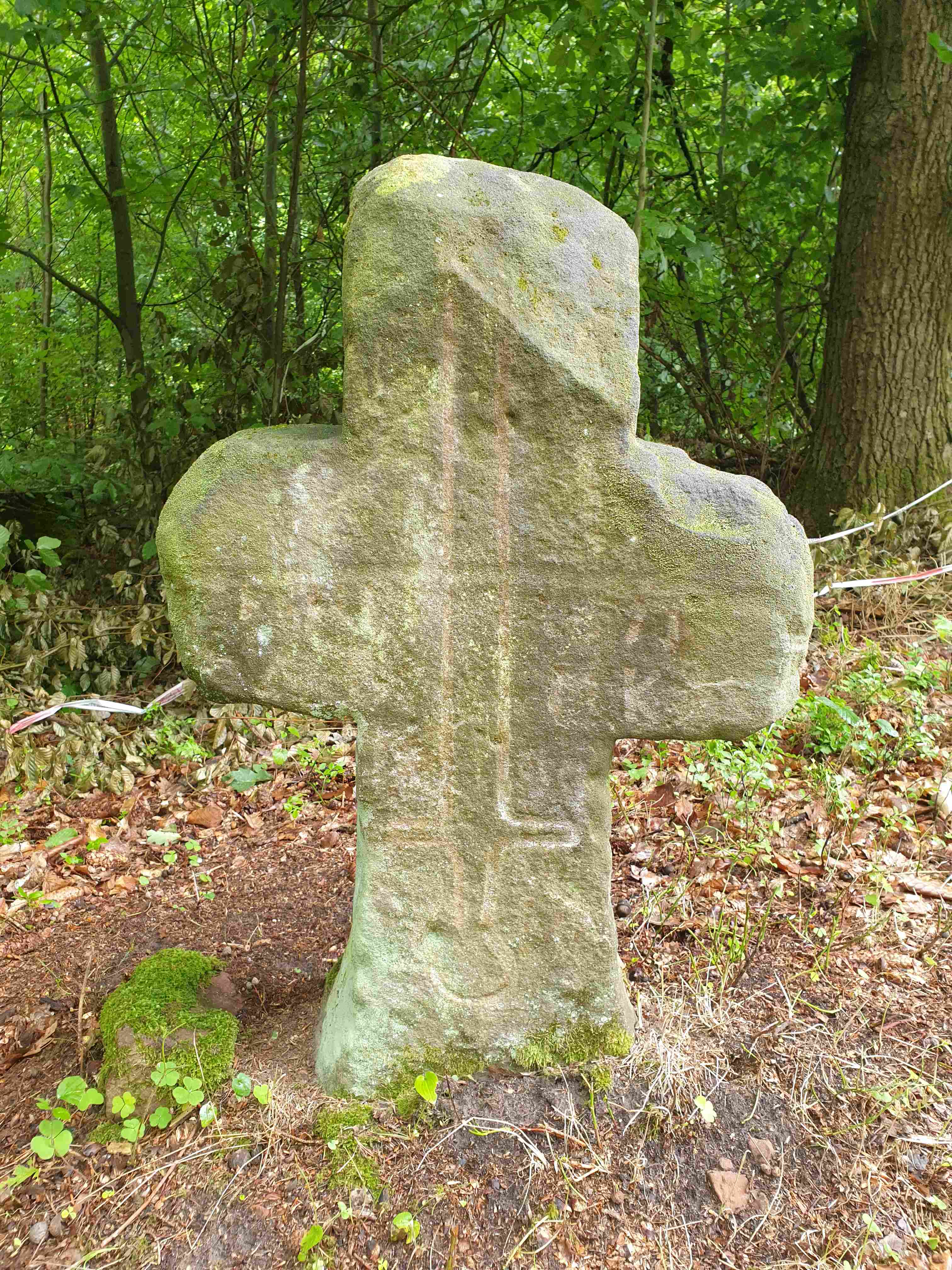
The Sühnekreuz in Waltersdorf stands as a poignant relic of medieval legal history, serving as a tangible connection to the customs of atonement that once defined regional justice. These stone crosses, often referred to as 'penitential crosses,' were historically erected by perpetrators of crimes as part of a settlement agreement—a 'Sühnevertrag'—to reconcile with the victim's family and the church. The Waltersdorf specimen is notable for its distinct physical characteristics, specifically a partial fracture on the right arm of the cross and a unique lateral protrusion at its base. Perhaps most compelling to modern researchers are the deep 'Wetzrillen'—sharpening grooves—visible on the reverse side of the stone. These grooves are believed to have been created by locals sharpening metal tools or weapons against the cross over centuries, a testament to the object's integration into the daily life and utility of the village long after its original legal purpose had faded. For those interested in medieval heritage and rural history, this site offers a rare glimpse into the intersection of ancient law and folk tradition. It remains an essential stop for anyone exploring the historical landscape of the region, providing excellent trip ideas for those who appreciate the quiet, enduring stories etched into stone. Visitors are encouraged to observe the craftsmanship and the physical wear on the monument, which serves as a silent witness to centuries of local evolution.
General information
The Sühnekreuz in Waltersdorf stands as a poignant relic of medieval legal history, serving as a tangible connection to the customs of atonement that once defined regional justice. These stone crosses, often referred to as 'penitential crosses,' were historically erected by perpetrators of crimes as part of a settlement agreement—a 'Sühnevertrag'—to reconcile with the victim's family and the church. The Waltersdorf specimen is notable for its distinct physical characteristics, specifically a partial fracture on the right arm of the cross and a unique lateral protrusion at its base. Perhaps most compelling to modern researchers are the deep 'Wetzrillen'—sharpening grooves—visible on the reverse side of the stone. These grooves are believed to have been created by locals sharpening metal tools or weapons against the cross over centuries, a testament to the object's integration into the daily life and utility of the village long after its original legal purpose had faded. For those interested in medieval heritage and rural history, this site offers a rare glimpse into the intersection of ancient law and folk tradition. It remains an essential stop for anyone exploring the historical landscape of the region, providing excellent trip ideas for those who appreciate the quiet, enduring stories etched into stone. Visitors are encouraged to observe the craftsmanship and the physical wear on the monument, which serves as a silent witness to centuries of local evolution.
Did you know
- Sühnekreuze were often erected as part of a legal settlement to avoid blood feuds.
- The 'Wetzrillen' (sharpening grooves) on the stone suggest that it was used by villagers to sharpen tools long after its initial placement.
- The Waltersdorf cross is distinguished by a specific partial fracture on its right arm.
History
The Sühnekreuz dates back to the late medieval period, a time when the 'Sühnevertrag' (atonement contract) was a common legal mechanism in Germany. These stone monuments were commissioned by offenders as a form of penance, often mandated by local courts or ecclesiastical authorities to appease the families of victims and restore social order. The cross in Waltersdorf serves as a physical record of such a judicial process. Over the subsequent centuries, the monument lost its original role as a site of legal reconciliation and instead became part of the village's physical fabric, as evidenced by the functional wear patterns such as the sharpening grooves found on its rear surface.
Cultural significance
These crosses represent a fascinating bridge between medieval judicial practices and folklore. While their origin is rooted in severe legal and religious obligations, their survival is due to their transition into local landmarks. They are considered important cultural monuments that document the evolution of the German legal system from private vengeance to institutionalized reconciliation. Today, they are protected as historical artifacts, serving as silent narrators of the social and moral climate of the Middle Ages, and are highly valued by historians and local history enthusiasts for the insight they provide into past community life.
Geography and landscape
The Sühnekreuz is situated in a rural setting, consistent with the placement of such medieval monuments along paths or crossroads. Its location in Waltersdorf places it within the broader landscape of Thuringia, characterized by rolling hills and traditional village structures. The stone itself is weathered, reflecting its exposure to the elements over hundreds of years. Its current environment is largely defined by the quiet, pastoral nature of the surrounding area, which allows the monument to stand as a solitary, contemplative historical marker amidst the natural scenery.
More facts
- Imported from OSM batch
Visitor links
Nearby attractions
- Franzosenkreuz Meusebach 1758 m
- Kursächsische Postmeilensäule 8964 m
- Steinkreuz 9666 m
- Totenstein 11420 m