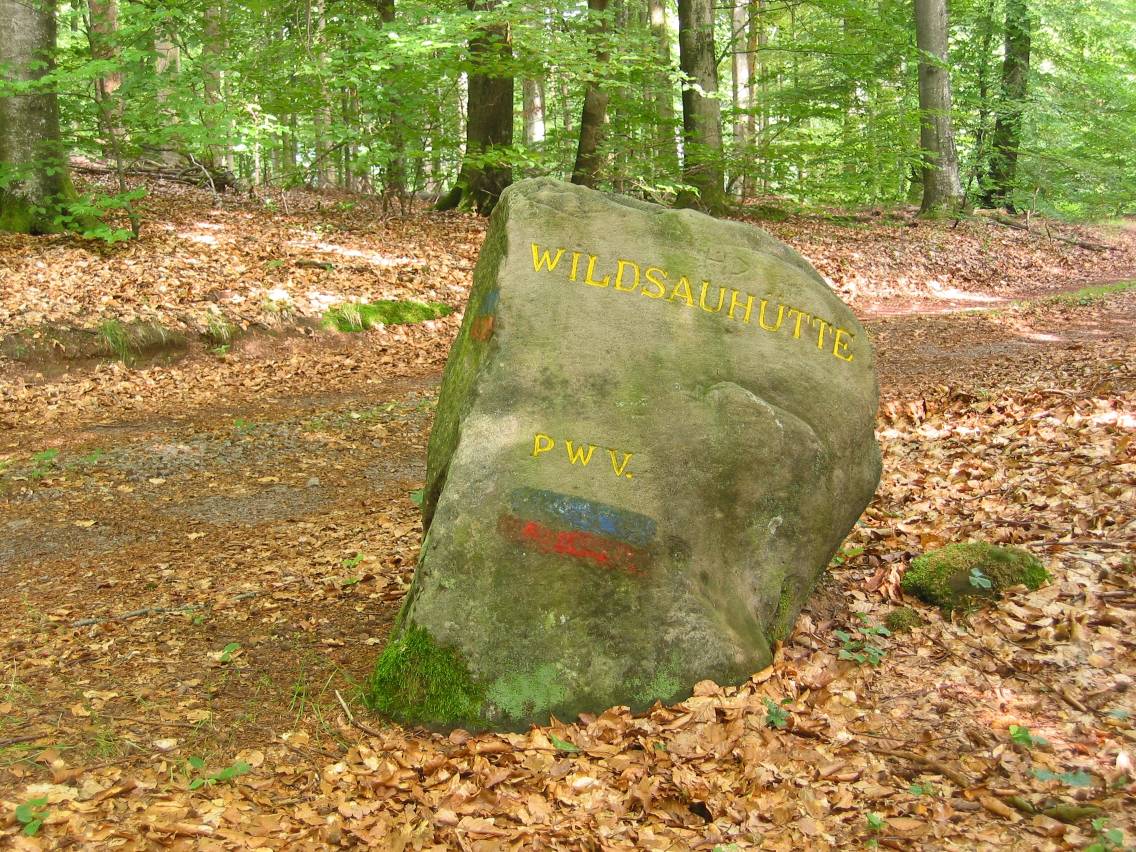
Ritterstein 50 "Wildsauhütte"
DE
- Location
- DE
- Category
- iconic bucket list
- Coordinates
- 49.2286241, 7.7990199
- Best time
- Morning or early afternoon
- Weather tip
- Check the local forecast before visiting.
Overview
Ritterstein 50, locally known as the 'Wildsauhütte,' is a significant historical marker located along the scenic hiking trail connecting Hinterweidenthal to the Hermersbergerhof. Situated in the Palatinate Forest of Germany, this site marks the former location of a rustic log cabin once utilized by foresters and woodworkers. For those seeking unique trip ideas, this site offers a glimpse into the region's industrial forestry heritage. Visitors to the area will find that the stone serves as a poignant reminder of the labor-intensive history of the Pfälzerwald. The marker is positioned strategically in the saddle between the Große Boll and the Hanseneck peaks, providing hikers with a quiet, reflective spot to pause during their journey. As you explore the surrounding trails, you will encounter various historical markers that define the landscape, making this an essential stop for history enthusiasts and avid hikers alike. Whether you are planning a day trip or looking for local attractions to round out your itinerary, the Ritterstein 50 provides a tangible connection to the past. The site is best enjoyed during the morning or early afternoon when the light filters through the dense canopy of the forest, highlighting the inscription on the stone. It is recommended to check the local weather forecast before heading out, as the terrain requires stable conditions for a comfortable hike.
General information
Ritterstein 50, locally known as the 'Wildsauhütte,' is a significant historical marker located along the scenic hiking trail connecting Hinterweidenthal to the Hermersbergerhof. Situated in the Palatinate Forest of Germany, this site marks the former location of a rustic log cabin once utilized by foresters and woodworkers. For those seeking unique trip ideas, this site offers a glimpse into the region's industrial forestry heritage. Visitors to the area will find that the stone serves as a poignant reminder of the labor-intensive history of the Pfälzerwald. The marker is positioned strategically in the saddle between the Große Boll and the Hanseneck peaks, providing hikers with a quiet, reflective spot to pause during their journey. As you explore the surrounding trails, you will encounter various historical markers that define the landscape, making this an essential stop for history enthusiasts and avid hikers alike. Whether you are planning a day trip or looking for local attractions to round out your itinerary, the Ritterstein 50 provides a tangible connection to the past. The site is best enjoyed during the morning or early afternoon when the light filters through the dense canopy of the forest, highlighting the inscription on the stone. It is recommended to check the local weather forecast before heading out, as the terrain requires stable conditions for a comfortable hike.
Did you know
- Rittersteine are sandstone markers found throughout the Palatinate Forest, documenting historical sites and geographical features.
- The term 'Wildsau' translates to 'wild sow' or 'boar', a common reference to the local wildlife found in the German forests.
- The Ritterstein 50 marks the site of a former forestry hut, illustrating the historical use of the land for timber production.
History
The Ritterstein 50 is part of a series of historical sandstone markers established in the Palatinate Forest. These markers were primarily installed to preserve the history of locations that would otherwise be forgotten, such as former forestry huts, historical boundaries, or significant natural features. The 'Wildsauhütte' itself served as a functional shelter for foresters and laborers who maintained the woodland. By the time the stone was erected, the original cabin had long since fallen into disrepair or been removed, making the stone a permanent memorial to the workers who once labored in this specific saddle of the mountain range.
Cultural significance
The Ritterstein system is a cultural phenomenon unique to the Pfälzerwald region. These stones represent a collective effort to document the cultural and social history of the forest. By commemorating sites like the Wildsauhütte, the community honors the legacy of forestry and the rugged lifestyle of the workers who shaped the landscape. These markers are highly regarded by local hiking associations, who maintain the trails and ensure the stones remain visible. They serve as cultural waypoints that connect modern hikers to the traditional, labor-oriented past of the German countryside.
Geography and landscape
The site is located in the heart of the Palatinate Forest, characterized by its dense canopy of pine and deciduous trees and dramatic sandstone rock formations. The Ritterstein 50 is situated specifically in a saddle, a topographic depression between two prominent elevations: the Große Boll and the Hanseneck. This geography creates a sheltered microclimate that was historically favorable for forestry camps. The surrounding landscape is rugged and typical of the low mountain ranges in southwestern Germany, featuring steep, forested slopes and well-trodden paths that offer expansive views of the valley once clearings are reached.
More facts
- Imported from OSM batch
Visitor links
Nearby attractions
- Ritterstein 40 "R. Granitzenhütte" 756 m
- Ritterstein 55 "Spalt" 1707 m
- Ritterstein 56 "Königswoog" 2523 m
- Ritterstein 52 "Eusserthaler Klostergut" 3181 m
- Ritterstein 54 Schäferei 3362 m
- Ritterstein 230 "Wieslauter Ursprung" 3443 m
- Ritterstein 60 "R. Jagdhaeuschen" 3624 m
- Ritterstein 231 "An der Karlsmühle" 4071 m