Ritterstein 17 "Fundstelle Biberkopf"
DE
- Location
- DE
- Category
- iconic bucket list
- Coordinates
- 49.0806729, 7.864068
- Best time
- Morning or early afternoon
- Weather tip
- Check the local forecast before visiting.
Overview
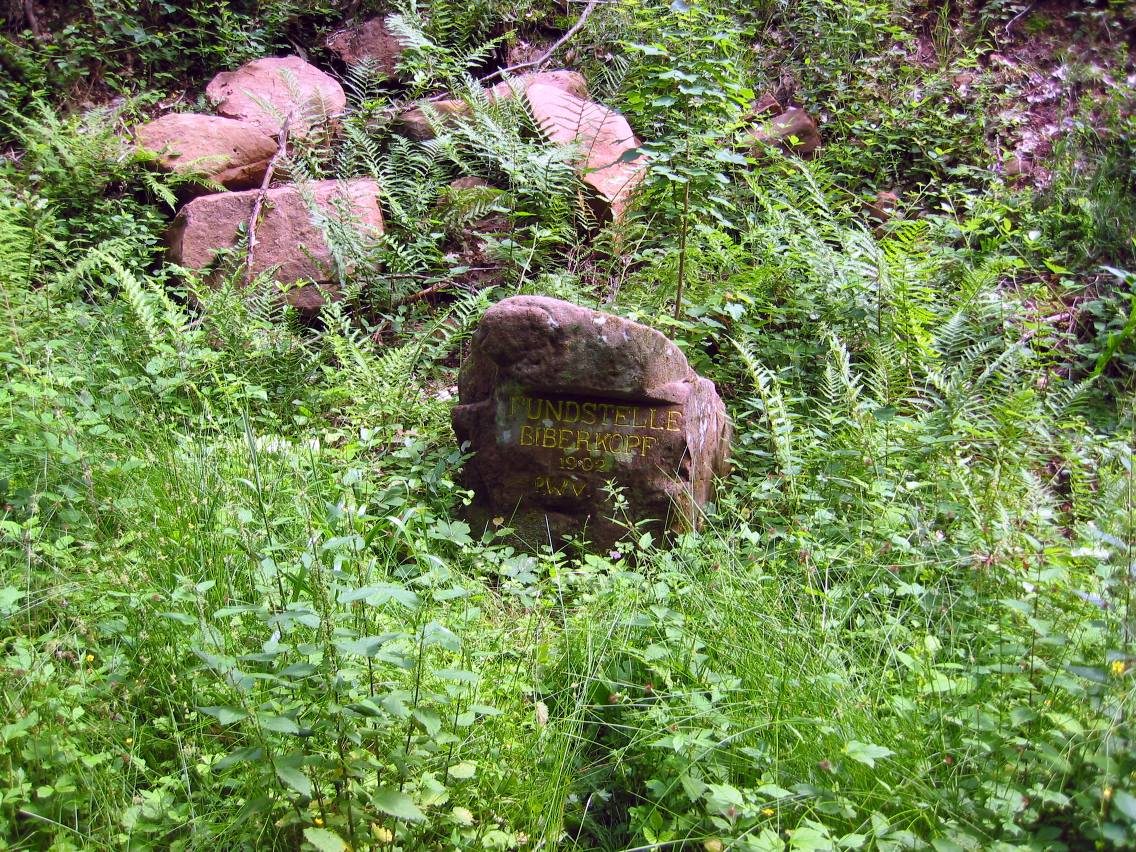
Ritterstein 17, known as 'Fundstelle Biberkopf,' is a unique geological and historical landmark situated in the Palatinate Forest region of Germany. Located approximately 800 meters north of the junction where the Portzbachtal valley meets the road leading toward Bobenthal, this site serves as a curious stop for hikers and history enthusiasts exploring the Pfälzerwald. The stone marks the specific location where, during road construction activities, a fossilized or skeletal remain—thought to be the skull of a beaver ('Biberkopf')—was discovered embedded within a rock crevice. While the site is modest in physical scale, it represents the tradition of 'Rittersteine,' stone markers placed throughout the region to denote points of historical, geological, or local interest. Visitors looking for unique trip ideas in the Palatinate region often include these markers in their itineraries to add a layer of discovery to their hikes. The area surrounding the site is characterized by the dense, scenic woodlands typical of the region, offering a peaceful atmosphere for those interested in natural history. When considering what to do in the area, a visit to this site provides a brief but fascinating glimpse into the prehistoric and construction history of the local landscape. It is recommended to visit during the morning or early afternoon to take full advantage of the natural light, and visitors should check the local weather forecast before heading out into the forest trails.
General information
Ritterstein 17, known as 'Fundstelle Biberkopf,' is a unique geological and historical landmark situated in the Palatinate Forest region of Germany. Located approximately 800 meters north of the junction where the Portzbachtal valley meets the road leading toward Bobenthal, this site serves as a curious stop for hikers and history enthusiasts exploring the Pfälzerwald. The stone marks the specific location where, during road construction activities, a fossilized or skeletal remain—thought to be the skull of a beaver ('Biberkopf')—was discovered embedded within a rock crevice. While the site is modest in physical scale, it represents the tradition of 'Rittersteine,' stone markers placed throughout the region to denote points of historical, geological, or local interest. Visitors looking for unique trip ideas in the Palatinate region often include these markers in their itineraries to add a layer of discovery to their hikes. The area surrounding the site is characterized by the dense, scenic woodlands typical of the region, offering a peaceful atmosphere for those interested in natural history. When considering what to do in the area, a visit to this site provides a brief but fascinating glimpse into the prehistoric and construction history of the local landscape. It is recommended to visit during the morning or early afternoon to take full advantage of the natural light, and visitors should check the local weather forecast before heading out into the forest trails.
Did you know
- Rittersteine are official historical markers maintained by the Pfälzerwald-Verein to preserve local site history.
- The term 'Biberkopf' refers to the beaver skull discovered during the construction of the road near the Portzbachtal.
- There are hundreds of such numbered stones scattered throughout the Palatinate Forest, each with its own story.
History
The history of Ritterstein 17 is tied to the mid-20th-century development of regional infrastructure. During the construction of the road leading toward Bobenthal, workers unearthed a fossilized or skeletal remain within a rock crevice. The discovery was identified as a potential beaver skull, leading to the designation of this site as the 'Fundstelle Biberkopf' (Beaver Skull Discovery Site). To ensure the location was not forgotten, it was marked as number 17 in the series of Rittersteine, a collection of sandstone markers established to document significant findings, historical events, and geographical curiosities throughout the Palatinate Forest.
Cultural significance
Rittersteine are culturally significant as they represent a grassroots effort to catalog the Palatinate Forest's heritage. Managed by the Pfälzerwald-Verein, these stones serve as physical links to the past, transforming a simple hiking trail into a narrative-driven landscape. For locals and hikers, Ritterstein 17 is a symbol of the curiosity inherent in regional exploration. It reflects a cultural appreciation for geology and the small, often overlooked historical anecdotes that define the identity of the Palatinate wilderness. It is a testament to the region's commitment to preserving its natural and historical discoveries for future generations of outdoor enthusiasts.
Geography and landscape
The site is located in the rugged, forested terrain of the Palatinate Forest (Pfälzerwald). The landscape is defined by dense deciduous and coniferous woodlands, characterized by sandstone formations and narrow valley systems like the Portzbachtal. The specific location of Ritterstein 17 is situated along a road corridor, making it accessible yet integrated into the wild, hilly topography of the region. The area is typical of the low mountain ranges in southwestern Germany, where the interplay between human-made road structures and the ancient, weathered sandstone bedrock creates a distinct, serene environment for visitors.
More facts
- Imported from OSM batch
Visitor links
Nearby attractions
- Ritterstein 193 "Drei Männer Weg" 1952 m
- Ritterstein 22 "Glückauf L. v. G. 1835" 2461 m
- Ritterstein 5 "Eselsschleifhäuschen" 2763 m
- Ritterstein 8 "Mundathütte" 3068 m
- Ritterstein 13 "Hirschtränke" 3082 m
- Ritterstein 18 "Hühnerfels" 3186 m
- Ritterstein 27 "Signal" 3693 m
- Ritterstein 11 "R. Buchbacherhof" 3969 m