Philadelphia's Magic Gardens
Philadelphia, US

- Location
- Philadelphia, US
- Category
- museums galleries
- Coordinates
- 39.942887, -75.159454
- Best time
- Morning or early afternoon
- Weather tip
- Check the local forecast before visiting.
- Opening hours
- We-Mo 11:00-18:00
Overview
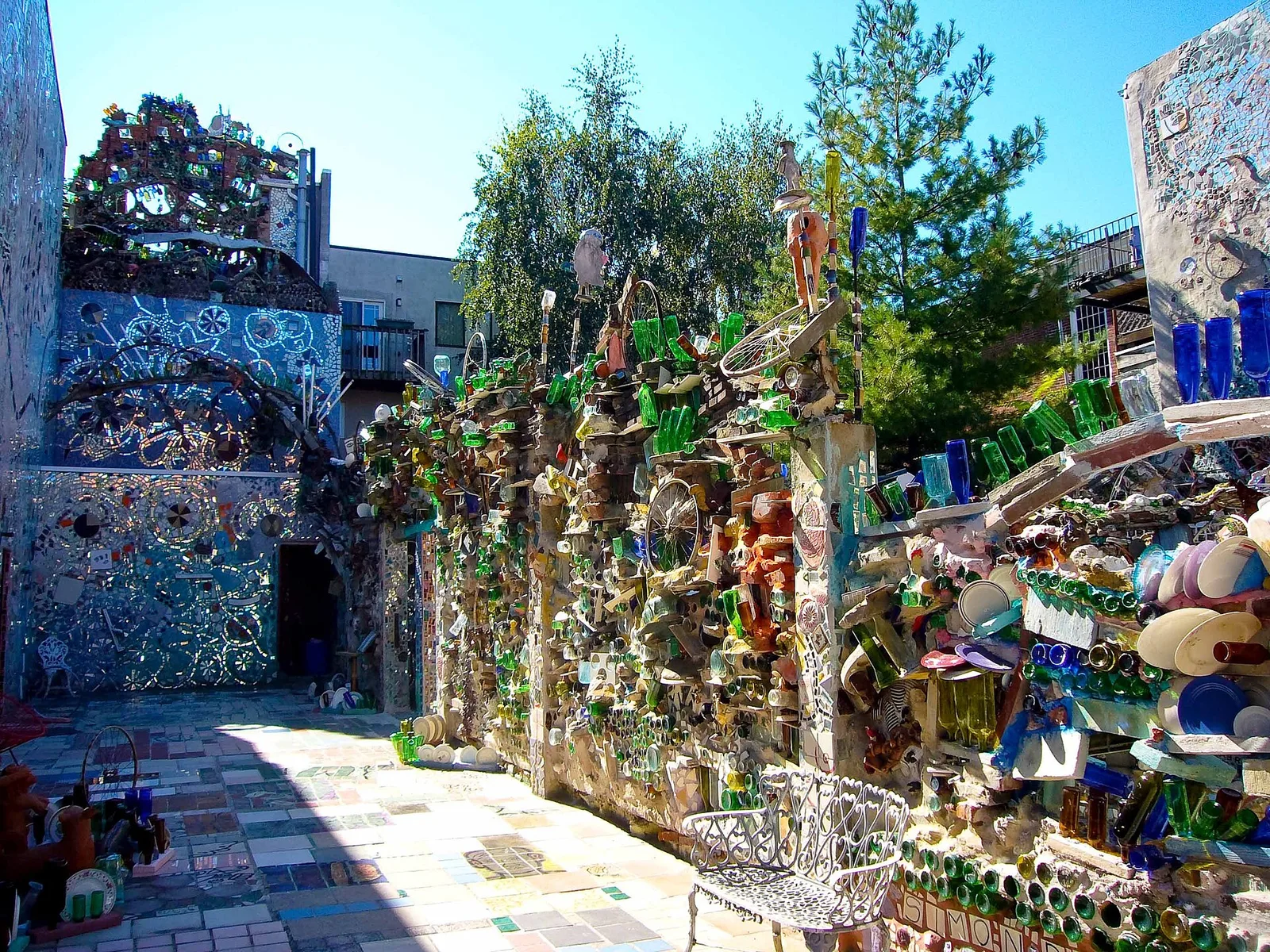
Philadelphia's Magic Gardens, located on South Street, stands as a sprawling, immersive folk art environment created by mosaic artist Isaiah Zagar. Spanning half a city block, the site serves as both a museum and a living piece of art, constructed primarily from found objects, including bicycle wheels, glass bottles, hand-made tiles, and mirrors. Visitors to this unique space can expect to walk through a labyrinthine series of corridors and courtyards, where every surface is intricately decorated with vibrant, hand-placed mosaics. The site is a testament to Zagar’s decades-long commitment to revitalizing the South Street neighborhood through artistic expression. As you explore the intricate walls and tunnels, you will find a complex narrative interwoven into the tiles, reflecting personal history and global cultural influences. For those planning trip ideas for their visit to Pennsylvania, this site is a quintessential stop for art enthusiasts and casual observers alike. It offers a profound look at how urban decay can be transformed into a vibrant cultural landmark. As one of the most distinct places to visit in Philadelphia, the Gardens provide an unparalleled experience that defies traditional museum conventions. Visitors are encouraged to explore the multi-level structure at their own pace, taking time to examine the thousands of individual pieces that form this massive, cohesive installation. It is recommended to arrive in the morning or early afternoon to fully appreciate the way natural light interacts with the glass and mirror surfaces.
General information
Philadelphia's Magic Gardens, located on South Street, stands as a sprawling, immersive folk art environment created by mosaic artist Isaiah Zagar. Spanning half a city block, the site serves as both a museum and a living piece of art, constructed primarily from found objects, including bicycle wheels, glass bottles, hand-made tiles, and mirrors. Visitors to this unique space can expect to walk through a labyrinthine series of corridors and courtyards, where every surface is intricately decorated with vibrant, hand-placed mosaics. The site is a testament to Zagar’s decades-long commitment to revitalizing the South Street neighborhood through artistic expression. As you explore the intricate walls and tunnels, you will find a complex narrative interwoven into the tiles, reflecting personal history and global cultural influences. For those planning trip ideas for their visit to Pennsylvania, this site is a quintessential stop for art enthusiasts and casual observers alike. It offers a profound look at how urban decay can be transformed into a vibrant cultural landmark. As one of the most distinct places to visit in Philadelphia, the Gardens provide an unparalleled experience that defies traditional museum conventions. Visitors are encouraged to explore the multi-level structure at their own pace, taking time to examine the thousands of individual pieces that form this massive, cohesive installation. It is recommended to arrive in the morning or early afternoon to fully appreciate the way natural light interacts with the glass and mirror surfaces.
Did you know
- The site covers approximately 3,000 square feet of mosaic-covered space.
- Isaiah Zagar began working on the site in the 1990s as part of a grassroots effort to beautify the neighborhood.
- The materials used include recycled items like ceramic shards, kitchen tiles, and even discarded bicycle parts.
History
The history of Philadelphia's Magic Gardens is deeply rooted in the artistic transformation of the South Street neighborhood. Starting in the 1960s, Isaiah Zagar and his wife, Julia, moved to the area and began creating mosaic murals on local buildings to combat urban blight. By the 1990s, Zagar began working on the vacant lots that now house the Magic Gardens. Facing a threat of development that would have destroyed the site, the community rallied to preserve the mosaic environment. This effort led to the formation of a non-profit organization in 2004, which successfully purchased the property, ensuring its permanent protection as a public art space.
Cultural significance
Philadelphia's Magic Gardens serves as a cornerstone of the South Street arts district, symbolizing the power of community-driven urban revitalization. The site is recognized as a significant example of folk art and mosaic installation in the United States. It challenges the traditional boundaries of a museum, inviting the public to engage with art in an open, non-hierarchical setting. By incorporating recycled materials, the Gardens also reflect a philosophy of sustainability and the reclamation of urban spaces, making it a vital cultural touchstone for contemporary public art discourse.
Geography and landscape
The Magic Gardens are situated in the dense urban fabric of Philadelphia’s South Street district. The site occupies a unique footprint that blends indoor and outdoor spaces, featuring a multi-level structure with subterranean tunnels and open-air courtyards. The terrain is entirely man-made, utilizing the walls of neighboring buildings as a canvas for the mosaic work. Because the site is open to the elements in several areas, the landscape is heavily influenced by the shifting natural light throughout the day, which illuminates the reflective glass and tile surfaces.
More facts
- Imported from OSM batch
- Imported from Wikidata
Visitor links
Nearby attractions
- John E. Fryer, M.D. Historic Marker 611 m
- Tomb of the Unknown Revolutionary War Soldier Philadelphia - 743 m
- Athenaeum of Philadelphia Philadelphia - 787 m
- Pennsylvania Bible Society Philadelphia - 810 m
- Jewelers' Row Philadelphia - 855 m
- Thaddeus Kosciuszko National Memorial Philadelphia - 1022 m
- Philadelphia History Museum Philadelphia - 1039 m
- Independence Hall Philadelphia - 1047 m