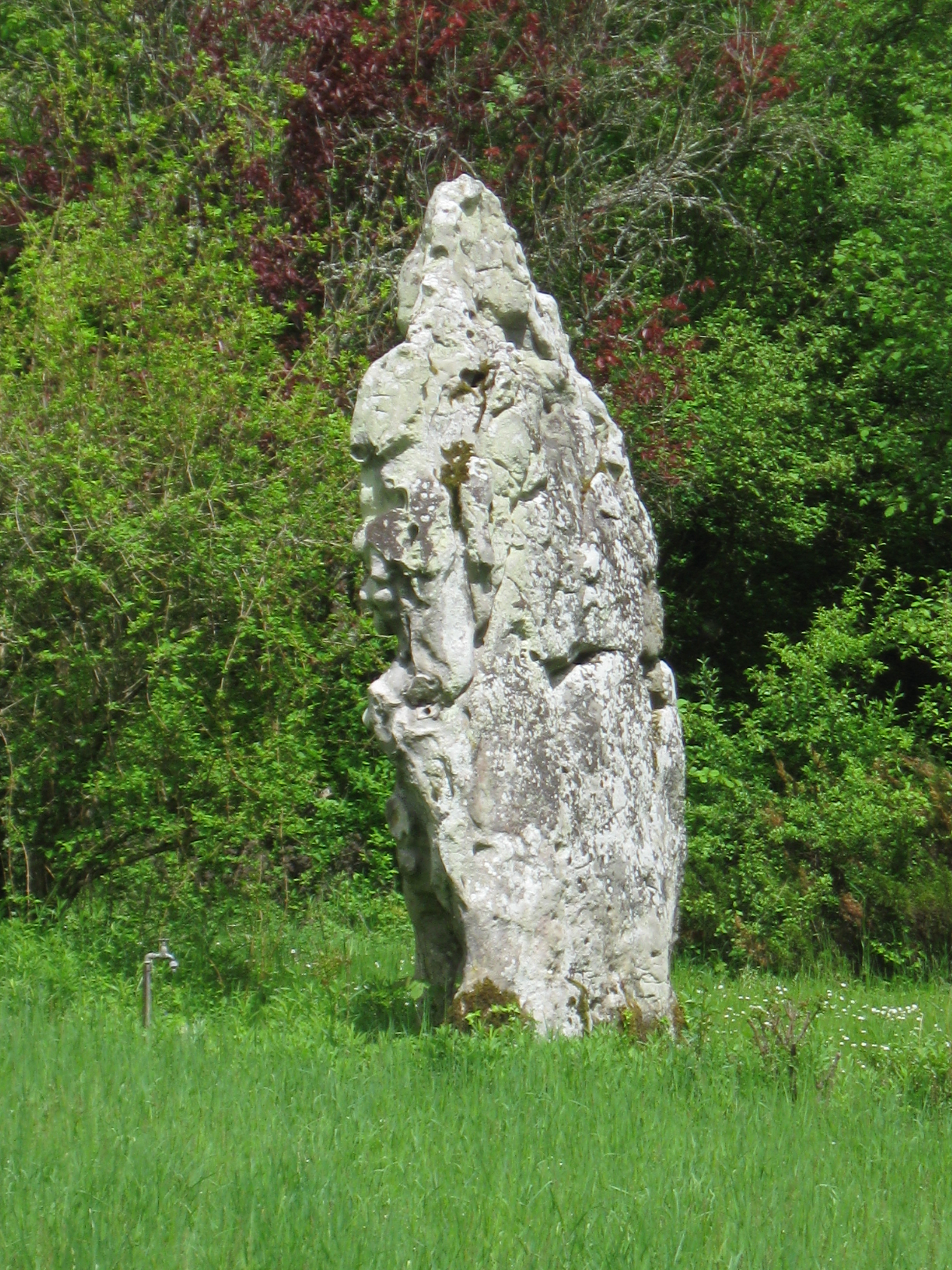
Menhir de Pierrefitte
FR
- Location
- FR
- Category
- heritage historic sites
- Coordinates
- 48.4288517, 2.1057969
- Best time
- Morning or early afternoon
- Weather tip
- Check the local forecast before visiting.
Overview
The Menhir de Pierrefitte stands as a significant megalithic monument, representing the prehistoric heritage of France. A menhir, derived from the Breton words 'men' (stone) and 'hir' (long), is a large upright standing stone erected during the Neolithic period. These structures are often associated with funerary practices, territorial markers, or ritualistic sites, though their precise original functions remain a subject of ongoing archaeological inquiry. Visitors to this site can expect to encounter an imposing stone monolith that has weathered millennia of environmental changes. The monument provides a tangible connection to the Neolithic societies that inhabited the region, offering a glimpse into the sophisticated social and symbolic structures of early human civilizations. When planning your visit, it is advisable to consider the site as a focal point for those interested in ancient history and megalithic architecture. As you explore the surrounding landscape, you will find that this site serves as an excellent reference for trip ideas centered on prehistoric archaeology. Whether you are a dedicated history enthusiast or a curious traveler, the Menhir de Pierrefitte offers a quiet, contemplative space to reflect on the deep history of the French landscape. It is recommended to visit during the morning or early afternoon to take advantage of natural lighting for photography and observation. Always verify the local weather forecast before heading out to ensure a comfortable excursion.
General information
The Menhir de Pierrefitte stands as a significant megalithic monument, representing the prehistoric heritage of France. A menhir, derived from the Breton words 'men' (stone) and 'hir' (long), is a large upright standing stone erected during the Neolithic period. These structures are often associated with funerary practices, territorial markers, or ritualistic sites, though their precise original functions remain a subject of ongoing archaeological inquiry. Visitors to this site can expect to encounter an imposing stone monolith that has weathered millennia of environmental changes. The monument provides a tangible connection to the Neolithic societies that inhabited the region, offering a glimpse into the sophisticated social and symbolic structures of early human civilizations. When planning your visit, it is advisable to consider the site as a focal point for those interested in ancient history and megalithic architecture. As you explore the surrounding landscape, you will find that this site serves as an excellent reference for trip ideas centered on prehistoric archaeology. Whether you are a dedicated history enthusiast or a curious traveler, the Menhir de Pierrefitte offers a quiet, contemplative space to reflect on the deep history of the French landscape. It is recommended to visit during the morning or early afternoon to take advantage of natural lighting for photography and observation. Always verify the local weather forecast before heading out to ensure a comfortable excursion.
Did you know
- The word 'menhir' comes from the Breton language and literally translates to 'long stone'.
- Menhirs were often erected by Neolithic communities using sophisticated lever and roller systems.
- Many menhirs in France have been classified as 'Monuments Historiques' to ensure their preservation for future generations.
History
The Menhir de Pierrefitte dates back to the Neolithic period, a time characterized by the development of agriculture and the construction of permanent stone monuments. These megaliths were typically placed between 4500 and 2000 BCE. While the specific construction date of the Menhir de Pierrefitte is difficult to pinpoint without localized excavation data, its presence signifies the long-standing human occupation of the area. These stones were often transported over significant distances, indicating a high level of communal organization and engineering capability among Neolithic populations. Over centuries, these monoliths have been integrated into local folklore and later historical landscapes, often surviving through agricultural shifts and land development that claimed other megalithic sites.
Cultural significance
As a prehistoric monolith, the Menhir de Pierrefitte represents a crucial link to the symbolic and spiritual life of early European societies. These stones are frequently interpreted as markers of sacred space, ancestral monuments, or astronomical alignments. In French cultural heritage, such sites are protected as markers of identity, connecting modern populations to the deep, pre-literate past of the region. The preservation of the menhir reflects a broader societal commitment to maintaining the physical remnants of early human history, allowing the public to engage directly with the mystery and monumentality of the Neolithic era.
Geography and landscape
The Menhir de Pierrefitte is situated within a landscape that likely reflects the traditional rural character of the region. These stones were typically placed in prominent positions—on ridges, near water sources, or in open fields—to ensure high visibility within the local topography. The surrounding area generally consists of open land, which allows the monolith to stand out as a vertical element against the horizon. The terrain is often characterized by the natural geology of the area, which provided the raw materials for these massive stone structures. Visitors should expect a rural, open-air setting that requires walking across natural ground.
More facts
- Imported from OSM batch
Visitor links
Nearby attractions
- Château de Méréville 12176 m