Upstalsboom
DE
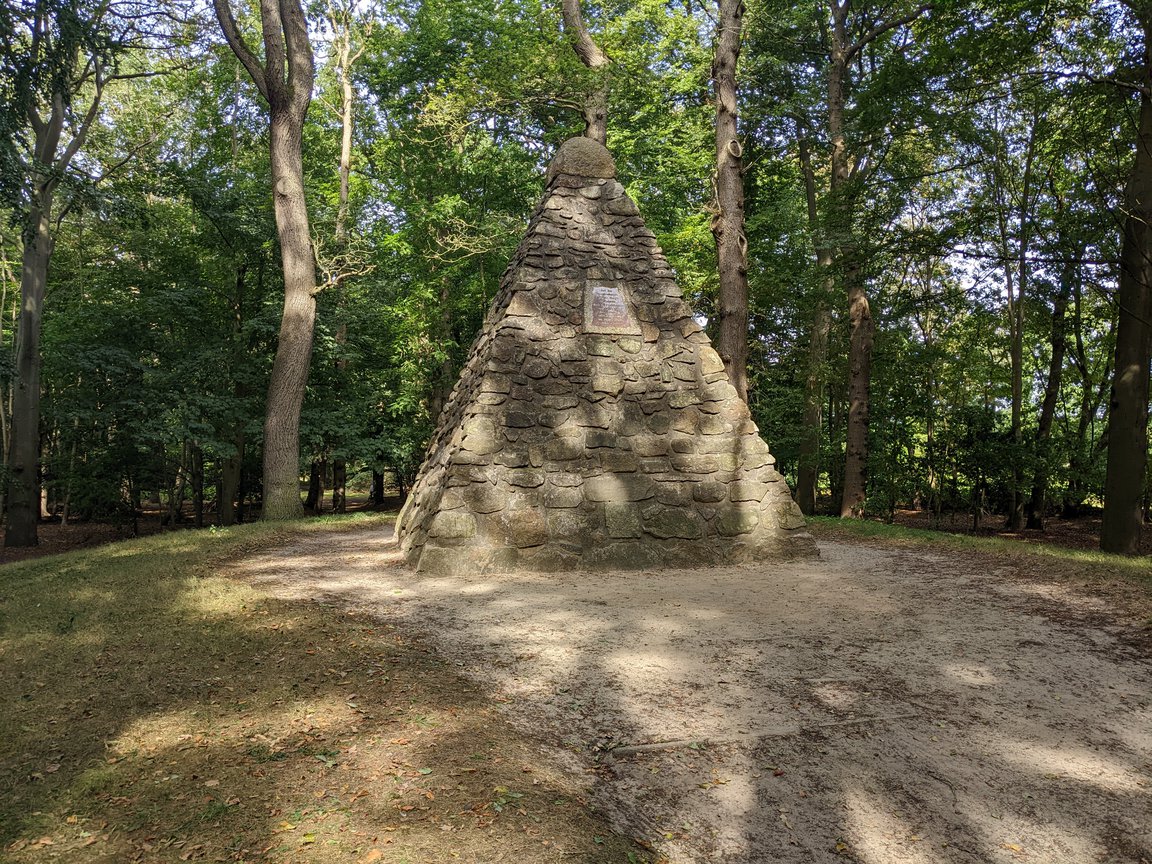
- Location
- DE
- Category
- heritage historic sites
- Coordinates
- 53.4540171, 7.431161
- Best time
- Morning or early afternoon
- Weather tip
- Check the local forecast before visiting.
Overview
The Upstalsboom, located near Aurich in East Frisia, Germany, stands as a significant historical monument representing the medieval autonomy of the Frisian people. Historically, this site served as the central meeting place for the Upstalsboom League, a confederation of various Frisian territories that gathered here annually on Pentecost to deliberate on legal issues and maintain their common liberties. Today, the site is recognized as a protected cultural monument, characterized by a memorial stone and an earthen mound that marks the location where these historic assemblies took place. Visitors interested in European legal history and regional heritage will find this site a compelling destination. When planning your trip ideas in this region, the Upstalsboom offers a quiet, reflective space to contemplate the evolution of democratic traditions in Northern Europe. The area is well-maintained and serves as a focal point for those exploring the rich history of the Frisian coast. Whether you are a history enthusiast or simply looking for unique places to visit, the site provides a tangible connection to the Middle Ages. It is recommended to visit during the morning or early afternoon to fully appreciate the serene landscape, and as with any outdoor historical site, it is advisable to check the local weather forecast before your arrival to ensure the most comfortable experience.
General information
The Upstalsboom, located near Aurich in East Frisia, Germany, stands as a significant historical monument representing the medieval autonomy of the Frisian people. Historically, this site served as the central meeting place for the Upstalsboom League, a confederation of various Frisian territories that gathered here annually on Pentecost to deliberate on legal issues and maintain their common liberties. Today, the site is recognized as a protected cultural monument, characterized by a memorial stone and an earthen mound that marks the location where these historic assemblies took place. Visitors interested in European legal history and regional heritage will find this site a compelling destination. When planning your trip ideas in this region, the Upstalsboom offers a quiet, reflective space to contemplate the evolution of democratic traditions in Northern Europe. The area is well-maintained and serves as a focal point for those exploring the rich history of the Frisian coast. Whether you are a history enthusiast or simply looking for unique places to visit, the site provides a tangible connection to the Middle Ages. It is recommended to visit during the morning or early afternoon to fully appreciate the serene landscape, and as with any outdoor historical site, it is advisable to check the local weather forecast before your arrival to ensure the most comfortable experience.
Did you know
- The name 'Upstalsboom' is derived from the Old Frisian words for 'up' (at), 'stal' (place/stall), and 'boom' (tree).
- The site was the traditional meeting point for representatives from all Frisian lands between the Weser and Lauwers rivers.
- The current memorial stone was erected in the 19th century to commemorate the site's historical importance.
History
The Upstalsboom gained prominence in the 13th and 14th centuries as the political center for the Frisian 'Landesgemeinden' (territorial communities). During this period, the Frisian territories operated without a centralized monarch, relying instead on these annual assemblies to uphold the 'Frisian Freedom.' Representatives met at this specific location to establish laws and settle disputes between the various territories. The decline of the Upstalsboom League occurred toward the end of the 14th century, as the influence of regional chieftains and neighboring powers grew, eventually leading to the loss of the traditional assembly's political function. The site remained a symbolic location, later becoming a focus for regional identity movements in the 19th century.
Cultural significance
The Upstalsboom is a profound symbol of Frisian identity and the historical concept of 'Frisian Freedom,' which emphasized local autonomy and communal decision-making. It represents a rare medieval experiment in self-governance that predates many modern democratic structures. Culturally, the site is deeply embedded in the regional consciousness of East Frisia, acting as a reminder of a time when the Frisian people were united by shared legal traditions and a commitment to independence. It remains a site of commemoration for historical and cultural associations, preserving the memory of the medieval League for future generations and serving as a testament to the enduring nature of regional heritage.
Geography and landscape
The Upstalsboom is situated in the rural landscape of East Frisia, near the town of Aurich. The site is characterized by an artificial earthen mound, which was historically significant for assembly gatherings. The surrounding area consists of typical North German lowland terrain, featuring green meadows, gentle slopes, and mature trees that provide a natural frame for the monument. The landscape is largely flat, reflecting the geography of the coastal plains, and the environment is quiet and rural, offering an atmosphere conducive to historical reflection. The site is accessible via local paths and is well-integrated into the surrounding agricultural and wooded landscape.
More facts
- Imported from OSM batch
Visitor links
Nearby attractions
- Hanni Wolff Aurich - 3306 m
- Klosterstätte Ihlow 5841 m