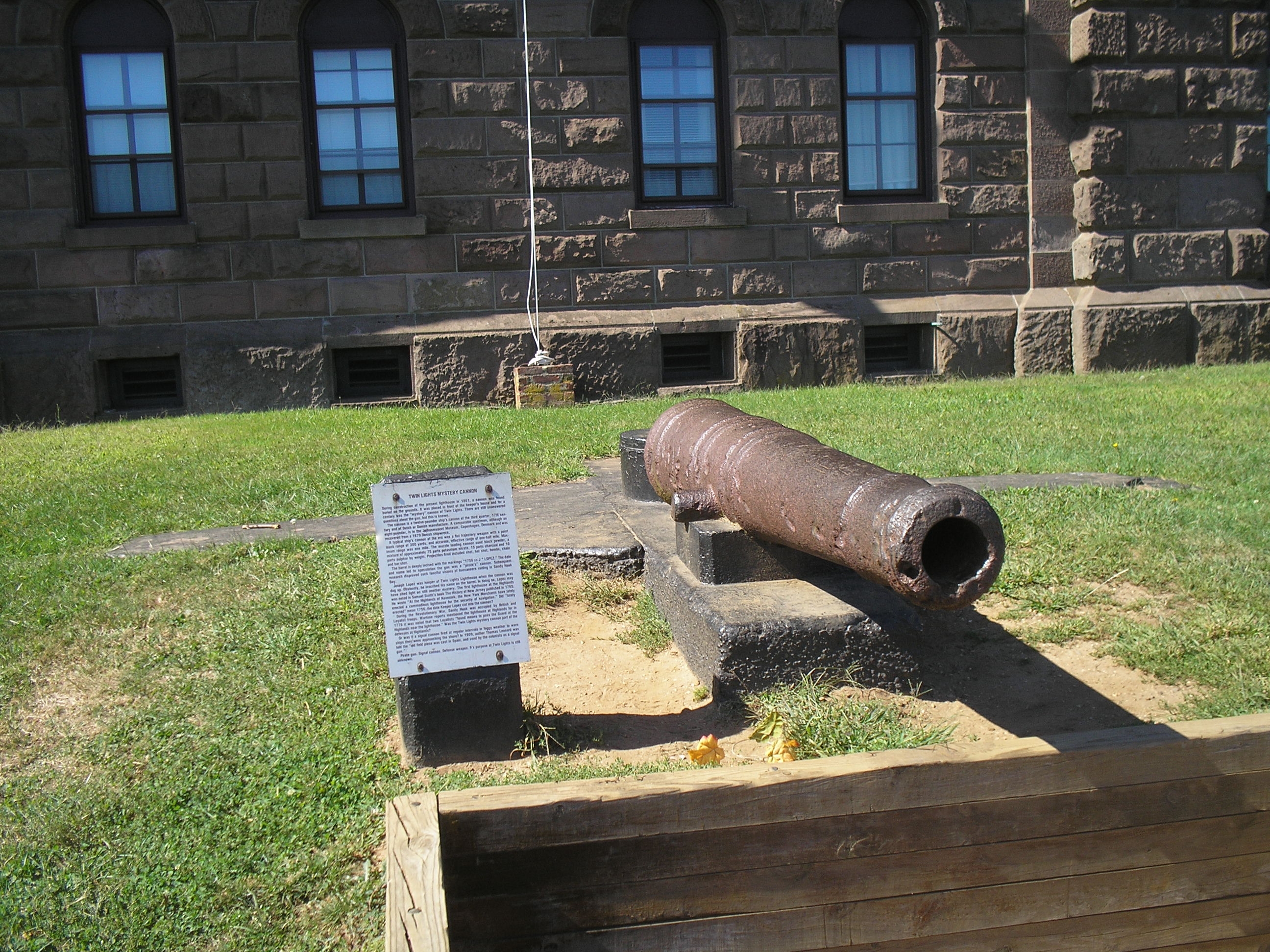
Twin Lights Mystery Cannon
US
- Location
- US
- Category
- heritage historic sites
- Coordinates
- 40.3963367, -73.9855685
- Best time
- Morning or early afternoon
- Weather tip
- Check the local forecast before visiting.
Overview
The Twin Lights Mystery Cannon, located at the Navesink Twin Lights Historic Site in Highlands, New Jersey, stands as a curious testament to 19th-century coastal defense. This historic artifact is a focal point for visitors exploring the grounds of the Twin Lights, a site renowned for its twin lighthouse towers that have guarded the entrance to New York Harbor since 1828. When considering what to do in the area, history enthusiasts often prioritize this site to examine the cannon's peculiar history and its association with the fortification of the New Jersey coastline. The cannon itself serves as a tangible link to the era when the Navesink highlands were considered a vital strategic point for maritime navigation and military observation. Visitors to the site can expect to walk through well-preserved grounds that offer panoramic views of the Atlantic Ocean and the Sandy Hook peninsula. As one of the notable places to visit for those interested in maritime heritage, the site provides a glimpse into the technological evolution of defense weaponry and lighthouse operations. The cannon’s presence sparks ongoing curiosity, serving as a conversation piece regarding the varied military equipment once utilized at this prominent coastal installation. Guests are encouraged to explore the museum exhibits nearby to better understand the broader context of the Twin Lights and the role this mysterious piece of artillery played in the local landscape.
General information
The Twin Lights Mystery Cannon, located at the Navesink Twin Lights Historic Site in Highlands, New Jersey, stands as a curious testament to 19th-century coastal defense. This historic artifact is a focal point for visitors exploring the grounds of the Twin Lights, a site renowned for its twin lighthouse towers that have guarded the entrance to New York Harbor since 1828. When considering what to do in the area, history enthusiasts often prioritize this site to examine the cannon's peculiar history and its association with the fortification of the New Jersey coastline. The cannon itself serves as a tangible link to the era when the Navesink highlands were considered a vital strategic point for maritime navigation and military observation. Visitors to the site can expect to walk through well-preserved grounds that offer panoramic views of the Atlantic Ocean and the Sandy Hook peninsula. As one of the notable places to visit for those interested in maritime heritage, the site provides a glimpse into the technological evolution of defense weaponry and lighthouse operations. The cannon’s presence sparks ongoing curiosity, serving as a conversation piece regarding the varied military equipment once utilized at this prominent coastal installation. Guests are encouraged to explore the museum exhibits nearby to better understand the broader context of the Twin Lights and the role this mysterious piece of artillery played in the local landscape.
Did you know
- The Navesink Twin Lights were the first in the United States to use a Fresnel lens.
- The site served as a testing ground for Guglielmo Marconi's wireless telegraphy experiments in 1899.
- The cannon is often called 'mysterious' because its exact origin and specific service record at this location remain a subject of historical study.
History
The Navesink Twin Lights site was established in 1828 to guide vessels safely into New York Harbor. The current brownstone towers were constructed in 1862. The presence of artillery pieces, including the 'Mystery Cannon,' reflects the site's dual role as a navigational aid and a strategic observation point for coastal defense. Throughout the late 19th and early 20th centuries, the site saw various military upgrades, including the installation of searchlights and communication equipment, which made it a critical node during periods of national concern regarding harbor security.
Cultural significance
The Twin Lights represent a significant cultural landmark for the Highlands community and the broader maritime history of New Jersey. The site is listed on the National Register of Historic Places, acknowledging its architectural importance and its role in maritime safety. The cannon, while an object of curiosity, contributes to the site's identity as a place where the history of technology—from lighthouse optics to early radio and defensive artillery—converges, offering an educational space for the public to engage with the past.
Geography and landscape
The Twin Lights are situated atop the Navesink Highlands, the highest point on the Atlantic coast south of Maine. This elevated position provides the site with a commanding view of the Sandy Hook peninsula, the Atlantic Ocean, and the New York City skyline. The landscape is characterized by steep bluffs that drop toward the Shrewsbury River and the Atlantic, creating a dramatic natural setting that has been utilized for maritime observation for centuries. The surrounding area remains largely protected as a historic site.
More facts
- Imported from OSM batch
Visitor links
Nearby attractions
- Gunnison Beach 7087 m
- Sandy Hook Light 7389 m