Trajan's Bridge Pillar
RO
- Location
- RO
- Category
- iconic bucket list
- Coordinates
- 44.6237815, 22.6670763
- Best time
- Morning or early afternoon
- Weather tip
- Check the local forecast before visiting.
Overview
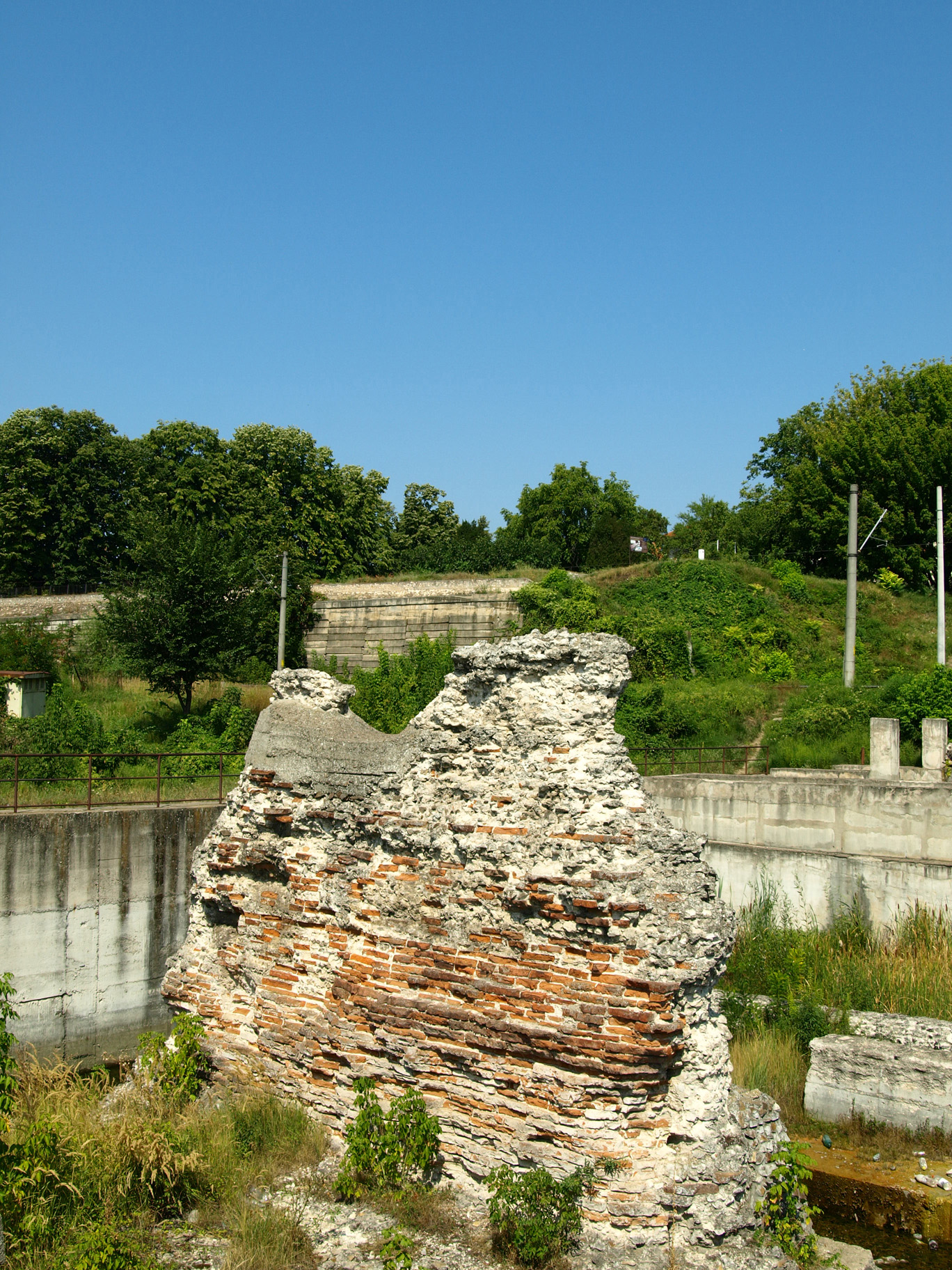
Trajan’s Bridge, spanning the Danube near the modern-day town of Drobeta-Turnu Severin, represents one of the most ambitious engineering feats of the Roman Empire. Constructed between 103 and 105 AD by the renowned architect Apollodorus of Damascus, this monumental structure was commissioned by Emperor Trajan to facilitate the Roman conquest of Dacia. Visitors traveling to this historic site can observe the remnants of the massive stone pillars that once supported the wooden arches of the bridge. As you explore the area, you will find it remains a cornerstone for those researching ancient infrastructure and Roman military logistics. For travelers looking for places to visit that offer a deep dive into antiquity, the site provides a tangible connection to the logistical genius required to traverse the Danube. While the bridge itself was dismantled centuries ago, the remaining pillar on the Romanian bank serves as a stark reminder of Roman dominance. It is highly recommended to plan your trip ideas around the morning or early afternoon hours, when the light best illuminates the stone masonry against the backdrop of the river. As a significant landmark in Romania, it offers a fascinating glimpse into a past where architecture was used as a tool for imperial expansion. Whether you are a history enthusiast or simply curious about ancient construction, this site is a essential stop for anyone exploring the historical landscape of the Danube region.
General information
Trajan’s Bridge, spanning the Danube near the modern-day town of Drobeta-Turnu Severin, represents one of the most ambitious engineering feats of the Roman Empire. Constructed between 103 and 105 AD by the renowned architect Apollodorus of Damascus, this monumental structure was commissioned by Emperor Trajan to facilitate the Roman conquest of Dacia. Visitors traveling to this historic site can observe the remnants of the massive stone pillars that once supported the wooden arches of the bridge. As you explore the area, you will find it remains a cornerstone for those researching ancient infrastructure and Roman military logistics. For travelers looking for places to visit that offer a deep dive into antiquity, the site provides a tangible connection to the logistical genius required to traverse the Danube. While the bridge itself was dismantled centuries ago, the remaining pillar on the Romanian bank serves as a stark reminder of Roman dominance. It is highly recommended to plan your trip ideas around the morning or early afternoon hours, when the light best illuminates the stone masonry against the backdrop of the river. As a significant landmark in Romania, it offers a fascinating glimpse into a past where architecture was used as a tool for imperial expansion. Whether you are a history enthusiast or simply curious about ancient construction, this site is a essential stop for anyone exploring the historical landscape of the Danube region.
Did you know
- The bridge was designed by Apollodorus of Damascus, the same architect who designed Trajan's Forum in Rome.
- It held the record as the longest arch bridge in the world for over 1,000 years.
- The structure consisted of 20 masonry pillars and wooden arches, spanning a total length of 1,135 meters.
- The bridge was depicted on Trajan's Column in Rome, which commemorates the Dacian Wars.
History
Commissioned by Emperor Trajan, the bridge was built in record time between 103 and 105 AD to support the Roman legions during the invasion of Dacia. Apollodorus of Damascus utilized innovative hydraulic cement and massive stone piers to withstand the powerful currents of the Danube. Despite its brilliance, the bridge had a relatively short functional life. It was reportedly dismantled or allowed to fall into disrepair by Emperor Hadrian around 270 AD to prevent barbarian incursions into the empire. The remaining pillar on the Romanian shore stands as a testament to the sophisticated Roman engineering techniques that allowed for the rapid movement of troops and supplies across one of Europe's most formidable rivers.
Cultural significance
Trajan’s Bridge is a symbol of Roman technological superiority and the strategic importance of the Danube frontier. Culturally, it represents the moment of encounter between the Roman Empire and the Dacian civilization, an event that fundamentally shaped the history and language of modern Romania. The bridge is not merely a ruin; it is a cultural icon of the 'Romanization' process. Its depiction on Trajan's Column ensures its place in the collective memory of Western civilization as a pinnacle of ancient civil engineering, representing the transition from military necessity to historical monument.
Geography and landscape
The site is located along the banks of the Danube River, which serves as a natural border between Romania and Serbia. The terrain is characterized by the river's wide, powerful flow and the surrounding alluvial plains. The remaining pillar is situated in a location that emphasizes the strategic nature of the crossing point. The landscape is largely riverine, with the modern infrastructure of Drobeta-Turnu Severin nearby. The proximity to the river provides a dramatic setting, where the ancient stone masonry contrasts sharply with the natural, ever-changing waters of the Danube.
More facts
- Imported from OSM batch
Visitor links
Nearby attractions
- Ruins of Severin Fortress Drobeta-Turnu Severin - 877 m
- Trajan's Bridge 1074 m
- Fetislam Fortress 5222 m
- Diana Fortress 10304 m
- Trajan's Plaque 28572 m