Temple de l'Amour
FR
- Location
- FR
- Category
- iconic bucket list
- Coordinates
- 48.816107, 2.112102
- Best time
- Morning or early afternoon
- Weather tip
- Check the local forecast before visiting.
Overview
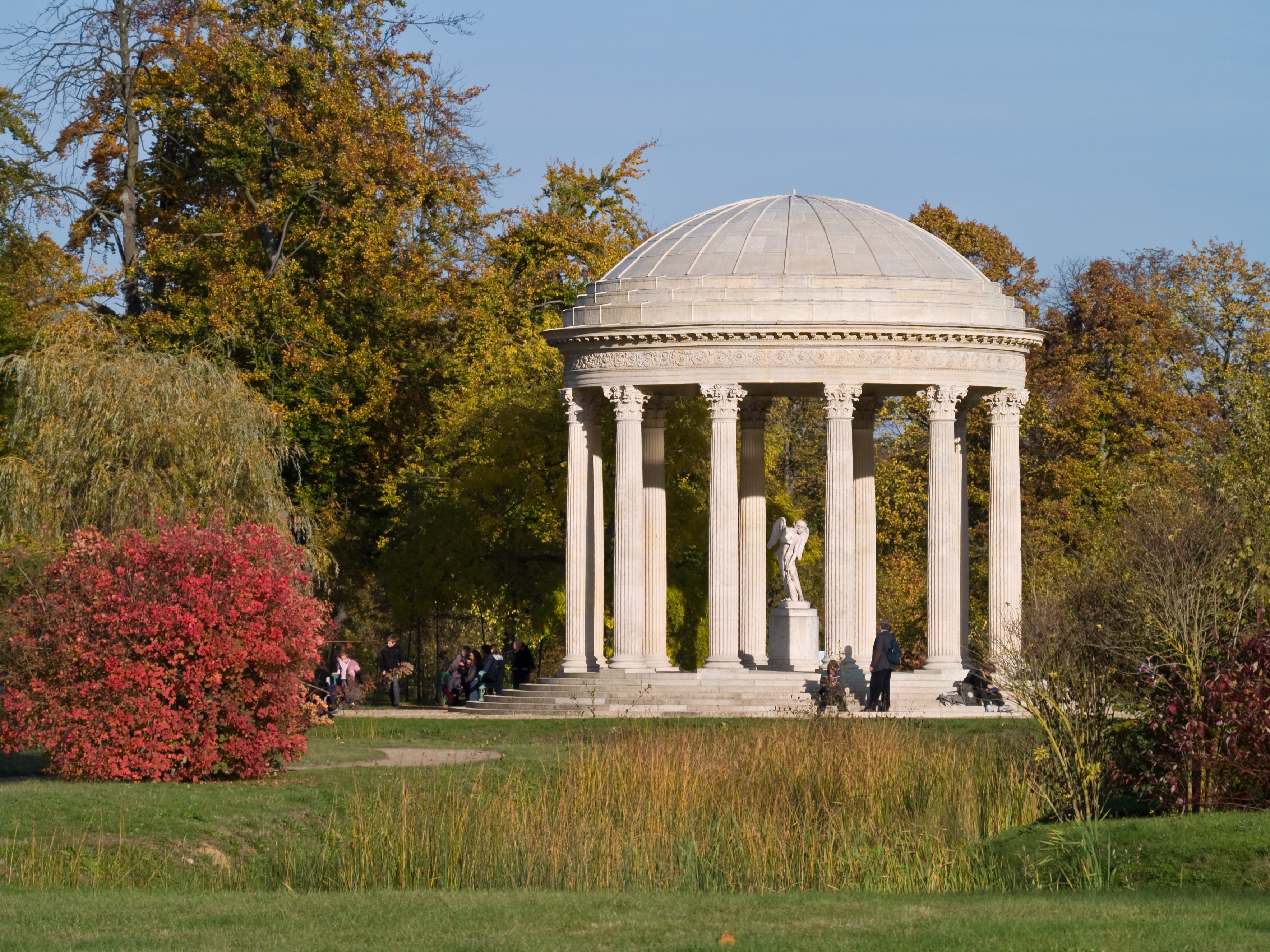
The Temple de l'Amour, most famously located within the gardens of the Petit Trianon at the Palace of Versailles, is a neoclassical architectural masterpiece that serves as a quintessential example of 18th-century garden follies. Commissioned by Queen Marie Antoinette and designed by architect Richard Mique, the temple was completed in 1778. It stands as a focal point of the English-style landscape garden, designed to offer a romantic, idealized retreat from the rigid formality of the main palace grounds. Visitors to this site are treated to a structure featuring a circular colonnade of Corinthian columns supporting a domed roof, housing a replica of Bouchardon’s statue, 'Cupid Cutting His Bow from the Club of Hercules.' When planning your trip ideas for the Versailles estate, this temple remains a must-see for those interested in the transition from Baroque excess to the more intimate, nature-focused aesthetics of the late 1700s. The site is best experienced during the morning hours, when the soft light filters through the surrounding trees, highlighting the intricate stonework. As you explore the wider grounds, you will find that the temple offers a peaceful vantage point, perfect for photography and quiet reflection. It remains one of the most significant architectural landmarks for anyone looking for places to visit that capture the refined, yet melancholic, elegance of the French monarchy's final years.
General information
The Temple de l'Amour, most famously located within the gardens of the Petit Trianon at the Palace of Versailles, is a neoclassical architectural masterpiece that serves as a quintessential example of 18th-century garden follies. Commissioned by Queen Marie Antoinette and designed by architect Richard Mique, the temple was completed in 1778. It stands as a focal point of the English-style landscape garden, designed to offer a romantic, idealized retreat from the rigid formality of the main palace grounds. Visitors to this site are treated to a structure featuring a circular colonnade of Corinthian columns supporting a domed roof, housing a replica of Bouchardon’s statue, 'Cupid Cutting His Bow from the Club of Hercules.' When planning your trip ideas for the Versailles estate, this temple remains a must-see for those interested in the transition from Baroque excess to the more intimate, nature-focused aesthetics of the late 1700s. The site is best experienced during the morning hours, when the soft light filters through the surrounding trees, highlighting the intricate stonework. As you explore the wider grounds, you will find that the temple offers a peaceful vantage point, perfect for photography and quiet reflection. It remains one of the most significant architectural landmarks for anyone looking for places to visit that capture the refined, yet melancholic, elegance of the French monarchy's final years.
Did you know
- The temple houses a marble replica of Edmé Bouchardon’s famous sculpture of Cupid.
- It was designed by Richard Mique, the Queen's favorite architect, who also worked on the Hamlet of the Queen.
- The structure is a classic example of an 'English garden folly,' intended to create a picturesque, romantic atmosphere.
History
Constructed in 1778, the Temple de l'Amour was a central component of Marie Antoinette's private domain at the Petit Trianon. During the late 18th century, the French aristocracy moved away from the strict, geometric designs of the era of Louis XIV toward the 'jardin à l'anglaise,' or English landscape garden, which emphasized naturalism and emotional resonance. The temple was built to serve as a visual anchor in this new, more intimate landscape. Its design, inspired by ancient Greek and Roman architecture, reflects the neoclassical movement that dominated European art and design during the Enlightenment. The temple survived the turbulence of the French Revolution, remaining a protected, if sometimes neglected, monument within the expansive Versailles estate throughout the 19th and 20th centuries.
Cultural significance
The Temple de l'Amour holds significant cultural value as a symbol of the private life of Marie Antoinette. It represents the Queen's desire to escape the suffocating protocol of the court and retreat into a space that emphasized pastoral simplicity and romanticism. Culturally, it marks a pivotal moment in European garden design, where the garden became a place for personal expression rather than just a display of royal power. Today, it is recognized as a heritage site that helps historians and visitors alike understand the aesthetic shifts of the late 18th century, serving as a poignant reminder of the luxury and the eventual decline of the Ancien Régime.
Geography and landscape
The temple is situated on an artificial island within the gardens of the Petit Trianon at Versailles. It is surrounded by a small, tranquil stream and lush, intentionally landscaped greenery that contrasts sharply with the vast, manicured lawns of the main palace. The terrain is relatively flat, typical of the Ile-de-France region, but the area surrounding the temple is carefully curated to feel like a secluded woodland clearing. The placement of the temple on an island, accessible by small paths, reinforces the sense of isolation and privacy that the Queen sought when commissioning the space. The surrounding landscape features mature trees and winding paths that encourage a slower, more contemplative pace of exploration.
More facts
- Imported from OSM batch
Visitor links
Nearby attractions
- Grotte 269 m
- Le Moulin 290 m
- La Maison de la Reine 325 m
- Ancienne Ménagerie 357 m
- La Maison du Billard 361 m
- Laocoon 507 m
- Galerie des Cotelle 547 m
- Péristyle 571 m