Stefan Zweig
Salzburg, IL
- Location
- Salzburg, IL
- Category
- iconic bucket list
- Coordinates
- 47.8027592, 13.0472879
- Best time
- Morning or early afternoon
- Weather tip
- Check the local forecast before visiting.
Overview
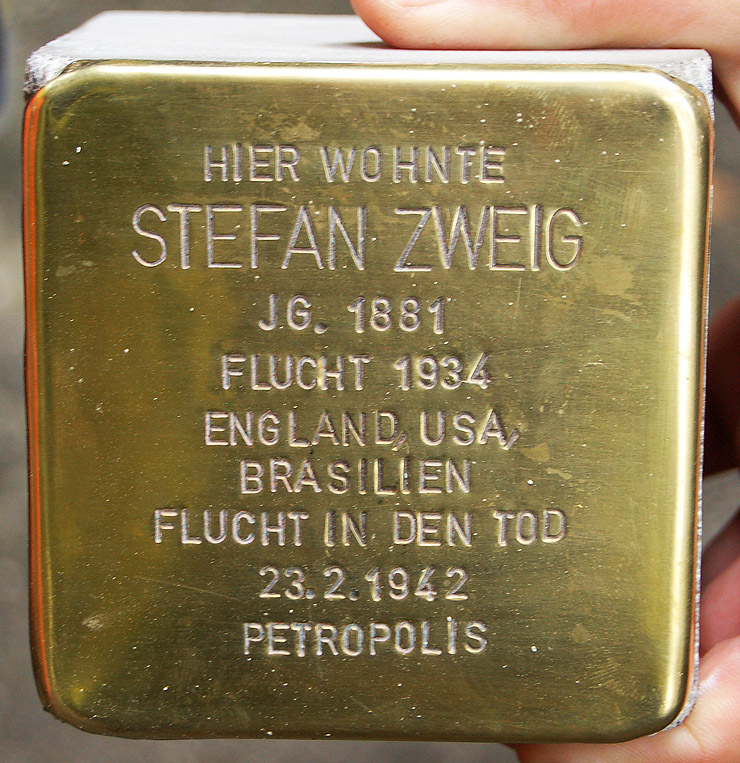
The Stefan Zweig legacy in Salzburg is intrinsically linked to the history of the Austrian-born Jewish writer who sought refuge and intellectual sanctuary in the city between 1919 and 1934. Zweig, one of the most translated and widely read authors of the interwar period, resided at the Kapuzinerberg, where he hosted prominent cultural figures of his time. Today, visitors exploring the city's rich intellectual heritage often seek out markers and memorial sites dedicated to his life and work. As you plan your trip, consider that visiting these commemorative locations offers a profound look into the life of an artist whose career was irrevocably altered by the rise of National Socialism. These sites serve as essential destinations for those interested in the cultural history of the region and are often included in broader itineraries of local attractions. While there is no single 'Stefan Zweig Museum' that encompasses his entire life, the various Stolpersteine (stumbling stones) and plaque installations across Salzburg provide a poignant, self-guided experience. For travelers seeking meaningful trip ideas, mapping these historical points offers a unique perspective on the city's complex past. Whether you are a dedicated reader of his novellas or a student of 20th-century history, these locations provide a quiet, reflective space to engage with the legacy of a man who viewed Salzburg as a central stage for European humanism.
General information
The Stefan Zweig legacy in Salzburg is intrinsically linked to the history of the Austrian-born Jewish writer who sought refuge and intellectual sanctuary in the city between 1919 and 1934. Zweig, one of the most translated and widely read authors of the interwar period, resided at the Kapuzinerberg, where he hosted prominent cultural figures of his time. Today, visitors exploring the city's rich intellectual heritage often seek out markers and memorial sites dedicated to his life and work. As you plan your trip, consider that visiting these commemorative locations offers a profound look into the life of an artist whose career was irrevocably altered by the rise of National Socialism. These sites serve as essential destinations for those interested in the cultural history of the region and are often included in broader itineraries of local attractions. While there is no single 'Stefan Zweig Museum' that encompasses his entire life, the various Stolpersteine (stumbling stones) and plaque installations across Salzburg provide a poignant, self-guided experience. For travelers seeking meaningful trip ideas, mapping these historical points offers a unique perspective on the city's complex past. Whether you are a dedicated reader of his novellas or a student of 20th-century history, these locations provide a quiet, reflective space to engage with the legacy of a man who viewed Salzburg as a central stage for European humanism.
Did you know
- Stefan Zweig was one of the most translated authors in the world during the 1930s.
- Zweig lived at the Kapuzinerberg in Salzburg for 15 years, a house he called his 'Eremitage' (hermitage).
- The 'Stolpersteine' project, which includes markers for Zweig's associates, is the world's largest decentralized memorial.
History
Stefan Zweig moved to Salzburg in 1919, seeking peace after the devastation of World War I. He purchased a house on the Kapuzinerberg, which became a meeting point for the European intelligentsia, including figures like Richard Strauss and Arturo Toscanini. Following the rise of the Nazi party in Germany and the increasing political instability in Austria, Zweig's works were banned and eventually burned. He left Salzburg in 1934, initially moving to London before eventually emigrating to Brazil. His departure marked the end of a golden era of literary activity in the city. The physical remnants of his time in Salzburg—primarily plaques and memorial stones—serve as a historical record of his forced exile and the subsequent erasure of his influence during the Nazi occupation.
Cultural significance
Zweig is regarded as a symbol of the intellectual "Old Europe" that prioritized pacifism, humanism, and internationalism. His cultural significance in Salzburg is rooted in the tension between his immense popularity as a writer and his status as a persecuted Jewish intellectual. The memorials dedicated to him and his contemporaries act as a focal point for modern discourse on memory, displacement, and the responsibility of cities to acknowledge their past. By honoring his presence, Salzburg reclaims a vital part of its cultural identity that was suppressed during the mid-20th century, fostering a deeper public understanding of the impact of totalitarianism on the arts.
Geography and landscape
The sites associated with Stefan Zweig are primarily located within the urban fabric of Salzburg, particularly around the Kapuzinerberg hill. This area is characterized by its steep, forested slopes and historic fortification walls that overlook the Salzach River and the Altstadt (Old Town). The landscape is a mix of dense medieval architecture and elevated natural terrain, providing a dramatic backdrop that Zweig himself often described in his letters as a source of inspiration. Visitors navigating these sites will encounter narrow, winding streets and elevated viewpoints that offer panoramic perspectives of the Salzburg skyline, contrasting the quiet, contemplative nature of the memorial sites with the bustling activity of the city below.
More facts
- Imported from OSM Overpass
Visitor links
Nearby attractions
- Alexia Winternitz Salzburg - 1 m
- Friderike Zweig-Winternitz Salzburg - 2 m
- Susanna Winternitz Salzburg - 2 m
- Theodor Kurtz Salzburg - 66 m
- Elise Therese Scheckenberger Salzburg - 69 m
- Elvira Posch Salzburg - 70 m
- Heinrich Weber Salzburg - 78 m
- Olga Sachsel-Lichtenstein Salzburg - 79 m