Ruderi di Montevago
IT
- Location
- IT
- Category
- heritage historic sites
- Coordinates
- 37.7066954, 12.9721545
- Best time
- Morning or early afternoon
- Weather tip
- Check the local forecast before visiting.
Overview
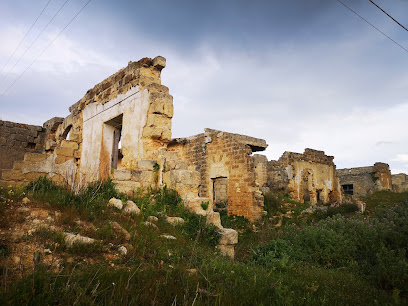
The Ruderi di Montevago, or the Ruins of Montevago, represent a poignant historical site located in Sicily, Italy. These remains serve as a stark, silent witness to the catastrophic Belice earthquake that struck the region on the night of January 14–15, 1968. The seismic event decimated the original town, forcing the population to abandon their ancestral homes and relocate to a newly constructed settlement nearby. Today, visitors encounter a hauntingly preserved 'ghost town' where the skeletal remains of residential buildings, churches, and civic structures stand frozen in time. Exploring this site offers a profound opportunity to contemplate the fragility of human settlements in the face of tectonic forces. As you wander through the debris-strewn streets, the remnants of domestic life—once vibrant and bustling—provide a somber contrast to the surrounding natural landscape. For travelers seeking meaningful trip ideas, the site provides a unique perspective on the intersection of geological history and human resilience. While the ruins are a somber destination, they remain a significant landmark for those interested in mid-20th-century Italian history and urban archaeology. Visitors are encouraged to explore the area with respect for the tragedy that occurred here, as it remains a vital site for understanding the regional heritage of the Belice Valley. When planning your itinerary, consider these ruins as a central component of your historical explorations in Sicily.
General information
The Ruderi di Montevago, or the Ruins of Montevago, represent a poignant historical site located in Sicily, Italy. These remains serve as a stark, silent witness to the catastrophic Belice earthquake that struck the region on the night of January 14–15, 1968. The seismic event decimated the original town, forcing the population to abandon their ancestral homes and relocate to a newly constructed settlement nearby. Today, visitors encounter a hauntingly preserved 'ghost town' where the skeletal remains of residential buildings, churches, and civic structures stand frozen in time. Exploring this site offers a profound opportunity to contemplate the fragility of human settlements in the face of tectonic forces. As you wander through the debris-strewn streets, the remnants of domestic life—once vibrant and bustling—provide a somber contrast to the surrounding natural landscape. For travelers seeking meaningful trip ideas, the site provides a unique perspective on the intersection of geological history and human resilience. While the ruins are a somber destination, they remain a significant landmark for those interested in mid-20th-century Italian history and urban archaeology. Visitors are encouraged to explore the area with respect for the tragedy that occurred here, as it remains a vital site for understanding the regional heritage of the Belice Valley. When planning your itinerary, consider these ruins as a central component of your historical explorations in Sicily.
Did you know
- The 1968 Belice earthquake measured 6.4 on the Richter scale.
- The site is often referred to as a 'ghost town' due to the immediate abandonment of the area following the earthquake.
- Many of the original town's architectural features were preserved in their damaged state to serve as a memorial.
History
Montevago was a traditional Sicilian town until the devastating earthquake of 1968. The seismic activity caused widespread destruction, rendering the historic center uninhabitable. Following the disaster, the Italian government opted to build a new town—Montevago Nuovo—a few kilometers away rather than reconstruct the original site. This decision left the old town, known now as the Ruderi di Montevago, to be reclaimed by time. Over the decades, the ruins have become an open-air museum, documenting the architectural and social landscape of a Sicilian community before the massive reconstruction efforts that transformed the Belice Valley in the late 20th century.
Cultural significance
The ruins hold deep cultural significance as a site of collective memory for the people of Sicily. It serves as a physical archive of the Belice earthquake, which was a turning point in the region's modernization. Beyond its historical value, the site has become a space for reflection on the impact of natural disasters on rural communities. Artists and photographers frequently visit the ruins, drawn by the stark aesthetic of the crumbling masonry against the Sicilian sky. It stands as a testament to the resilience of the survivors who rebuilt their lives after the total loss of their community infrastructure.
Geography and landscape
The Ruderi di Montevago are situated within the undulating, hilly terrain of the Belice Valley in western Sicily. The landscape is characterized by Mediterranean scrub and agricultural fields that frame the jagged, broken skyline of the abandoned town. The elevation provides expansive views of the surrounding countryside, which remains largely rural and sparsely populated. The ruins themselves are integrated into the topography, with streets following the natural contours of the hillside. The proximity to the newer town of Montevago highlights the stark contrast between the modern, planned urban environment and the organic, historical layout of the ruined settlement.
More facts
- Imported from OSM batch
Visitor links
Nearby attractions
- Antica Cattedrale ex Centro Storico Montevago 66 m
- Statua di Giuseppe Tomasi di Lampedusa 4878 m
- Sito Archeologico di "Contrada Stretto" 5318 m
- Campanile di San Francesco d'Assisi 7427 m
- Fontana Settecentesca 8024 m
- Monumento ai Caduti 8207 m
- Altare a Santa Rosalia 10458 m
- Torre di San Michele 24078 m