Ritterstein 229 "Stahlbuehl"
DE
- Location
- DE
- Category
- iconic bucket list
- Coordinates
- 49.2289614, 8.071684
- Best time
- Morning or early afternoon
- Weather tip
- Check the local forecast before visiting.
Overview
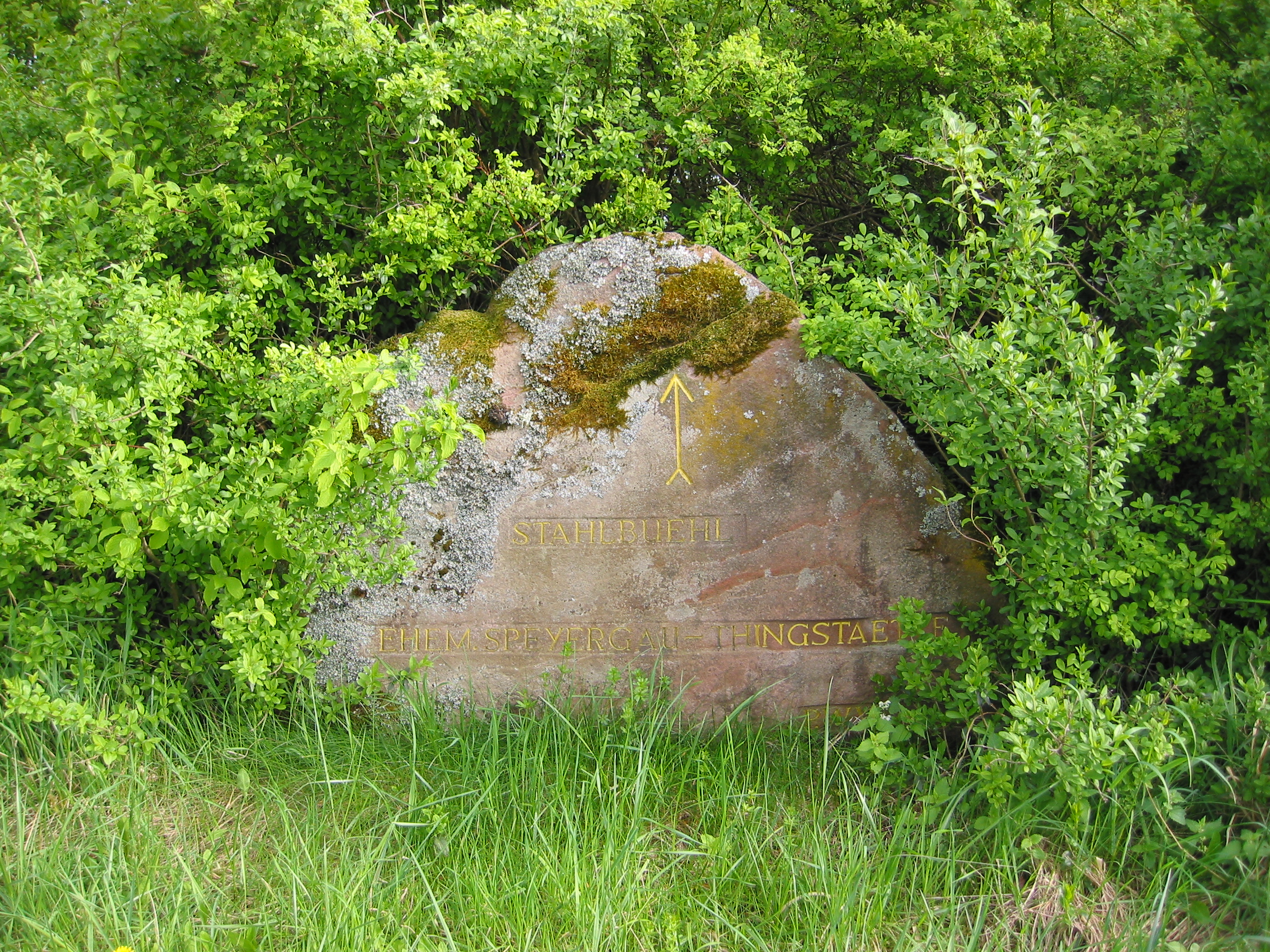
Ritterstein 229, known as 'Stahlbuehl', is a significant historical marker located on the southern side of the road connecting Frankweiler and Nußdorf in the Palatinate region of Germany. These stone monuments, collectively known as Rittersteine, were erected by the Pfälzerwald-Verein to commemorate historically significant sites throughout the Palatinate Forest. The Stahlbuehl site holds particular historical weight as it served as a traditional assembly point and a medieval court site for the Speyergau, a medieval administrative district or 'Gau' in the Holy Roman Empire. Visitors interested in regional history often include this site in their itinerary when exploring the area, as it provides a tangible link to the judicial and social organization of the Middle Ages. For those planning trip ideas in the Palatinate, the Ritterstein offers a quiet, contemplative stop that bridges the gap between natural forest exploration and cultural heritage. The marker is easily accessible for hikers and those traveling by car between the two villages. While the site itself is a modest stone monument, its location provides a quiet vantage point to reflect on the region's long-standing administrative history. As you explore local attractions, consider that this site represents the intersection of landscape preservation and archival history, making it a unique point of interest for those traversing the historic paths of the Speyergau.
General information
Ritterstein 229, known as 'Stahlbuehl', is a significant historical marker located on the southern side of the road connecting Frankweiler and Nußdorf in the Palatinate region of Germany. These stone monuments, collectively known as Rittersteine, were erected by the Pfälzerwald-Verein to commemorate historically significant sites throughout the Palatinate Forest. The Stahlbuehl site holds particular historical weight as it served as a traditional assembly point and a medieval court site for the Speyergau, a medieval administrative district or 'Gau' in the Holy Roman Empire. Visitors interested in regional history often include this site in their itinerary when exploring the area, as it provides a tangible link to the judicial and social organization of the Middle Ages. For those planning trip ideas in the Palatinate, the Ritterstein offers a quiet, contemplative stop that bridges the gap between natural forest exploration and cultural heritage. The marker is easily accessible for hikers and those traveling by car between the two villages. While the site itself is a modest stone monument, its location provides a quiet vantage point to reflect on the region's long-standing administrative history. As you explore local attractions, consider that this site represents the intersection of landscape preservation and archival history, making it a unique point of interest for those traversing the historic paths of the Speyergau.
Did you know
- The 'Rittersteine' are a series of over 300 sandstone markers placed throughout the Palatinate Forest.
- The term 'Speyergau' refers to an administrative district that existed during the Carolingian period.
- Ritterstein 229 was specifically placed to mark the site of historical judicial assemblies.
History
The site of Stahlbuehl is rooted in the medieval history of the Speyergau. During the Middle Ages, the Speyergau functioned as an administrative and judicial territory within the Frankish Empire. Assembly points like Stahlbuehl were essential for the administration of justice and the gathering of local nobility and free men to discuss regional affairs. The current stone marker, Ritterstein 229, was placed in the early 20th century by the Pfälzerwald-Verein, an organization dedicated to preserving the cultural and natural heritage of the Palatinate Forest. By marking this spot, the association ensured that the site's function as a historical Gerichtsplatz (court site) would not be forgotten by future generations.
Cultural significance
Culturally, the Ritterstein 229 serves as a monument to the regional identity of the Palatinate. It reflects the efforts of local historical societies to codify and memorialize the landscape. By highlighting sites of ancient legal proceedings, these markers transform the forest into an open-air archive. The Stahlbuehl remains a symbol of the transition from ancient communal governance to the modern administrative structures of the German states. It is a quiet testament to the importance of localized authority and the tradition of public assembly in the historical landscape of the Speyergau.
Geography and landscape
The Stahlbuehl is situated along the rural road connecting the villages of Frankweiler and Nußdorf. The terrain is characteristic of the Palatinate region, featuring a mix of agricultural fields and the encroaching foothills of the Palatinate Forest. The landscape is generally rolling, with the stone marker positioned to be accessible from the roadside, allowing for easy integration into a walking or driving route. The area is defined by its proximity to the Haardt mountain range, which provides a scenic backdrop of forested slopes and vineyard-laden valleys, typical of the Southern Palatinate.
More facts
- Imported from OSM batch
Visitor links
Nearby attractions
- Ritterstein 183 "Dagobert-Hecke" 1279 m
- Pauline Blumenthal geb. Wolff 1551 m
- Ella Wolff geb. Kern 1716 m
- Ritterstein 58 "Zimmer-Platz" 3850 m