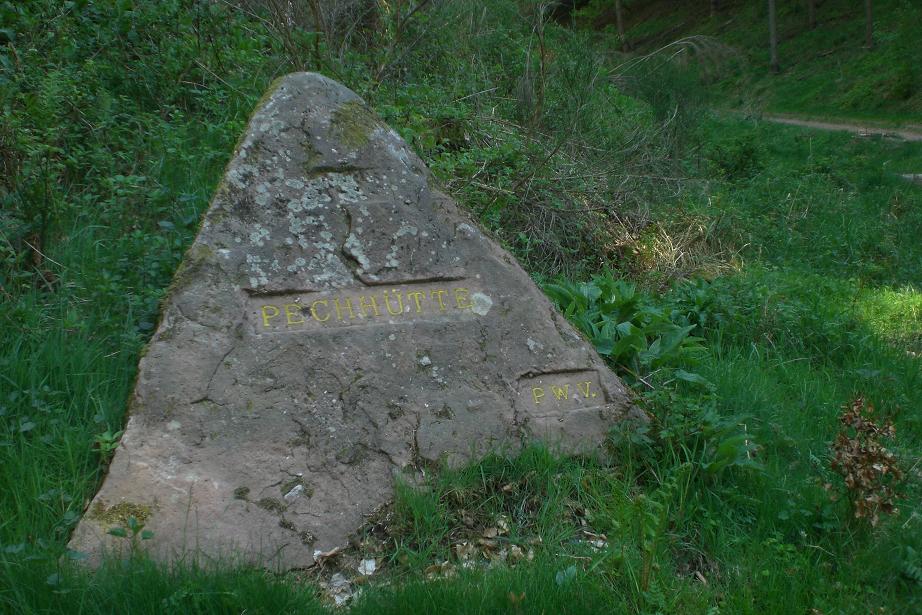
Ritterstein 149 "Pechhütte"
DE
- Location
- DE
- Category
- iconic bucket list
- Coordinates
- 49.4107973, 7.9359401
- Best time
- Morning or early afternoon
- Weather tip
- Check the local forecast before visiting.
Overview
Ritterstein 149, known as the "Pechhütte," stands as a historical marker in the Pfälzerwald, specifically situated within the Ungertal. This southern side valley of the Leinbachtal is framed by the natural elevations of the Schüsseleck, Wassersteinberg, and the Großer Berg. The stone serves as a commemorative site marking the former location of a "Pechhütte," or pitch hut, which once operated as a specialized facility for resin processing. Historically, resin harvested from the surrounding pine forests was transported to this specific site to be refined into pitch—a vital industrial material used for sealing, waterproofing, and various artisanal applications. For those seeking unique trip ideas in the Pfälzerwald, this site offers a glimpse into the region’s historical forestry industries. Visitors trekking through the Ungertal will find this sandstone marker embedded in the landscape, providing an educational anchor point for hikers exploring the area’s industrial heritage. As you plan your visit, consider that the site is best experienced during morning or early afternoon hours when the natural light best highlights the inscriptions on the stone. While the hut itself is long gone, the Ritterstein remains a testament to the labor-intensive practices that once defined the economic life of these valleys. It is a quiet, contemplative spot that rewards those interested in the intersection of forestry history and local geography, serving as a reminder of the human activity that has shaped these woodlands over the centuries.
General information
Ritterstein 149, known as the "Pechhütte," stands as a historical marker in the Pfälzerwald, specifically situated within the Ungertal. This southern side valley of the Leinbachtal is framed by the natural elevations of the Schüsseleck, Wassersteinberg, and the Großer Berg. The stone serves as a commemorative site marking the former location of a "Pechhütte," or pitch hut, which once operated as a specialized facility for resin processing. Historically, resin harvested from the surrounding pine forests was transported to this specific site to be refined into pitch—a vital industrial material used for sealing, waterproofing, and various artisanal applications. For those seeking unique trip ideas in the Pfälzerwald, this site offers a glimpse into the region’s historical forestry industries. Visitors trekking through the Ungertal will find this sandstone marker embedded in the landscape, providing an educational anchor point for hikers exploring the area’s industrial heritage. As you plan your visit, consider that the site is best experienced during morning or early afternoon hours when the natural light best highlights the inscriptions on the stone. While the hut itself is long gone, the Ritterstein remains a testament to the labor-intensive practices that once defined the economic life of these valleys. It is a quiet, contemplative spot that rewards those interested in the intersection of forestry history and local geography, serving as a reminder of the human activity that has shaped these woodlands over the centuries.
Did you know
- Rittersteine are sandstone markers in the Palatinate Forest that commemorate historical, geographical, or botanical points of interest.
- The term 'Pechhütte' refers to a historical workplace where pine resin was heated in ovens to create pitch.
- Pitch was historically essential for sealing wooden barrels and ships, making the forest industry a primary economic driver in this region.
History
The Ritterstein 149 commemorates the historical site of a Pechhütte, a facility central to the resin-gathering industry that was once prevalent in the Pfälzerwald. During the era when this industry flourished, pine resin was harvested from trees and brought to these huts to be processed in specialized ovens. The resulting pitch was a critical commodity for various trades, including coopering and maritime maintenance. The stone marker itself is part of a larger network of over 300 Rittersteine placed throughout the Palatinate Forest to preserve the memory of specific historical and cultural sites that would otherwise be forgotten as the landscape evolved and industrial methods changed.
Cultural significance
The "Pechhütte" marker holds significance as a symbol of the traditional forestry and craft industries that once sustained the communities of the Leinbachtal region. By marking the location of the former resin-processing site, the stone serves as an outdoor cultural monument that connects modern hikers with the labor-intensive reality of their ancestors. It highlights the ingenuity of past generations who utilized the abundant pine resources of the Palatinate Forest to create essential materials. Today, these markers are protected and maintained by local heritage organizations, reflecting the region's commitment to preserving its industrial folklore and historical identity.
Geography and landscape
The site is located deep within the Ungertal, a rugged and forested southern side valley of the Leinbachtal. The topography is defined by the surrounding slopes of the Schüsseleck, the Wassersteinberg, and the Großer Berg, which create a secluded and tranquil environment. The landscape is dominated by dense mixed woodlands, typical of the Pfälzerwald, characterized by sandstone formations and narrow trails. The terrain is hilly and requires moderate hiking fitness to navigate. The placement of the Ritterstein in this valley illustrates how historical industrial sites were often strategically located near the resources they processed, nestled within the natural shelter provided by the surrounding mountain ridges.
More facts
- Imported from OSM batch
Visitor links
Nearby attractions
- Ritterstein 259 "Ungertal" 636 m
- Ritterstein 151 "Wasserstein" 1091 m
- Ritterstein 150 "Hohlog" 1173 m
- Ritterstein 296 "Atlasfelsen" 1177 m
- Ritterstein 154 "Griesenfels" 1847 m
- Ritterstein 141 "Schwarzer Stock" 2147 m
- Ritterstein 136 "Prinzregent Luitpold Linde" 2255 m
- Ritterstein 156 "Biedenbacherwoog" 2281 m