Preußischer Meilenstein
DE
- Location
- DE
- Category
- heritage historic sites
- Coordinates
- 51.0653444, 6.1032028
- Best time
- Morning or early afternoon
- Weather tip
- Check the local forecast before visiting.
Overview
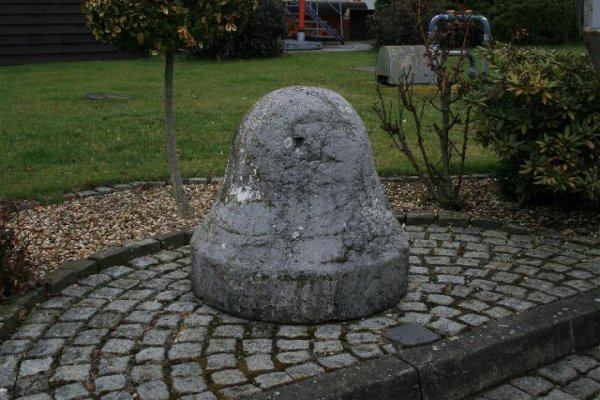
The Prussian Quarter-Mile Stone (Preußischer Meilenstein) is a significant piece of road infrastructure history located in the North Rhine-Westphalia region of Germany. Standing approximately 80 centimeters tall, this bell-shaped monument is crafted from blue stone (Blaustein). It was originally erected between 1833 and 1838 to mark distances along the newly constructed road connecting Geilenkirchen to Heinsberg. These stones served as essential navigational tools for travelers and post coaches during the 19th century, providing standardized distance measurements that were vital for trade and communication. Today, the stone stands as a protected heritage site, offering a tangible connection to the modernization of the Prussian road network. For those planning trip ideas in the region, this site provides a fascinating glimpse into historical logistics and civil engineering. Visitors can expect to find a well-preserved artifact that highlights the meticulous planning of 19th-century Prussian infrastructure. As you explore the area, you will find that these milestones are often integrated into the local landscape, serving as quiet witnesses to centuries of travel. Whether you are a history enthusiast or simply interested in discovering unique local attractions, the Prussian Quarter-Mile Stone is a noteworthy stop for anyone traveling through the Geilenkirchen-Heinsberg corridor.
General information
The Prussian Quarter-Mile Stone (Preußischer Meilenstein) is a significant piece of road infrastructure history located in the North Rhine-Westphalia region of Germany. Standing approximately 80 centimeters tall, this bell-shaped monument is crafted from blue stone (Blaustein). It was originally erected between 1833 and 1838 to mark distances along the newly constructed road connecting Geilenkirchen to Heinsberg. These stones served as essential navigational tools for travelers and post coaches during the 19th century, providing standardized distance measurements that were vital for trade and communication. Today, the stone stands as a protected heritage site, offering a tangible connection to the modernization of the Prussian road network. For those planning trip ideas in the region, this site provides a fascinating glimpse into historical logistics and civil engineering. Visitors can expect to find a well-preserved artifact that highlights the meticulous planning of 19th-century Prussian infrastructure. As you explore the area, you will find that these milestones are often integrated into the local landscape, serving as quiet witnesses to centuries of travel. Whether you are a history enthusiast or simply interested in discovering unique local attractions, the Prussian Quarter-Mile Stone is a noteworthy stop for anyone traveling through the Geilenkirchen-Heinsberg corridor.
Did you know
- The stone is crafted from 'Blaustein', a type of limestone often used in historical regional architecture.
- These milestones were part of a standardized Prussian system to track distances for post coaches and freight.
- The stone marks a 'quarter-mile' interval, which was a specific unit of measurement used in the 19th century.
History
The Prussian Quarter-Mile Stone was established during a period of intense infrastructure development in the Rhineland. Between 1833 and 1838, the Prussian state oversaw the construction of a new road linking the towns of Geilenkirchen and Heinsberg. To facilitate efficient travel and administrative control, engineers placed these bell-shaped stones at specific intervals. These markers were not merely decorative; they were functional tools that allowed travelers to calculate their progress accurately. The standardization of these stones reflects the administrative precision characteristic of the Prussian state during the early 19th century, marking a transition toward modern, state-regulated transport networks that would eventually pave the way for the German road systems we recognize today.
Cultural significance
As a protected historical monument, the Prussian Quarter-Mile Stone represents the evolution of German civil engineering and the importance of trade routes in the 19th century. It stands as a testament to the era when the Prussian state sought to unify its territories through improved logistics and standardized measurements. Culturally, these milestones are viewed as small but essential pieces of heritage that ground the modern landscape in its historical context. They remind contemporary observers of the slow, deliberate pace of travel in the pre-automotive age, where every quarter-mile was a significant marker of progress for the coachman and the merchant alike.
Geography and landscape
The stone is situated along the historic road corridor connecting Geilenkirchen and Heinsberg, a region characterized by the rolling terrain of the North Rhine-Westphalian countryside. The landscape here is a mix of agricultural fields and small, historic settlements that retain their traditional character. The marker itself is typically found near the roadside, where it has stood for nearly two centuries. The surrounding area is relatively flat, typical of the Lower Rhine region, which facilitated the construction of these straight, efficient transit routes in the 1830s. The site is easily accessible for those interested in viewing remnants of early road development in rural Germany.
More facts
- Imported from OSM batch
Visitor links
Nearby attractions
- Hochgrab 924 m
- Wasser.Blick 24 Rur 3634 m
- Merteskreuz 4223 m
- Sibylla Kaufmann geb. Meyer 5293 m
- Wehrturm 5459 m
- Kreuzweg Station 6 6531 m
- Kreuzweg Station 9 6580 m
- Kreuzweg Station 11 6632 m