Mount Pleasant Indian Industial Boarding School
US
- Location
- US
- Category
- heritage historic sites
- Coordinates
- 43.615215, -84.788571
- Best time
- Morning or early afternoon
- Weather tip
- Check the local forecast before visiting.
Overview
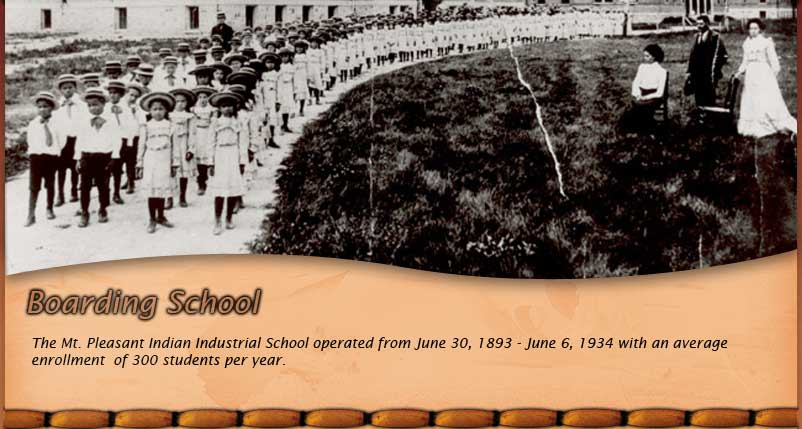
The Mount Pleasant Indian Industrial Boarding School, located in Mount Pleasant, Michigan, stands as a significant and somber site of historical inquiry regarding the United States government's assimilation policies. Operating from 1893 to 1934, the institution was part of a federal network of boarding schools designed to strip Indigenous children of their cultural identities, languages, and traditions. Today, the site serves as a place of reflection and education, offering visitors the opportunity to engage with the complex and often painful legacy of the boarding school era. Those researching local attractions or seeking meaningful places to visit will find the site provides a stark, evidence-based look at the impact of federal Indian policy on tribal communities in the Great Lakes region. The grounds are currently managed with a focus on preservation and memorialization, allowing the public to understand the architectural and social history of the facility. As you explore what to do in the area, consider that this site is not merely a tourist destination, but a place of historical gravity that requires a respectful approach. Visitors can expect to see remaining structures that bear witness to the lives of the thousands of Anishinaabe and other Indigenous children who attended the school. The site remains a focal point for ongoing archaeological and historical research, emphasizing the importance of truth-telling and historical awareness in contemporary American society.
General information
The Mount Pleasant Indian Industrial Boarding School, located in Mount Pleasant, Michigan, stands as a significant and somber site of historical inquiry regarding the United States government's assimilation policies. Operating from 1893 to 1934, the institution was part of a federal network of boarding schools designed to strip Indigenous children of their cultural identities, languages, and traditions. Today, the site serves as a place of reflection and education, offering visitors the opportunity to engage with the complex and often painful legacy of the boarding school era. Those researching local attractions or seeking meaningful places to visit will find the site provides a stark, evidence-based look at the impact of federal Indian policy on tribal communities in the Great Lakes region. The grounds are currently managed with a focus on preservation and memorialization, allowing the public to understand the architectural and social history of the facility. As you explore what to do in the area, consider that this site is not merely a tourist destination, but a place of historical gravity that requires a respectful approach. Visitors can expect to see remaining structures that bear witness to the lives of the thousands of Anishinaabe and other Indigenous children who attended the school. The site remains a focal point for ongoing archaeological and historical research, emphasizing the importance of truth-telling and historical awareness in contemporary American society.
Did you know
- The school operated for 41 years, from its opening in 1893 until its closure in 1934.
- The facility was part of a larger federal system that sought to assimilate Native American children into mainstream white society.
- The site is currently the subject of extensive archaeological study to better understand the experiences of the students who lived there.
History
Established by the federal government in 1893, the Mount Pleasant Indian Industrial Boarding School was built to enforce the assimilation of Native American children, primarily from the Anishinaabe tribes of Michigan. The curriculum focused on manual labor and vocational training, while strictly prohibiting the use of Indigenous languages and the practice of traditional customs. By the time the school closed in 1934, thousands of children had passed through its doors. The history of the school reflects the broader, often destructive, federal policies directed at Native American populations during the late 19th and early 20th centuries. Following its closure, the property underwent various transitions, eventually becoming a site of historical preservation where the physical remnants serve as primary evidence of the boarding school system's operational realities.
Cultural significance
The site holds profound cultural and spiritual significance, particularly for the Saginaw Chippewa Indian Tribe and other regional Indigenous communities. It serves as a site of memory and trauma, representing a period of deliberate cultural erasure. The ongoing preservation efforts are rooted in the desire to honor the survivors and the children who did not return home. It functions as an educational center that challenges visitors to confront the history of settler-colonialism and the resilience of Indigenous cultures. Through its memorialization, the site fosters a deeper understanding of the intergenerational impacts of the boarding school era and supports the healing processes within contemporary tribal communities, emphasizing the importance of cultural reclamation and historical truth.
Geography and landscape
The Mount Pleasant Indian Industrial Boarding School is situated in the central region of Michigan's Lower Peninsula. The landscape consists of flat to gently rolling terrain characteristic of the glacial plains in the area. The site occupies a significant acreage, which historically included agricultural fields, orchards, and various outbuildings that supported the school's self-sustaining mandate. Today, the surrounding environment is a mix of open green spaces and nearby suburban development. The physical layout of the remaining buildings provides a clear view of the institutional architecture of the period, designed to impose order and discipline upon the landscape. The grounds are largely preserved to maintain the integrity of the historical site, providing a quiet, reflective atmosphere for those visiting the area.
More facts
- Imported from OSM batch