Messerkerl
DE
- Location
- DE
- Category
- heritage historic sites
- Coordinates
- 51.8028704, 8.9184913
- Best time
- Morning or early afternoon
- Weather tip
- Check the local forecast before visiting.
Overview
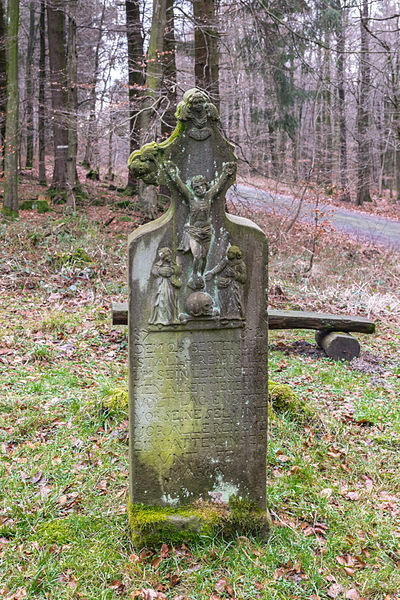
The 'Messerkerl' memorial serves as a somber historical marker commemorating the life and tragic death of Albert Meyer, a traveling merchant known locally as a 'Töddenhändler.' These itinerant traders were a staple of the Westphalian economy in previous centuries, traveling long distances on foot to sell textiles and household goods. The site marks the location associated with the murder of Meyer, providing a tangible connection to the often-perilous existence of these historical figures. Visitors who seek to explore regional heritage often find such memorials to be poignant reminders of the social and economic conditions of the past. As you investigate local attractions and historical sites, the Messerkerl memorial offers a moment of reflection on the lives of those who shaped the region’s commercial history. The site is best visited during the morning or early afternoon to take advantage of natural light for viewing the memorial inscriptions. While it is a small site, it remains a significant touchstone for those interested in the history of traveling merchants in Germany. Because this is an outdoor memorial, it is recommended that you check the local weather forecast before visiting to ensure a comfortable experience while honoring this piece of local history.
General information
The 'Messerkerl' memorial serves as a somber historical marker commemorating the life and tragic death of Albert Meyer, a traveling merchant known locally as a 'Töddenhändler.' These itinerant traders were a staple of the Westphalian economy in previous centuries, traveling long distances on foot to sell textiles and household goods. The site marks the location associated with the murder of Meyer, providing a tangible connection to the often-perilous existence of these historical figures. Visitors who seek to explore regional heritage often find such memorials to be poignant reminders of the social and economic conditions of the past. As you investigate local attractions and historical sites, the Messerkerl memorial offers a moment of reflection on the lives of those who shaped the region’s commercial history. The site is best visited during the morning or early afternoon to take advantage of natural light for viewing the memorial inscriptions. While it is a small site, it remains a significant touchstone for those interested in the history of traveling merchants in Germany. Because this is an outdoor memorial, it is recommended that you check the local weather forecast before visiting to ensure a comfortable experience while honoring this piece of local history.
Did you know
- The term 'Töddenhändler' refers to traveling merchants from the Tecklenburg region who famously walked across Europe to sell their wares.
- The nickname 'Messerkerl' translates literally to 'Knife-Guy' or 'Knife-Man,' referring to the specific goods Albert Meyer carried.
- Memorials of this type were historically significant as they served as public warnings or communal acts of remembrance for victims of violent crime.
History
The site commemorates the murder of Albert Meyer, a 'Töddenhändler' (traveling merchant). Historically, these merchants were vital to the regional economy, yet they faced significant risks, including robbery and violence, due to the nature of their work and the isolation of their travel routes. The memorial serves as a historical record of the event, preserving the memory of Meyer within the local landscape. While specific dates of the murder are often tied to local oral tradition, the memorial stands as a testament to the dangers inherent in the life of a 19th-century itinerant trader.
Cultural significance
The Messerkerl memorial represents a broader cultural interest in the history of the 'Töddenhändler.' These merchants are a central figure in Westphalian folklore and economic history, symbolizing the industriousness and endurance of the local population. By marking the site of a tragic event, the memorial transforms a landscape feature into a site of cultural memory, reminding modern visitors of the precarious lives led by those who built the region's early commercial networks.
Geography and landscape
The memorial is situated in an outdoor setting, likely along a historical transit route once traversed by traveling merchants. The landscape typically reflects the rural or semi-rural character of the region where such traders operated. As an outdoor site, it is integrated into the natural environment, requiring visitors to navigate local paths to reach the marker. The surrounding terrain is representative of the historical paths that connected small villages and towns, emphasizing the isolation that often characterized the merchant's journey.
More facts
- Imported from OSM batch
Visitor links
Nearby attractions
- Madonna am Walde 3614 m
- Klara Ikenberg geb. Löwenhardt 4679 m
- Kiebitzteich 6641 m