Maria Brandstätter
Salzburg, IL
- Location
- Salzburg, IL
- Category
- iconic bucket list
- Coordinates
- 47.8083874, 13.040795
- Best time
- Morning or early afternoon
- Weather tip
- Check the local forecast before visiting.
Overview
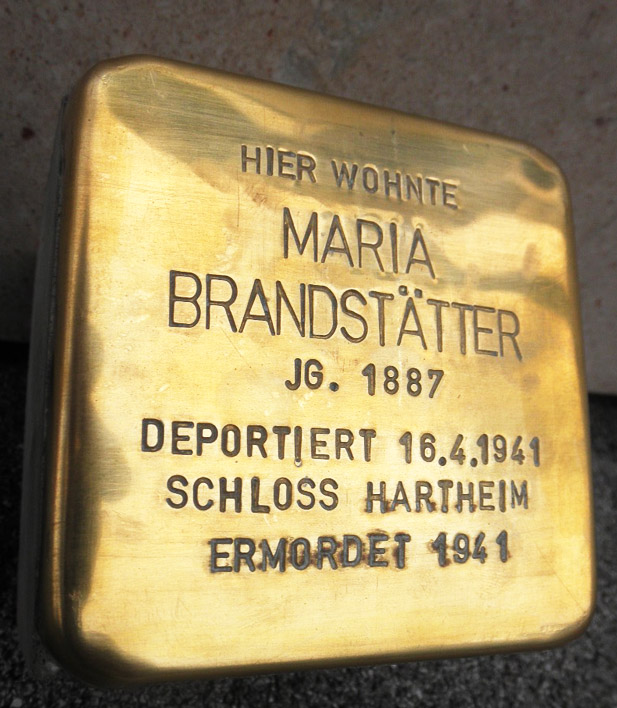
Maria Brandstätter is commemorated by a Stolperstein, a brass memorial plaque embedded in the pavement at Elisabethkai 33 in Salzburg, Austria. This site serves as a poignant reminder of an individual victim of Nazi persecution, specifically the so-called 'euthanasia' program. The Stolperstein for Maria Brandstätter is part of a larger European project initiated by artist Gunter Demnig, designed to bring the names and fates of Holocaust victims back into public spaces, making their stories tangible and accessible. Visitors approaching this memorial will encounter a small, unassuming marker that invites solemn reflection on the historical events and individual lives lost. It is not a traditional tourist attraction but rather a significant historical marker and a place for remembrance, offering a profound opportunity to engage with the city's complex past and understand the broader context of World War II's impact on its residents. For those seeking to explore historical sites in Salzburg, these memorials offer a unique perspective on human dignity and the consequences of systemic persecution.
General information
Maria Brandstätter is commemorated by a Stolperstein, a brass memorial plaque embedded in the pavement at Elisabethkai 33 in Salzburg, Austria. This site serves as a poignant reminder of an individual victim of Nazi persecution, specifically the so-called 'euthanasia' program. The Stolperstein for Maria Brandstätter is part of a larger European project initiated by artist Gunter Demnig, designed to bring the names and fates of Holocaust victims back into public spaces, making their stories tangible and accessible. Visitors approaching this memorial will encounter a small, unassuming marker that invites solemn reflection on the historical events and individual lives lost. It is not a traditional tourist attraction but rather a significant historical marker and a place for remembrance, offering a profound opportunity to engage with the city's complex past and understand the broader context of World War II's impact on its residents. For those seeking to explore historical sites in Salzburg, these memorials offer a unique perspective on human dignity and the consequences of systemic persecution.
Did you know
- Maria Brandstätter was born in Salzburg on October 25, 1896.
- She was a victim of the Nazi 'euthanasia' program, euphemistically known as Action T4.
- Her Stolperstein is located at Elisabethkai 33, her last known voluntary residence in Salzburg.
- The 'euthanasia' program led to the systematic murder of hundreds of thousands of people deemed 'unworthy of life' by the Nazi regime.
History
Maria Brandstätter was born in Salzburg on October 25, 1896. She worked as a domestic servant and had a child out of wedlock, which led to social difficulties. In 1934, she was institutionalized at the Landesheilanstalt Salzburg (Salzburg State Sanatorium) due to mental illness. With the Nazi annexation of Austria in 1938, the regime intensified its 'racial hygiene' policies. On January 28, 1941, Maria Brandstätter was transferred from Salzburg to the Hartheim Euthanasia Centre near Linz, where she was murdered as part of the Action T4 program. Her death was falsely recorded as occurring in Salzburg, a common deception used to conceal the systematic killings.
Cultural significance
The Stolperstein for Maria Brandstätter holds profound cultural significance as a decentralized memorial to a victim of Nazi persecution. It represents the broader project of 'Stolpersteine' (stumbling stones), which aims to bring remembrance directly into everyday urban spaces, confronting passersby with the individual fates of those murdered by the Nazi regime. By embedding these brass plaques in the pavement, the project ensures that the memory of victims like Maria Brandstätter is not confined to museums or distant memorial sites but is integrated into the fabric of the cities where they lived. This form of remembrance emphasizes personal stories, counteracting the anonymity of mass atrocities and fostering a direct, tangible connection to history.
Geography and landscape
The Stolperstein commemorating Maria Brandstätter is physically situated in the urban landscape of Salzburg, Austria, specifically at Elisabethkai 33. This location is on the pavement directly in front of what was her last known voluntary residence. The memorial itself is a small, brass-covered concrete cube, approximately 10x10 cm, set flush into the sidewalk. Its unassuming presence means it integrates seamlessly into the streetscape, yet its polished surface and engraved text stand out upon closer inspection. The setting along Elisabethkai, a street bordering the Salzach River, places it within a busy, central part of Salzburg, ensuring that its message of remembrance is encountered by residents and visitors alike amidst the daily flow of city life.
More facts
- Imported from OSM Overpass
Visitor links
Nearby attractions
- Andreas Rehrl Salzburg - 34 m
- Matthias Holzer Salzburg - 36 m
- Karl Böttinger Salzburg - 39 m
- Franziska van Alderwerelt Salzburg - 71 m
- Elsbeth Bulla Salzburg - 94 m
- Johanna Klein Salzburg - 97 m
- Hermine Bechinsky Salzburg - 115 m
- Abraham Morpurgo Salzburg - 117 m