Louvre Palace
Paris, FR
- Location
- Paris, FR
- Category
- iconic bucket list
- Coordinates
- 48.861028, 2.336396
- Best time
- Morning or early afternoon
- Weather tip
- Check the local forecast before visiting.
- Opening hours
- Mo,Th,Sa-Su 09:00-18:00; Tu off; We,Fr 09:00-21:00; Jan 01,May 01,Dec 25 off
Overview
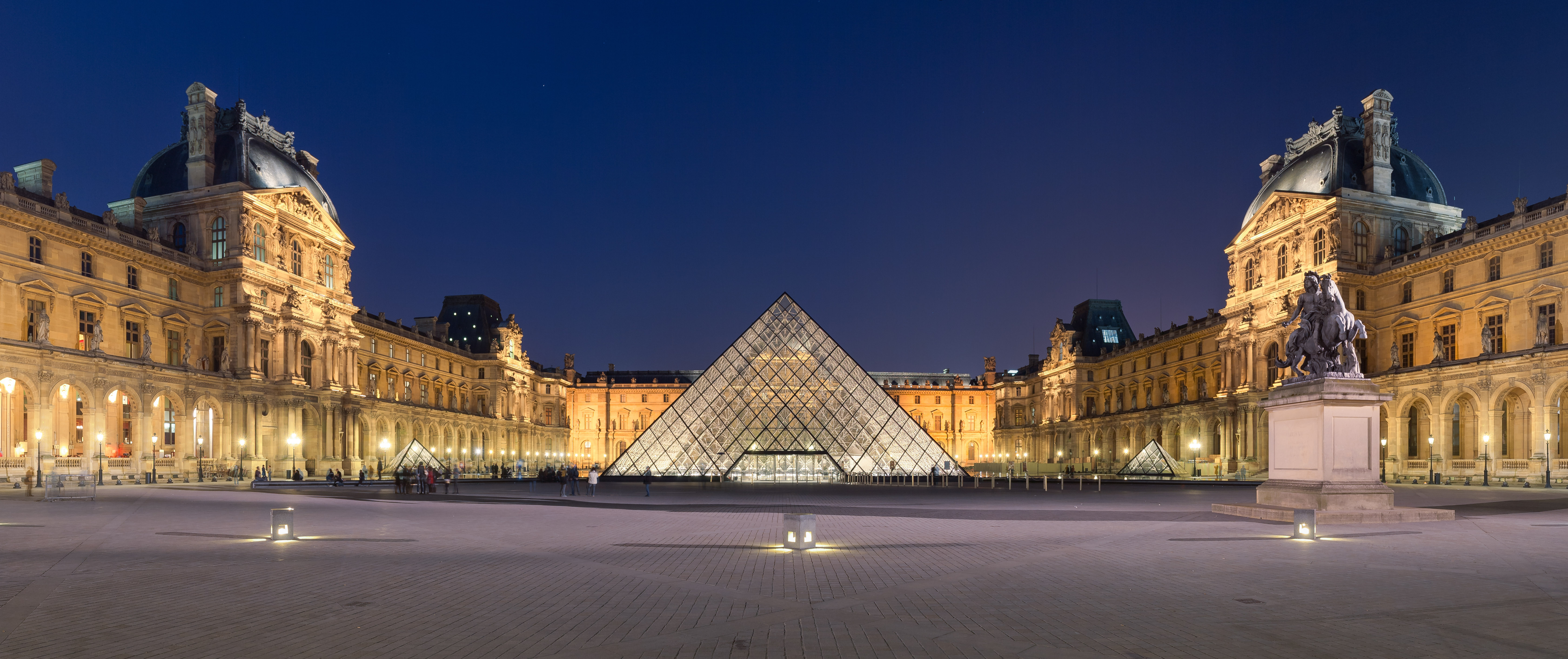
The Louvre Palace, located on the Right Bank of the Seine in Paris, stands as one of the world's most significant architectural and historical landmarks. Originally constructed as a fortress in the late 12th century under Philip II, it evolved over centuries into a sprawling royal residence, reflecting the shifting power dynamics and artistic tastes of the French monarchy. Today, the site is globally recognized as the home of the Musée du Louvre, the world's largest art museum. Visitors travel from across the globe to explore its vast collections, which span from ancient civilizations to the mid-19th century. When planning your visit, you will encounter a complex architectural evolution, ranging from medieval foundations visible in the basement to the iconic glass pyramid designed by I.M. Pei, which serves as the museum's primary entrance. As you consider what to do in the area, the palace serves as the perfect starting point for walking tours through the Tuileries Garden and toward the Place de la Concorde. Whether you are an art historian or a casual traveler, the palace offers an unparalleled look into the layers of French history. For those seeking unique trip ideas, the palace grounds provide a deep dive into the evolution of Parisian urbanism and royal grandeur. Expect to spend significant time navigating the expansive galleries, as the sheer scale of the palace and its collections requires careful planning for an optimal experience.
General information
The Louvre Palace, located on the Right Bank of the Seine in Paris, stands as one of the world's most significant architectural and historical landmarks. Originally constructed as a fortress in the late 12th century under Philip II, it evolved over centuries into a sprawling royal residence, reflecting the shifting power dynamics and artistic tastes of the French monarchy. Today, the site is globally recognized as the home of the Musée du Louvre, the world's largest art museum. Visitors travel from across the globe to explore its vast collections, which span from ancient civilizations to the mid-19th century. When planning your visit, you will encounter a complex architectural evolution, ranging from medieval foundations visible in the basement to the iconic glass pyramid designed by I.M. Pei, which serves as the museum's primary entrance. As you consider what to do in the area, the palace serves as the perfect starting point for walking tours through the Tuileries Garden and toward the Place de la Concorde. Whether you are an art historian or a casual traveler, the palace offers an unparalleled look into the layers of French history. For those seeking unique trip ideas, the palace grounds provide a deep dive into the evolution of Parisian urbanism and royal grandeur. Expect to spend significant time navigating the expansive galleries, as the sheer scale of the palace and its collections requires careful planning for an optimal experience.
Did you know
- The Louvre began as a fortress built by King Philip II in 1190 to protect Paris from Viking raids.
- The iconic glass pyramid, completed in 1989, was initially met with significant public controversy.
- The palace served as the official residence of French kings until Louis XIV moved the court to Versailles in 1682.
History
The history of the Louvre spans over 800 years. Initially a defensive fortress built by Philip II, the structure was transformed into a royal residence by Charles V in the 14th century. During the Renaissance, Francis I initiated a massive reconstruction project to replace the medieval castle with a modern palace. Subsequent monarchs, including Catherine de' Medici and Louis XIV, expanded the complex significantly. The palace ceased to be a royal residence in 1682 when the court relocated. Following the French Revolution, the National Assembly decreed that the Louvre should be used as a museum to display the nation's masterpieces, formally opening to the public in 1793.
Cultural significance
The Louvre Palace is the symbolic heart of French cultural heritage. Its transition from a seat of absolute monarchy to a public institution represents a pivotal shift in European history, democratizing access to art and knowledge. As the home of the Mona Lisa and the Venus de Milo, it dictates international standards for curatorial practice and historical preservation. The palace also serves as a testament to the influence of French architecture, blending Renaissance, Baroque, and contemporary styles into a single, cohesive urban monument that continues to define the aesthetic identity of Paris.
Geography and landscape
Situated in the 1st arrondissement, the Louvre occupies a prime location on the Right Bank of the Seine. It is physically connected to the Tuileries Garden to the west, which was originally laid out by André Le Nôtre. The palace complex is defined by its expansive courtyards, most notably the Cour Napoléon, where the modern glass pyramid is situated. The terrain is flat, typical of the Seine river basin, and the surrounding urban landscape is characterized by grand boulevards, historic government buildings, and direct access to the riverbanks, which are designated UNESCO World Heritage sites.
More facts
- Imported from OSM batch
- Imported from Wikidata
Visitor links
Nearby attractions
- Louvre Pyramid Paris - 46 m
- Le cercueil de Mesrê Paris - 240 m
- Le Sarcophage du Grec d'Egypte Dioskoridès Paris - 241 m
- Le cercueil de Ânkhapy, prêtre du roi Snéfrou et du dieu Ptah Paris - 245 m
- Cercueil extérieur de l'intendant Sopi Paris - 248 m
- Sarcophage d'Ibis Paris - 250 m
- Sarcophage de serpent Paris - 250 m
- Sarcophage contenant encore sa momie de chat Paris - 251 m