Kriegerdenkmal Dülken
DE
- Location
- DE
- Category
- heritage historic sites
- Coordinates
- 51.2490699, 6.3319349
- Best time
- Morning or early afternoon
- Weather tip
- Check the local forecast before visiting.
Overview
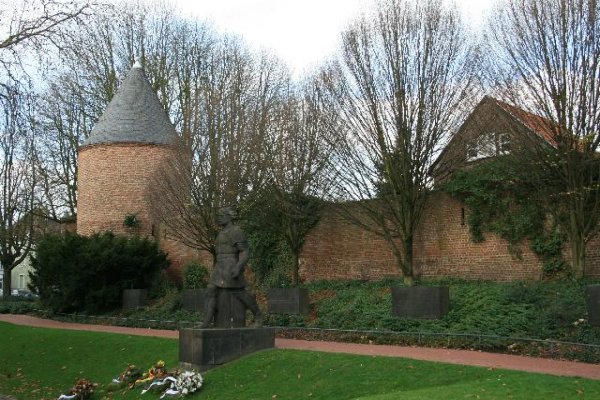
The Kriegerdenkmal Dülken is a significant commemorative monument located in the Dülken district of Viersen, Germany. This historical site serves as a solemn memorial to the 451 soldiers from the area who lost their lives during the First World War. The centerpiece of the monument is a striking, larger-than-life statue standing approximately 3.80 meters tall. Sculpted to represent the legendary figure of Siegfried from Germanic mythology, the statue serves as a symbolic embodiment of youth, physical strength, and resilience. Surrounding the central figure are five basalt stones, each engraved with the names of the fallen, creating a tangible connection to the individuals commemorated here. For those interested in regional history and heritage, this site offers a quiet, reflective space to explore the local impact of global conflicts. Visitors often include this memorial in their itinerary when looking for places to visit in the Viersen region to better understand the community's past. The site is best experienced during the morning or early afternoon when natural light highlights the details of the Siegfried statue and the textures of the basalt stones. As you plan your trip, it is advisable to check the local weather forecast, as the monument is located in an open-air setting. This memorial remains a poignant example of early 20th-century commemorative art and a key point of interest for those seeking historical trip ideas in North Rhine-Westphalia.
General information
The Kriegerdenkmal Dülken is a significant commemorative monument located in the Dülken district of Viersen, Germany. This historical site serves as a solemn memorial to the 451 soldiers from the area who lost their lives during the First World War. The centerpiece of the monument is a striking, larger-than-life statue standing approximately 3.80 meters tall. Sculpted to represent the legendary figure of Siegfried from Germanic mythology, the statue serves as a symbolic embodiment of youth, physical strength, and resilience. Surrounding the central figure are five basalt stones, each engraved with the names of the fallen, creating a tangible connection to the individuals commemorated here. For those interested in regional history and heritage, this site offers a quiet, reflective space to explore the local impact of global conflicts. Visitors often include this memorial in their itinerary when looking for places to visit in the Viersen region to better understand the community's past. The site is best experienced during the morning or early afternoon when natural light highlights the details of the Siegfried statue and the textures of the basalt stones. As you plan your trip, it is advisable to check the local weather forecast, as the monument is located in an open-air setting. This memorial remains a poignant example of early 20th-century commemorative art and a key point of interest for those seeking historical trip ideas in North Rhine-Westphalia.
Did you know
- The central statue stands approximately 3.80 meters tall.
- The monument commemorates exactly 451 soldiers from the region.
- The figure of Siegfried was chosen as a symbol of strength and youth.
History
The Kriegerdenkmal Dülken was erected to honor the memory of local soldiers who perished during the First World War. Such monuments were common throughout Germany in the post-war period, serving as focal points for community mourning and the formal recognition of the immense loss of life. By utilizing the mythological figure of Siegfried, the designers aimed to elevate the sacrifice of the fallen to a heroic status, aligning with the cultural narratives of the time. The inclusion of 451 names etched into basalt stones provides a specific historical record of the community's demographic loss during the conflict.
Cultural significance
As a war memorial, the site holds deep cultural importance as a place of collective remembrance. The use of Siegfried, a hero from the Nibelungenlied, reflects the German cultural tendency during the early 20th century to frame national history and sacrifice through the lens of epic mythology. Today, the monument functions as a historical marker that prompts reflection on the cost of war. It stands as an enduring piece of heritage that links contemporary visitors to the specific historical experiences of the Dülken community, preserving the names of those who would otherwise be forgotten.
Geography and landscape
The monument is situated in the urban landscape of Dülken, a district within the city of Viersen in North Rhine-Westphalia. It is positioned in an open-air setting, designed to be accessible to the public. The site features a combination of the towering sculptural figure and the surrounding basalt stones, which are volcanic in origin and offer a dark, somber contrast to the statue. The surrounding area is typical of a German town environment, providing a quiet space that allows the monument to serve as a focal point for the immediate vicinity.
More facts
- Imported from OSM batch
Visitor links
Nearby attractions
- Kaiser-Wilhelm-Denkmal 433 m
- Bildstock Ransberg 18 1281 m
- Gefallenendenkmal Röhlenend 1590 m
- Bildstock Armener Weg 1810 m
- Friedrich Greef Gedenkstein 3084 m
- Sektionskreuz Bockert 3185 m
- Gedenkkreuz Johannes Steffes 3801 m
- Fußfallstation 3878 m