Kapel van Sint-Jansberg
BE
- Location
- BE
- Category
- heritage historic sites
- Coordinates
- 51.109729, 5.781409
- Best time
- Morning or early afternoon
- Weather tip
- Check the local forecast before visiting.
Overview
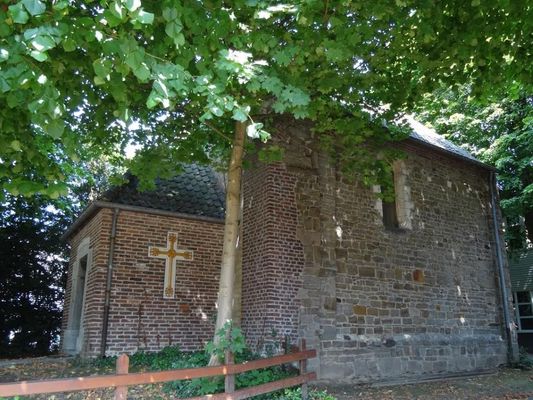
The Kapel van Sint-Jansberg stands as a significant historical fragment, representing the surviving choir of a former church originally constructed in 1332. This structure was erected on the site of a predecessor that had been destroyed by fire, marking a pivotal point in the local ecclesiastical timeline. Today, the chapel serves as a quiet witness to centuries of architectural evolution and religious history in the region. Visitors seeking meaningful places to visit often find the chapel’s austere beauty and its connection to medieval craftsmanship to be a highlight of their journey. The site offers a tranquil atmosphere, ideal for those who appreciate historical preservation and the tangible links to the 14th century. While the nave of the original church has long since vanished, the remaining choir section provides a rare glimpse into the Gothic building techniques of the era. Exploring this site is one of the most rewarding trip ideas for architecture enthusiasts interested in the resilience of Belgian heritage. The chapel is best visited during the morning or early afternoon when natural light best illuminates the masonry. As with any outdoor-focused exploration in Belgium, it is advisable to check the local weather forecast before visiting to ensure a comfortable experience while navigating the grounds.
General information
The Kapel van Sint-Jansberg stands as a significant historical fragment, representing the surviving choir of a former church originally constructed in 1332. This structure was erected on the site of a predecessor that had been destroyed by fire, marking a pivotal point in the local ecclesiastical timeline. Today, the chapel serves as a quiet witness to centuries of architectural evolution and religious history in the region. Visitors seeking meaningful places to visit often find the chapel’s austere beauty and its connection to medieval craftsmanship to be a highlight of their journey. The site offers a tranquil atmosphere, ideal for those who appreciate historical preservation and the tangible links to the 14th century. While the nave of the original church has long since vanished, the remaining choir section provides a rare glimpse into the Gothic building techniques of the era. Exploring this site is one of the most rewarding trip ideas for architecture enthusiasts interested in the resilience of Belgian heritage. The chapel is best visited during the morning or early afternoon when natural light best illuminates the masonry. As with any outdoor-focused exploration in Belgium, it is advisable to check the local weather forecast before visiting to ensure a comfortable experience while navigating the grounds.
Did you know
- The current chapel is the only remaining part of a larger church structure built in 1332.
- The original church on this site was destroyed by fire before the current choir was constructed.
- The site represents a rare example of 14th-century ecclesiastical architecture surviving in its partial form.
History
The history of the Kapel van Sint-Jansberg is defined by the transition from a larger parish church to its current form as a solitary choir. Following the destruction of an earlier church by fire, the choir was rebuilt in 1332. This date aligns with the expansion of stone ecclesiastical construction in the region during the Middle Ages. Over the subsequent centuries, the nave was lost, likely due to structural decay or changing religious requirements, leaving the choir as the sole remnant. The site serves as a physical record of both the devastation caused by medieval fires and the subsequent efforts to restore sacred spaces during the 14th century.
Cultural significance
The cultural significance of the Kapel van Sint-Jansberg lies in its role as a preserved monument of medieval heritage. It acts as a focal point for understanding the religious landscape of the 14th century, demonstrating the importance of the choir as the liturgical heart of the church. By persisting through the centuries, the structure has become a symbol of continuity, bridging the gap between the medieval era and modern historical appreciation. It remains a site of quiet contemplation, reflecting the enduring nature of local religious traditions and architectural craftsmanship.
Geography and landscape
The chapel is situated in a landscape that reflects the rural or semi-rural character typical of historical sites in Belgium. The terrain is largely characterized by its historic elevation, often associated with the 'berg' (hill) in its name, which provides a vantage point over the surrounding area. The site is embedded in a setting that has likely evolved from a bustling ecclesiastical center to a serene, isolated monument. The immediate surroundings are defined by the masonry of the chapel itself, which stands in contrast to the natural greenery or open space that has reclaimed the area once occupied by the original church nave.
More facts
- Imported from OSM batch
Visitor links
Nearby attractions
- De Bonten Os Maaseik - 1763 m
- Bunker ACI 3 1770 m
- Stadhuis Maaseik Maaseik - 1787 m
- In den Prince van Luyck Maaseik - 1793 m
- Gevelniskapel 1795 m
- Die Ketten Maaseik - 1807 m
- Die Ketten Maaseik - 1807 m
- Jan en Hubert Van Eyck 1827 m