Josef Pfeffer
Salzburg, IL
- Location
- Salzburg, IL
- Category
- iconic bucket list
- Coordinates
- 47.7988061, 13.018681
- Best time
- Morning or early afternoon
- Weather tip
- Check the local forecast before visiting.
Overview
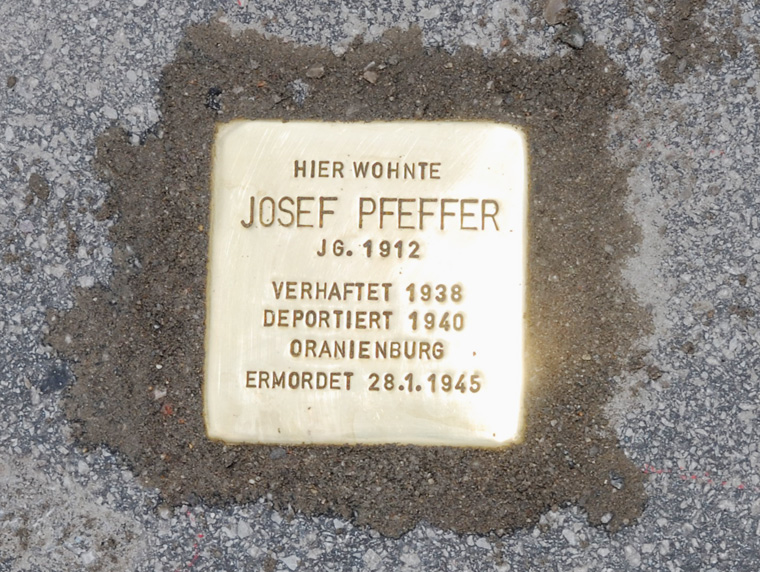
The entry for "Josef Pfeffer" refers to a Stolperstein, a memorial brass plaque commemorating an individual victim of the Holocaust, located in Salzburg, Austria. It is important to note that the provided information indicating "Country: Israel" is incorrect; Stolpersteine are primarily found across Europe. This particular Stolperstein honors Josef Pfeffer, who was born on July 25, 1897, in Ostrau and was deported from Salzburg to Izbica on November 11, 1941, and later murdered in Auschwitz. The Stolpersteine project, initiated by artist Gunter Demnig, aims to keep the memory of individuals alive by placing these small, personalized memorials in front of their last known voluntary residences. These installations serve as a poignant reminder of human lives lost during the Nazi regime and offer a unique way for visitors to engage with history and reflect on the past. For those seeking meaningful historical markers to visit, understanding the context of these memorials is crucial.
General information
The entry for "Josef Pfeffer" refers to a Stolperstein, a memorial brass plaque commemorating an individual victim of the Holocaust, located in Salzburg, Austria. It is important to note that the provided information indicating "Country: Israel" is incorrect; Stolpersteine are primarily found across Europe. This particular Stolperstein honors Josef Pfeffer, who was born on July 25, 1897, in Ostrau and was deported from Salzburg to Izbica on November 11, 1941, and later murdered in Auschwitz. The Stolpersteine project, initiated by artist Gunter Demnig, aims to keep the memory of individuals alive by placing these small, personalized memorials in front of their last known voluntary residences. These installations serve as a poignant reminder of human lives lost during the Nazi regime and offer a unique way for visitors to engage with history and reflect on the past. For those seeking meaningful historical markers to visit, understanding the context of these memorials is crucial.
Did you know
- The Stolperstein for Josef Pfeffer is located in Salzburg, Austria, not Israel, correcting the initial location information.
- Josef Pfeffer was born in Ostrau (present-day Ostrava, Czech Republic) on July 25, 1897.
- He was deported from Salzburg to Izbica on November 11, 1941, and subsequently murdered in Auschwitz.
- The Stolpersteine project was conceived by German artist Gunter Demnig in 1992.
History
Josef Pfeffer, born on July 25, 1897, in Ostrau, was a victim of the Holocaust. His life, like millions of others, was tragically cut short by the Nazi regime. Historical records indicate that he was deported from Salzburg, Austria, on November 11, 1941, to Izbica, a transit ghetto in occupied Poland. From Izbica, many Jews were then transported to extermination camps. Josef Pfeffer was ultimately murdered in Auschwitz, one of the most infamous concentration and extermination camps. The Stolpersteine project, which commemorates individuals like Josef Pfeffer, began in 1992, with the first official Stolperstein laid in 1996. These memorials aim to bring the names and fates of Holocaust victims back into public consciousness and to the places where they once lived.
Cultural significance
The Stolperstein for Josef Pfeffer holds profound cultural significance as part of a larger European memorial project. These brass plaques serve as decentralized monuments, bringing the memory of Holocaust victims directly into the urban landscape. By placing them in front of the last known voluntary residences, the Stolpersteine personalize the abstract numbers of the Holocaust, giving each victim a name, a date, and a place. This direct, tangible connection encourages passersby to pause, reflect, and confront history in their daily lives. The project aims to counteract forgetting, to remind future generations of the atrocities committed, and to foster a collective responsibility to prevent similar events. It transforms public spaces into sites of remembrance and education, ensuring that the individual stories of those persecuted are not lost to time.
Geography and landscape
The Stolperstein commemorating Josef Pfeffer is embedded into the pavement in front of his last known voluntary residence in Salzburg, Austria. This placement is characteristic of the Stolpersteine project, which integrates these small memorials directly into the everyday urban environment. They are typically found on sidewalks, at eye level for pedestrians looking down, making them a subtle yet impactful part of the streetscape. This specific location connects the memorial directly to the physical space where Josef Pfeffer lived, grounding his story within the city's historical fabric. The surrounding area would be typical of an urban setting in Salzburg, with buildings that likely predate World War II, providing a direct visual link to the historical period of his life and persecution.
More facts
- Imported from OSM Overpass
Visitor links
Nearby attractions
- Elisabeth Jungwirth Salzburg - 176 m
- Stefanie Maresch Salzburg - 299 m
- Johann Stojkowitsch Salzburg - 347 m
- Jan Blach Salzburg - 351 m
- Johann Brandthaler Salzburg - 387 m
- Anton Brugger Salzburg - 443 m
- Josef Riedherr Salzburg - 469 m
- Ignaz Duda Salzburg - 477 m