Holmdel Horn Antenna
US
- Location
- US
- Category
- iconic bucket list
- Coordinates
- 40.3907228, -74.1848443
- Best time
- Morning or early afternoon
- Weather tip
- Check the local forecast before visiting.
Overview
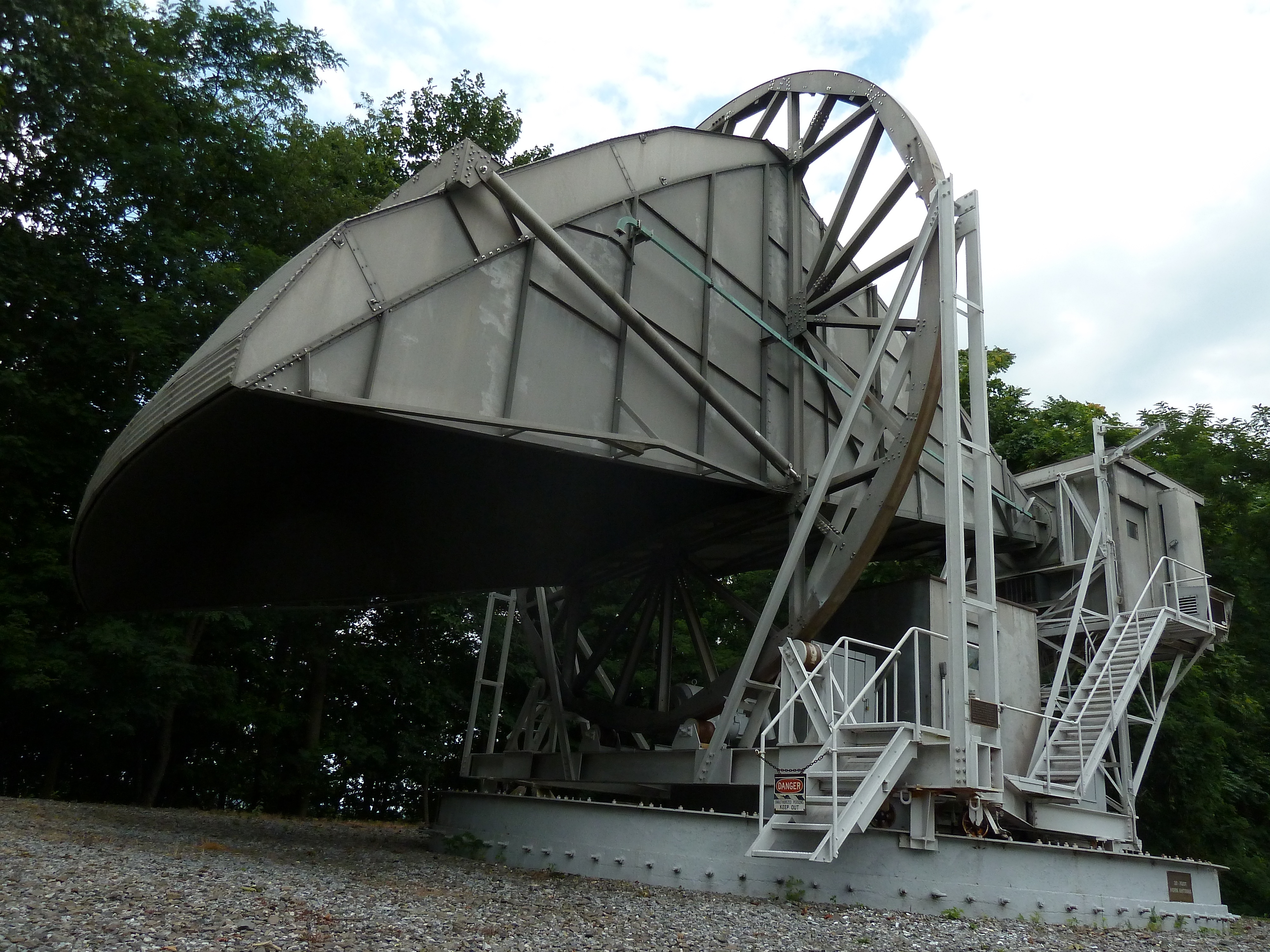
The Holmdel Horn Antenna, located in Holmdel, New Jersey, stands as a monumental artifact in the history of modern cosmology. Originally constructed by Bell Telephone Laboratories in 1959 to support the Echo satellite project, the antenna gained global scientific prominence in 1964. It was here that physicists Arno Penzias and Robert Wilson detected a persistent, low-level background noise that they could not eliminate. This interference was eventually identified as cosmic microwave background radiation, the thermal remnant of the early universe. This discovery provided the strongest evidence to date for the Big Bang theory, fundamentally altering our understanding of the universe's origin. Today, the antenna is designated as a National Historic Landmark and serves as a pilgrimage site for those interested in the history of science and technology. Visitors can expect a quiet, contemplative experience as they stand before this massive aluminum structure, which is preserved in an open field. It is an essential stop for those seeking unique places to visit that bridge the gap between telecommunications history and astrophysics. The site offers a profound look at how a piece of industrial equipment inadvertently unlocked the secrets of the cosmos. For travelers planning their trip ideas, the antenna remains a testament to the power of scientific observation and the serendipitous nature of discovery. While the site is modest in scale, its impact on human knowledge is immeasurable, making it a bucket-list destination for science enthusiasts.
General information
The Holmdel Horn Antenna, located in Holmdel, New Jersey, stands as a monumental artifact in the history of modern cosmology. Originally constructed by Bell Telephone Laboratories in 1959 to support the Echo satellite project, the antenna gained global scientific prominence in 1964. It was here that physicists Arno Penzias and Robert Wilson detected a persistent, low-level background noise that they could not eliminate. This interference was eventually identified as cosmic microwave background radiation, the thermal remnant of the early universe. This discovery provided the strongest evidence to date for the Big Bang theory, fundamentally altering our understanding of the universe's origin. Today, the antenna is designated as a National Historic Landmark and serves as a pilgrimage site for those interested in the history of science and technology. Visitors can expect a quiet, contemplative experience as they stand before this massive aluminum structure, which is preserved in an open field. It is an essential stop for those seeking unique places to visit that bridge the gap between telecommunications history and astrophysics. The site offers a profound look at how a piece of industrial equipment inadvertently unlocked the secrets of the cosmos. For travelers planning their trip ideas, the antenna remains a testament to the power of scientific observation and the serendipitous nature of discovery. While the site is modest in scale, its impact on human knowledge is immeasurable, making it a bucket-list destination for science enthusiasts.
Did you know
- Arno Penzias and Robert Wilson were awarded the Nobel Prize in Physics in 1978 for their discovery.
- The antenna was originally designed for satellite communications, not for deep space observation.
- The 'noise' detected by the antenna was initially thought to be caused by pigeon droppings on the equipment.
History
Constructed in 1959, the Holmdel Horn Antenna was initially built for the Echo satellite project, an early experiment in satellite communications. In 1964, while using the instrument for radio astronomy, researchers Arno Penzias and Robert Wilson encountered a persistent interference. Despite cleaning the antenna of pigeon droppings and checking for terrestrial sources of noise, the signal remained. They consulted with Robert Dicke at Princeton University, who realized that the radiation was the predicted 'afterglow' of the Big Bang. This confirmed the theory that the universe began as an extremely hot, dense point approximately 13.8 billion years ago. The antenna was declared a National Historic Landmark in 1989.
Cultural significance
The Holmdel Horn Antenna represents a pivotal moment in the shift from classical physics to modern observational cosmology. Its cultural value lies in its role as a physical witness to the validation of the Big Bang theory, a paradigm shift that changed how humanity views its place in time and space. It is a symbol of the 'Age of Discovery' in physics, where industrial-scale engineering provided the tools for fundamental scientific breakthroughs. The site is maintained as a preserved landmark, reminding the public of the intersection between telecommunications infrastructure and the quest for universal truths.
Geography and landscape
The antenna is situated in a quiet, open field in Holmdel, New Jersey, within the former Bell Labs complex. The landscape is characterized by its industrial history, surrounded by grassy areas and low-lying vegetation. The massive, 50-foot-long aluminum horn sits prominently on a rotating base, starkly framed against the sky. The location is relatively secluded, providing a peaceful environment that emphasizes the structural scale of the antenna. The terrain is flat and accessible, allowing visitors to walk around the base of the structure and appreciate its unique geometric design.
More facts
- Imported from OSM batch