Großer Gegenstein;Leopold Friedrich
DE
- Location
- DE
- Category
- viewpoints natural phenomena
- Coordinates
- 51.7367143, 11.2262091
- Best time
- Morning or early afternoon
- Weather tip
- Check the local forecast before visiting.
Overview
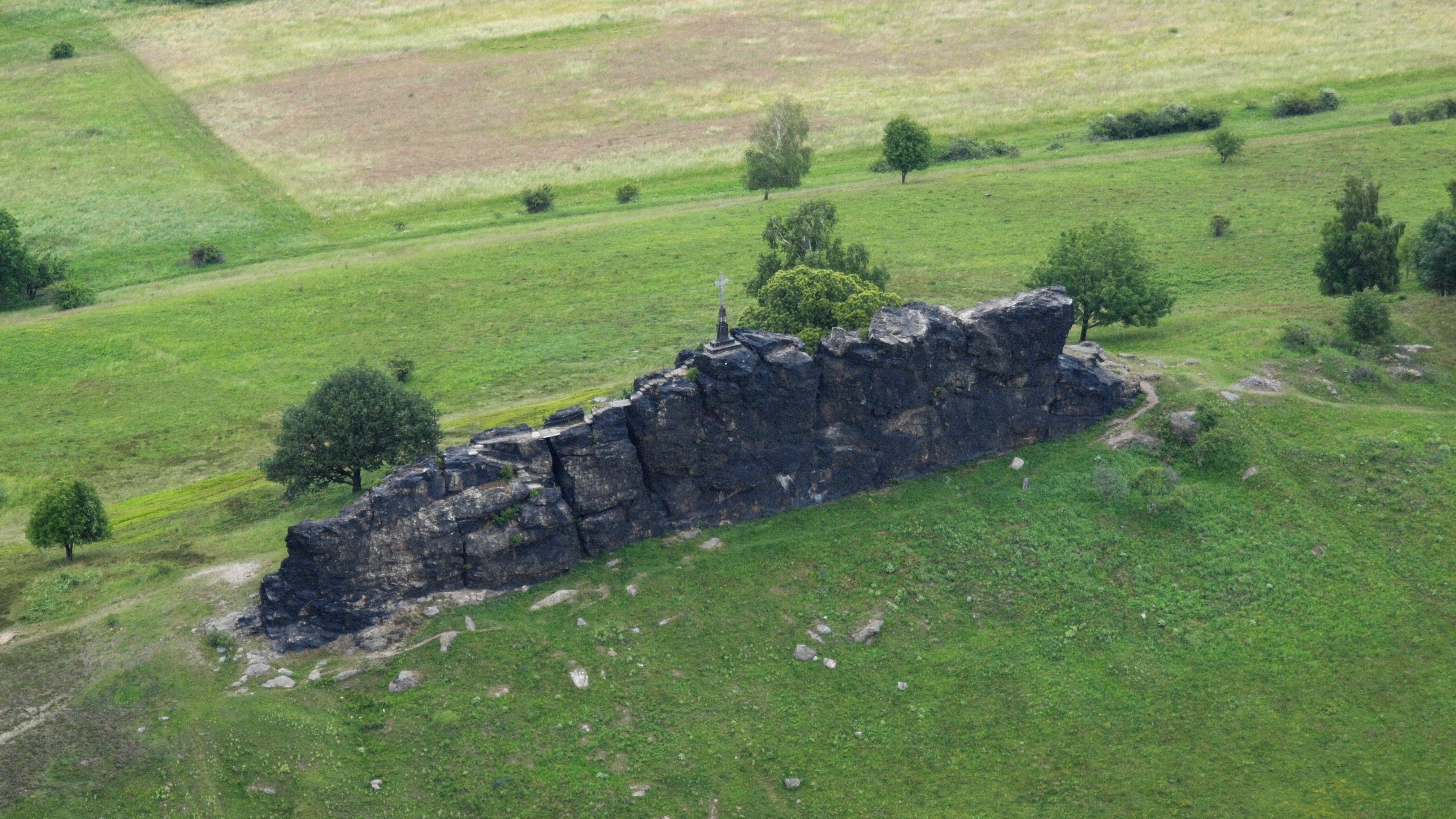
The Großer Gegenstein, located near Ballenstedt in the Harz region of Germany, is a striking sandstone formation that serves as a prominent natural landmark. Rising abruptly from the surrounding forest, this geological feature is composed of steeply tilted layers of Lower Triassic sandstone. Visitors are drawn to the site primarily for its dramatic visual profile and the panoramic views afforded from its summit. Accessing the top of the formation requires navigating a set of stairs carved directly into the rock, leading to a viewing platform that offers expansive vistas of the Harz foreland and the nearby ruins of the Anhalt castle. For those planning their trip, this site is a highlight among local attractions, providing a unique perspective on the region's geological history. When considering what to do in the area, the Großer Gegenstein is frequently paired with hikes through the neighboring Teufelsmauer (Devil's Wall) range. The site is best experienced during the morning or early afternoon when the sunlight illuminates the rock face, enhancing the visibility of its distinct sedimentary layers. As an outdoor destination, it is recommended to check the local weather forecast before visiting to ensure optimal conditions for the ascent and photography.
General information
The Großer Gegenstein, located near Ballenstedt in the Harz region of Germany, is a striking sandstone formation that serves as a prominent natural landmark. Rising abruptly from the surrounding forest, this geological feature is composed of steeply tilted layers of Lower Triassic sandstone. Visitors are drawn to the site primarily for its dramatic visual profile and the panoramic views afforded from its summit. Accessing the top of the formation requires navigating a set of stairs carved directly into the rock, leading to a viewing platform that offers expansive vistas of the Harz foreland and the nearby ruins of the Anhalt castle. For those planning their trip, this site is a highlight among local attractions, providing a unique perspective on the region's geological history. When considering what to do in the area, the Großer Gegenstein is frequently paired with hikes through the neighboring Teufelsmauer (Devil's Wall) range. The site is best experienced during the morning or early afternoon when the sunlight illuminates the rock face, enhancing the visibility of its distinct sedimentary layers. As an outdoor destination, it is recommended to check the local weather forecast before visiting to ensure optimal conditions for the ascent and photography.
Did you know
- The Großer Gegenstein is part of the same geological formation as the famous Teufelsmauer (Devil's Wall).
- The rock features stairs carved into the sandstone, which have allowed visitors to climb to the peak for generations.
- The formation consists of steeply tilted sandstone layers resulting from tectonic activity during the formation of the Harz Mountains.
History
The Großer Gegenstein has been a site of interest for centuries, historically serving as a landmark within the Harz region. It is closely associated with the nearby castle ruins of Anhalt, which date back to the 11th century. The site gained prominence in the 19th century as Romantic-era travelers and early tourists began documenting the natural wonders of the Harz Mountains. The installation of fixed steps and railings was an early effort to improve accessibility for visitors, reflecting the region's early commitment to developing nature-based tourism infrastructure.
Cultural significance
The formation holds cultural importance as a quintessential symbol of the Harz landscape. It is deeply embedded in local folklore and regional identity, often appearing in literature and art that celebrates the rugged beauty of the German uplands. Its proximity to the historical Anhalt castle ruins links the natural site with the medieval history of the region, making it a focal point for heritage-focused hiking trails. It remains a popular destination for those seeking to connect with the geological and historical narrative of the Harz foreland.
Geography and landscape
The Großer Gegenstein is situated on the northern edge of the Harz Mountains. The landscape is characterized by dense deciduous forests that contrast sharply with the exposed, pale sandstone of the formation. The rock itself rises as a 'cliff'—a geological term for a steeply tilted layer of rock that has resisted erosion more effectively than the surrounding strata. From the summit, the topography transitions from the high-altitude Harz peaks to the flatter, agricultural plains of the foreland, providing a clear visual representation of the region's complex tectonic transition zone.
More facts
- Imported from OSM batch
Visitor links
Nearby attractions
- Kleiner Gegenstein 486 m
- Anhaltischer Meilenstein 1741 m
- Sühnestein "Blauer Bulle" 1873 m
- Obelisk 7861 m
- GutsMuths-Denkmal 8086 m
- Brühl 8136 m