Giordano Bruno
Rome, IT
- Location
- Rome, IT
- Category
- heritage historic sites
- Coordinates
- 41.895599, 12.472184
- Best time
- Morning or early afternoon
- Weather tip
- Check the local forecast before visiting.
Overview
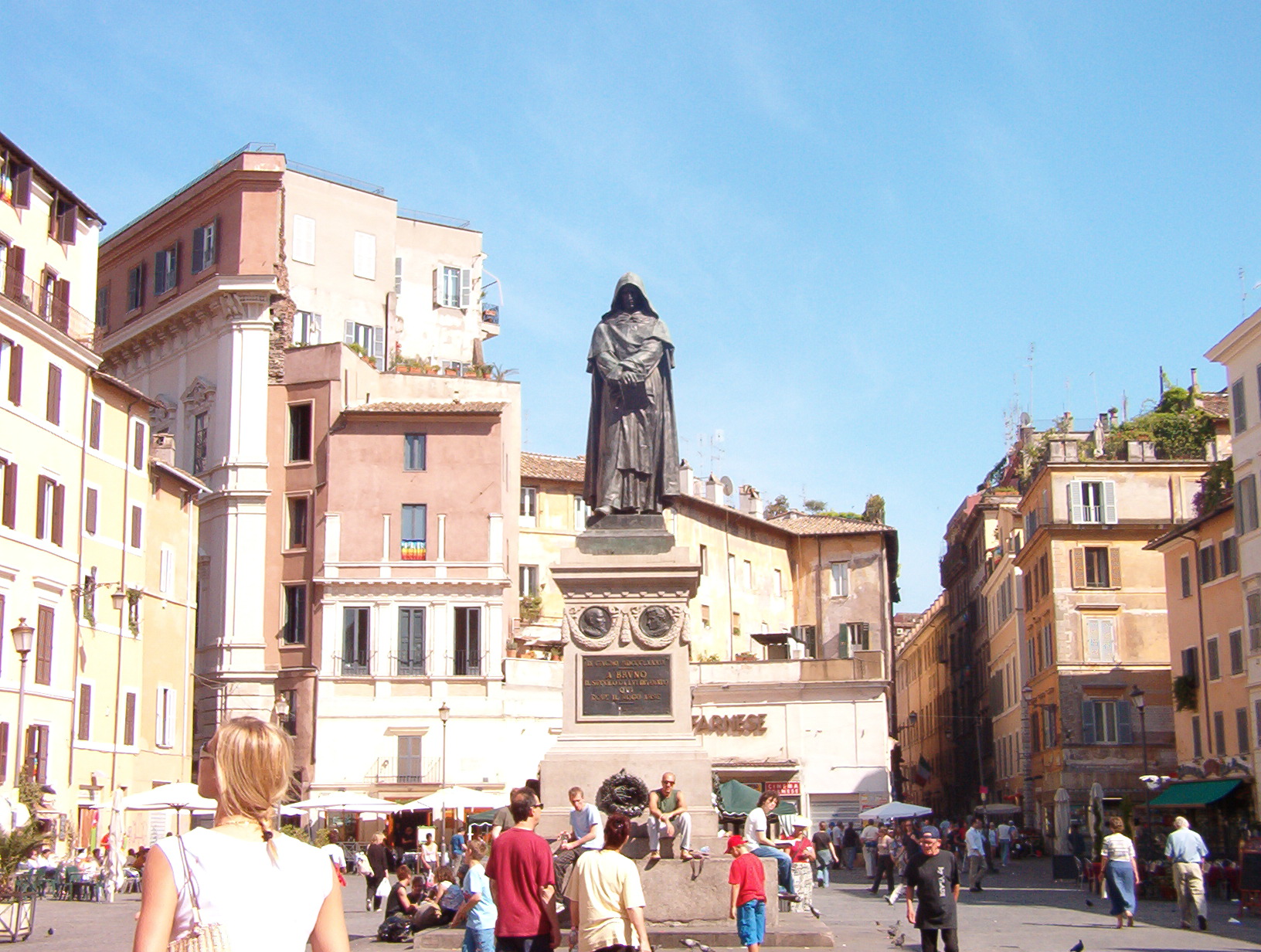
The monument to Giordano Bruno, located in the center of Rome’s Campo de' Fiori, serves as a profound historical landmark dedicated to the Dominican friar, philosopher, and cosmologist who was executed for heresy in 1600. Designed by the sculptor Ettore Ferrari and inaugurated on June 9, 1889, the bronze statue depicts Bruno standing with his arms crossed, his gaze fixed toward the Vatican. This site represents a significant intersection of history and political expression, often included in curated lists of places to visit for those interested in the intellectual evolution of Europe. Visitors to the square will find the statue standing atop a high pedestal featuring portraits of other historical figures who challenged the religious orthodoxy of their time. The monument is not merely a piece of art but a site of memory that highlights the transition toward freedom of thought in modern Italy. When planning your trip ideas in the Eternal City, the square offers a unique vantage point to contemplate the city's complex past while enjoying the vibrant atmosphere of the local market. The surrounding architecture retains a medieval character, providing a stark contrast to the revolutionary ideals represented by the sculpture. Whether you are walking through the historic center or seeking specific cultural landmarks, this site remains a focal point for researchers and travelers alike, offering a tangible connection to the transformative events that shaped the intellectual landscape of Rome.
General information
The monument to Giordano Bruno, located in the center of Rome’s Campo de' Fiori, serves as a profound historical landmark dedicated to the Dominican friar, philosopher, and cosmologist who was executed for heresy in 1600. Designed by the sculptor Ettore Ferrari and inaugurated on June 9, 1889, the bronze statue depicts Bruno standing with his arms crossed, his gaze fixed toward the Vatican. This site represents a significant intersection of history and political expression, often included in curated lists of places to visit for those interested in the intellectual evolution of Europe. Visitors to the square will find the statue standing atop a high pedestal featuring portraits of other historical figures who challenged the religious orthodoxy of their time. The monument is not merely a piece of art but a site of memory that highlights the transition toward freedom of thought in modern Italy. When planning your trip ideas in the Eternal City, the square offers a unique vantage point to contemplate the city's complex past while enjoying the vibrant atmosphere of the local market. The surrounding architecture retains a medieval character, providing a stark contrast to the revolutionary ideals represented by the sculpture. Whether you are walking through the historic center or seeking specific cultural landmarks, this site remains a focal point for researchers and travelers alike, offering a tangible connection to the transformative events that shaped the intellectual landscape of Rome.
Did you know
- The monument was inaugurated on June 9, 1889, precisely on the site where Bruno was burned at the stake.
- The sculptor Ettore Ferrari was a prominent member of the Freemasons, who campaigned for the monument's creation.
- Bruno's statue faces the Vatican, a placement widely interpreted as a symbolic gesture of defiance.
History
Giordano Bruno was a Renaissance philosopher known for his cosmological theories, which included the belief that the universe is infinite and contains countless inhabited worlds. Following a long trial by the Roman Inquisition, he was declared a heretic and executed by burning at the stake in Campo de' Fiori on February 17, 1600. For centuries, his death remained a point of controversy. The monument, erected in 1889, was a project spearheaded by secularists and intellectuals who viewed Bruno as a martyr for scientific inquiry and free speech, effectively transforming the site of his execution into a symbol of intellectual liberty.
Cultural significance
The monument to Giordano Bruno acts as a powerful symbol of secularism and the right to freedom of thought within Italy. Its placement in Campo de' Fiori, a bustling public square, ensures that Bruno's legacy remains integrated into the daily life of modern Rome. By featuring medallions of other historical figures like John Wycliffe and Jan Hus on the pedestal, the monument frames Bruno as part of a broader lineage of dissenters against dogmatic authority. It serves as a site of pilgrimage for those who value academic freedom and the historical struggle against censorship.
Geography and landscape
The statue is situated in the heart of Campo de' Fiori, one of Rome's most famous squares. Historically, the area was a meadow before it was urbanized in the 15th century. Today, the landscape is defined by the square's irregular shape, surrounded by traditional Roman buildings with ochre-colored facades and shuttered windows. During the morning hours, the square functions as a busy marketplace, filling the space around the monument with stalls selling flowers, produce, and local goods. The urban layout remains largely medieval, with narrow cobblestone streets radiating outward from the square toward the surrounding neighborhoods.
More facts
- Imported from OSM batch
Visitor links
Nearby attractions
- Santa Brigida Rome - 119 m
- San Lorenzo in Damaso Rome - 130 m
- Museo di Scultura Antica Giovanni Barracco Rome - 144 m
- Teatro di Pompeo Rome - 150 m
- Galleria Spada Rome - 154 m
- Santa Barbara dei Librai Rome - 155 m
- Portico of Pompey Rome - 165 m
- San Tommaso di Canterbury (Rome) Rome - 188 m