Gatorade's Birthplace
US
- Location
- US
- Category
- iconic bucket list
- Coordinates
- 29.6500025, -82.3502872
- Best time
- Morning or early afternoon
- Weather tip
- Check the local forecast before visiting.
Overview
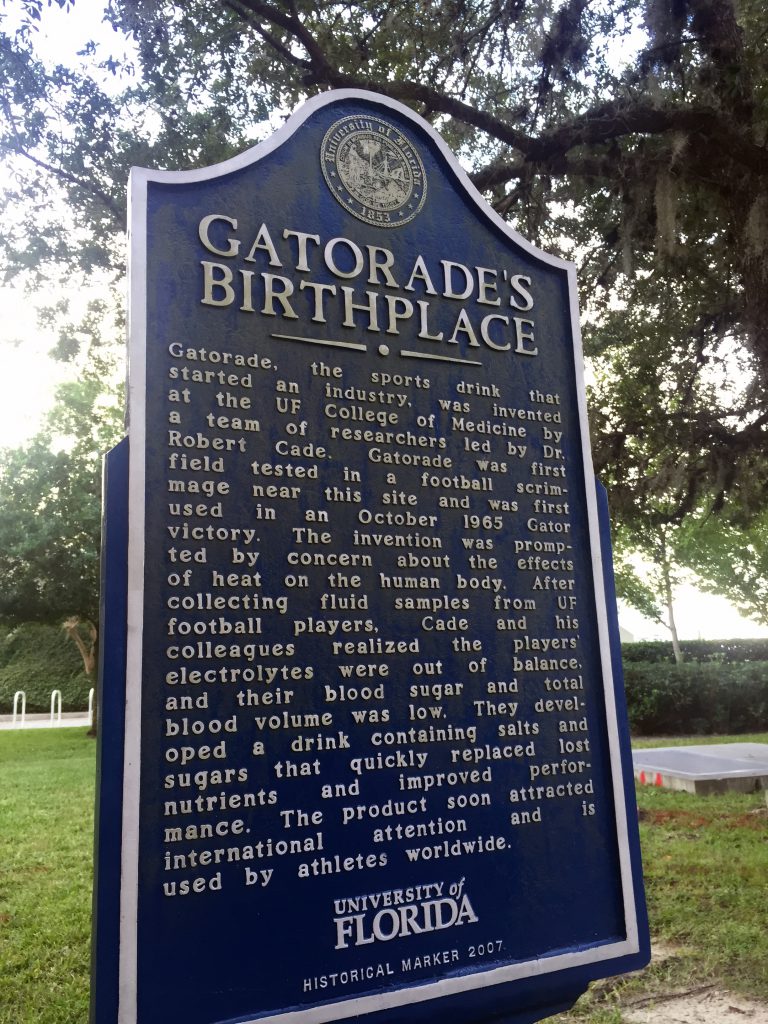
Gatorade’s Birthplace, located at the University of Florida in Gainesville, marks the site where the world’s first scientifically formulated sports drink was developed. In 1965, Dr. Robert Cade and his team of researchers in the College of Medicine sought to understand why Florida Gators football players were suffering from heat-related exhaustion. By analyzing the physiological needs of athletes, the team developed a solution containing water, electrolytes, and carbohydrates to replenish what was lost during intense physical exertion. Today, visitors can explore this site to learn about the intersection of sports science and hydration history. It serves as a fascinating stop for those interested in the origins of global consumer brands and medical innovation. When planning your trip, consider this a primary destination among the many historical places to visit in the region. The site provides a unique glimpse into how university-led research can transform athletic performance and public health. As you walk through the campus, you can appreciate the academic environment that fostered this invention, making it one of the most intriguing attractions in the area for students, sports fans, and history enthusiasts alike. The site is best visited during the morning or early afternoon, allowing ample time to appreciate the historical markers and the surrounding academic landscape.
General information
Gatorade’s Birthplace, located at the University of Florida in Gainesville, marks the site where the world’s first scientifically formulated sports drink was developed. In 1965, Dr. Robert Cade and his team of researchers in the College of Medicine sought to understand why Florida Gators football players were suffering from heat-related exhaustion. By analyzing the physiological needs of athletes, the team developed a solution containing water, electrolytes, and carbohydrates to replenish what was lost during intense physical exertion. Today, visitors can explore this site to learn about the intersection of sports science and hydration history. It serves as a fascinating stop for those interested in the origins of global consumer brands and medical innovation. When planning your trip, consider this a primary destination among the many historical places to visit in the region. The site provides a unique glimpse into how university-led research can transform athletic performance and public health. As you walk through the campus, you can appreciate the academic environment that fostered this invention, making it one of the most intriguing attractions in the area for students, sports fans, and history enthusiasts alike. The site is best visited during the morning or early afternoon, allowing ample time to appreciate the historical markers and the surrounding academic landscape.
Did you know
- The drink was initially named 'Gatorade' to honor the University of Florida Gators football team.
- The original formula was tested during the 1965 football season.
- Dr. Robert Cade's research was initially met with skepticism by the university's administration.
History
In 1965, University of Florida head coach Ray Graves asked Dr. Robert Cade why his players were losing weight and suffering from heat exhaustion during games. Dr. Cade, along with colleagues Dr. Dana Shires, Dr. Harry James Free, and Dr. Alejandro de Quesada, conducted research into the loss of electrolytes and fluids. They discovered that the players were losing salt and water without adequate replacement. The team created a mixture of water, salt, sugar, and lemon juice. After successful testing with the football team, the formula was refined and eventually commercialized. This invention fundamentally changed the sports drink industry, leading to the global phenomenon known today as Gatorade.
Cultural significance
Gatorade’s Birthplace represents a significant milestone in sports medicine and the commercialization of academic research. It highlights the shift in the mid-20th century toward evidence-based athletic performance enhancement. The drink’s widespread adoption by professional and amateur athletes alike solidified its place in American pop culture. The site is a testament to the influence of the University of Florida on global sports culture, serving as a point of pride for the institution and a notable example of how scientific inquiry can address practical, real-world problems in the field of athletics.
Geography and landscape
The site is located on the campus of the University of Florida in Gainesville. The setting is characterized by the traditional collegiate architecture, green spaces, and academic facilities typical of a large public research university. The area surrounding the historical marker is integrated into the campus infrastructure, providing a quiet, scholarly atmosphere. Visitors will find themselves within the heart of the university grounds, surrounded by mature trees and academic buildings that have evolved significantly since the 1960s. The landscape reflects the ongoing growth and modernization of the campus while maintaining markers of its historical contributions.
More facts
- Imported from OSM batch
Visitor links
Nearby attractions
- The French Fries 620 m
- Historic Marker- Latin American Studies 753 m
- Historic Marker- Children's Literature Collection 779 m
- Anderson Hall 836 m
- University of Florida 1360 m