Fort Hahneberg
Berlin, DE
- Location
- Berlin, DE
- Category
- iconic bucket list
- Coordinates
- 52.521844, 13.138078
- Best time
- Morning or early afternoon
- Weather tip
- Check the local forecast before visiting.
- Opening hours
- Sa,Su,PH 14:00-16:00
Overview
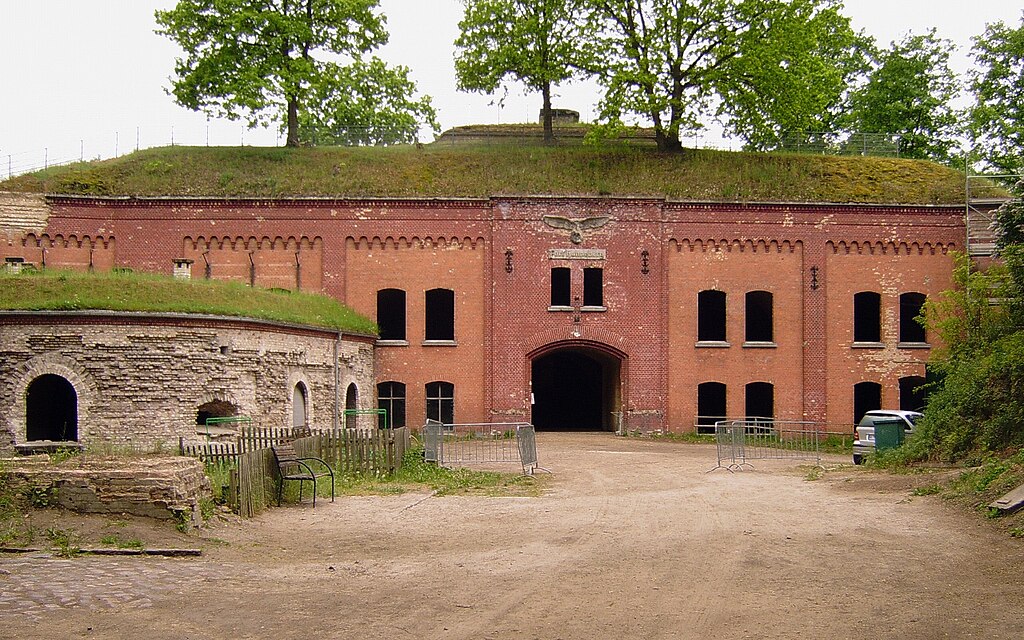
Fort Hahneberg, situated on the western edge of Berlin in the Spandau district, serves as a significant relic of 19th-century military architecture. Constructed between 1882 and 1888, this fortress was designed as part of the defensive ring surrounding the Spandau Citadel, intended to protect the capital during a period of rapid industrial and military expansion in the German Empire. Today, it stands as one of the few remaining examples of its kind in the region, offering visitors a unique opportunity to explore the remnants of Prussian fortification design. Visitors can expect a rugged, atmospheric experience as they wander through the red-brick masonry, vaulted tunnels, and the sprawling, overgrown grounds that now serve as a protected habitat for rare bat species. It is an ideal destination for those seeking historical depth away from the bustling city center, making it one of the most interesting hidden places to visit in Berlin. Whether you are a history enthusiast or a photographer interested in industrial decay and architectural heritage, the fort provides a striking contrast to the modern urban landscape. If you are planning your itinerary, consider exploring the nearby Spandau Citadel to complete your historical tour of the area, providing excellent trip ideas for those interested in military history and unique architectural landmarks.
General information
Fort Hahneberg, situated on the western edge of Berlin in the Spandau district, serves as a significant relic of 19th-century military architecture. Constructed between 1882 and 1888, this fortress was designed as part of the defensive ring surrounding the Spandau Citadel, intended to protect the capital during a period of rapid industrial and military expansion in the German Empire. Today, it stands as one of the few remaining examples of its kind in the region, offering visitors a unique opportunity to explore the remnants of Prussian fortification design. Visitors can expect a rugged, atmospheric experience as they wander through the red-brick masonry, vaulted tunnels, and the sprawling, overgrown grounds that now serve as a protected habitat for rare bat species. It is an ideal destination for those seeking historical depth away from the bustling city center, making it one of the most interesting hidden places to visit in Berlin. Whether you are a history enthusiast or a photographer interested in industrial decay and architectural heritage, the fort provides a striking contrast to the modern urban landscape. If you are planning your itinerary, consider exploring the nearby Spandau Citadel to complete your historical tour of the area, providing excellent trip ideas for those interested in military history and unique architectural landmarks.
Did you know
- Fort Hahneberg was never actually used in an active military conflict.
- The site is currently a protected winter habitat for several species of bats.
- It represents one of the last defensive structures built in the style of the Prussian school of fortification.
History
Construction of Fort Hahneberg began in 1882 and concluded in 1888. It was commissioned by the German Empire to bolster the defenses of the Spandau Citadel, which housed the Imperial military treasury and key manufacturing facilities. By the time the fort was completed, advancements in artillery technology—specifically the development of high-explosive shells—had already rendered its brick-and-earth design largely obsolete. Consequently, the fort saw no combat service. During the 20th century, the site was utilized for various purposes, including storage and, notably, as part of the border fortifications during the era of the Berlin Wall, which ran in close proximity to the structure.
Cultural significance
The fort serves as a cultural monument to the rapid evolution of military engineering in the late 19th century. It acts as a physical timeline marker, illustrating the transition from traditional masonry fortifications to the modern era of armored warfare. Beyond its military history, the site has gained local significance as a protected nature reserve. Its vaulted interior spaces provide the dark, stable, and cool environment necessary for bat hibernation, turning a structure once designed for war into a sanctuary for biodiversity within the Berlin metropolitan area.
Geography and landscape
Fort Hahneberg is located on a hill of the same name in the Spandau district of Berlin. The landscape is characterized by a mix of dense forest and open, overgrown terrain that obscures the fort's original defensive lines. The structure itself is built primarily of brick and earth, partially embedded into the hillside to provide camouflage and structural integrity. The surrounding area is relatively remote compared to the city center, offering a quiet, hilly environment that contrasts sharply with the flat, urban sprawl of eastern Berlin. The site's elevation provides a distinct vantage point over the local landscape.
More facts
- Imported from OSM batch
Visitor links
Nearby attractions
- Schildhorndenkmal Berlin - 4823 m
- Militärhistorisches Museum Flugplatz Berlin-Gatow Berlin - 5443 m
- Spandau Citadel Berlin - 5486 m