Via Dolorosa
Jerusalem, IL

- Location
- Jerusalem, IL
- Category
- religious spiritual
- Coordinates
- 31.7794, 35.232072
Overview
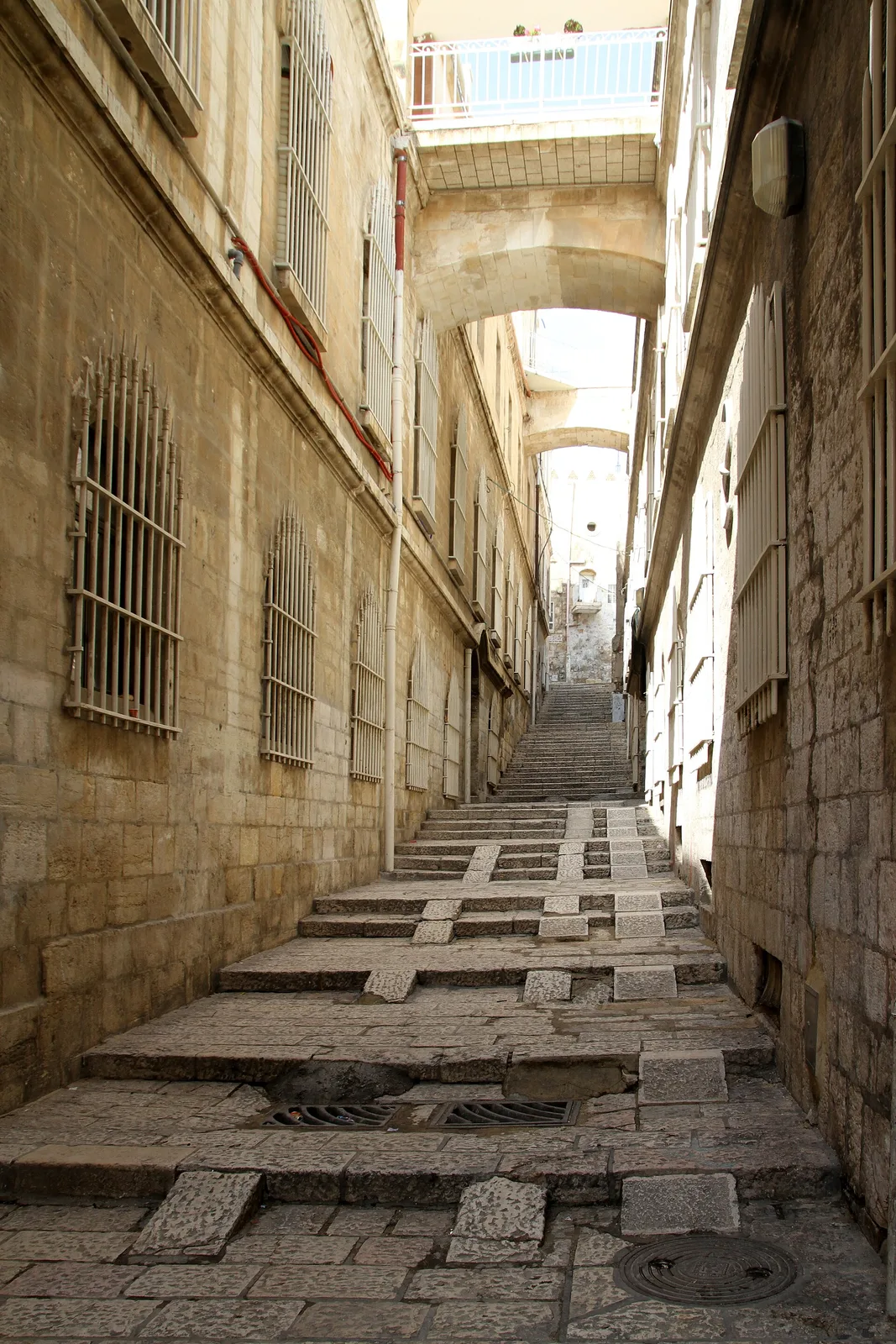
The Via Dolorosa, translated as the 'Way of Sorrows,' is one of the most profound spiritual sites in Jerusalem's Old City. It follows the traditional path believed to have been trodden by Jesus during his final journey from his condemnation to the site of his crucifixion and burial. The route traverses a series of narrow, historic streets within the Christian and Muslim Quarters, marked by fourteen Stations of the Cross. These stations commemorate specific events described in the Gospels or established through long-standing tradition. For visitors seeking local attractions, this path offers a unique intersection of deep religious devotion and the vibrant everyday life of Jerusalem; you will encounter bustling market stalls, residential entrances, and active neighborhood schools along the way. The first nine stations are situated outdoors on the street level, while the final five are located within the Church of the Holy Sepulchre. Because some markers are small or integrated into the dense urban fabric, following the full path can be a challenging yet rewarding experience. For those planning trip ideas in the Old City, this walk provides an intimate look at the physical and spiritual layers of history that define this holy site.
General information
The Via Dolorosa, translated as the 'Way of Sorrows,' is one of the most profound spiritual sites in Jerusalem's Old City. It follows the traditional path believed to have been trodden by Jesus during his final journey from his condemnation to the site of his crucifixion and burial. The route traverses a series of narrow, historic streets within the Christian and Muslim Quarters, marked by fourteen Stations of the Cross. These stations commemorate specific events described in the Gospels or established through long-standing tradition. For visitors seeking local attractions, this path offers a unique intersection of deep religious devotion and the vibrant everyday life of Jerusalem; you will encounter bustling market stalls, residential entrances, and active neighborhood schools along the way. The first nine stations are situated outdoors on the street level, while the final five are located within the Church of the Holy Sepulchre. Because some markers are small or integrated into the dense urban fabric, following the full path can be a challenging yet rewarding experience. For those planning trip ideas in the Old City, this walk provides an intimate look at the physical and spiritual layers of history that define this holy site.
Did you know
- The first nine stations are located outdoors on the streets, while the final five are inside the Church of the Holy Sepulchre.
- Every Friday afternoon, Franciscan friars lead a public procession along the route involving pilgrims from around the world.
History
The Via Dolorosa is rooted in early Christian tradition and the biblical narratives of the New Testament. It represents the physical path of the Passion of Christ. Historically, the route has remained largely consistent through centuries of occupation and transformation, serving as a core pilgrimage site for Christians since the early centuries of the common era.
Cultural significance
The Via Dolorosa holds immense cultural and religious significance as a cornerstone of Christian pilgrimage. It represents the 'Way of Sorrows,' symbolizing the suffering of Jesus. The diversity of cultures in the Old City—including Muslim, Christian, and Jewish influences—adds layers to its narrative, making it a site where profound faith meets the multi-layered history of Jerusalem.
Geography and landscape
The path is situated within the densely populated Old City of Jerusalem. It winds through narrow lanes and alleyways characterized by ancient stone architecture. The terrain is urban and compact, moving through both the Christian and Muslim Quarters, where historical structures stand adjacent to modern-day residential areas and commercial stalls.
Visitor links
Nearby attractions
- Old City of Jerusalem and its Walls Jerusalem - 132 m
- Ecce Homo Arch Jerusalem - 153 m
- Gate of Bani Ghanem Jerusalem - 171 m
- Gate of the Watchman Jerusalem - 180 m
- Lithostrotos Jerusalem - 186 m
- Terra Sancta Museum Jerusalem - 218 m
- Iron Gate Jerusalem - 224 m
- Church of the Holy Sepulchre Old City of Jerusalem - 244 m