The Ramparts Walk
Jerusalem, IL

- Location
- Jerusalem, IL
- Category
- iconic bucket list
- Coordinates
- 31.7766567660112, 35.2276043269494
Overview
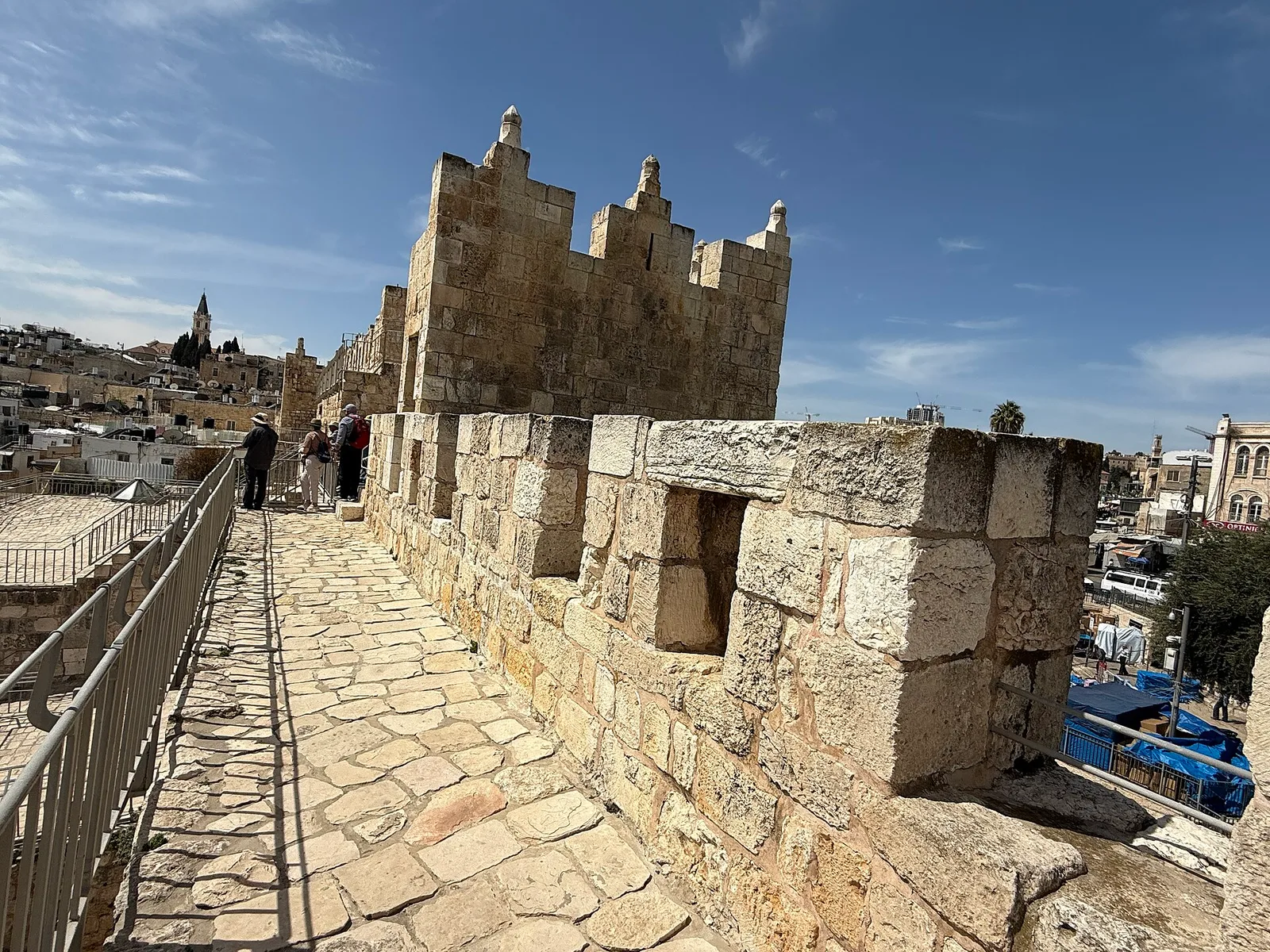
The Ramparts Walk provides an unparalleled vantage point for observing the architectural and social fabric of Jerusalem. Visitors traverse the elevated stone walkways of the Old City walls, which were commissioned by the Ottoman Sultan Suleiman the Magnificent in the 16th century. This path offers a dual perspective: to one side, the dense, historic courtyards and rooftops of the four quarters; to the other, the expanding modern skyline of West and East Jerusalem. For those looking for trip ideas in the Holy City, this walk serves as a comprehensive orientation to the city's complex layout. The experience is divided into two distinct routes. The North Promenade extends from Jaffa Gate toward the Lion's Gate, overlooking the Christian and Muslim Quarters. The South Promenade leads from Jaffa Gate toward Zion Gate and the Dung Gate, bordering the Armenian and Jewish Quarters. As one of the premier places to visit for a panoramic overview, the walk allows guests to inspect defensive embrasures, watchtowers, and the intricate masonry of the city gates. The terrain is characterized by steep stone stairs and uneven surfaces, reflecting its original military purpose, and requires appropriate footwear for a safe transit.
General information
The Ramparts Walk provides an unparalleled vantage point for observing the architectural and social fabric of Jerusalem. Visitors traverse the elevated stone walkways of the Old City walls, which were commissioned by the Ottoman Sultan Suleiman the Magnificent in the 16th century. This path offers a dual perspective: to one side, the dense, historic courtyards and rooftops of the four quarters; to the other, the expanding modern skyline of West and East Jerusalem. For those looking for trip ideas in the Holy City, this walk serves as a comprehensive orientation to the city's complex layout. The experience is divided into two distinct routes. The North Promenade extends from Jaffa Gate toward the Lion's Gate, overlooking the Christian and Muslim Quarters. The South Promenade leads from Jaffa Gate toward Zion Gate and the Dung Gate, bordering the Armenian and Jewish Quarters. As one of the premier places to visit for a panoramic overview, the walk allows guests to inspect defensive embrasures, watchtowers, and the intricate masonry of the city gates. The terrain is characterized by steep stone stairs and uneven surfaces, reflecting its original military purpose, and requires appropriate footwear for a safe transit.
Did you know
- The current walls of Jerusalem were built between 1537 and 1541 by order of the Ottoman Sultan Suleiman the Magnificent.
- The total length of the walls surrounding the Old City is approximately 4.5 kilometers (2.8 miles).
- The walls feature 34 watchtowers and 7 open gates, each designed with specific strategic defensive angles.
- The South Promenade offers a rare view of the archaeological excavations at the City of David from above.
History
The history of Jerusalem’s fortifications spans millennia, but the current structure dates specifically to the Ottoman Period. Following the Ottoman conquest of 1517, Sultan Suleiman I ordered the reconstruction of the city's defenses, which had been largely in ruins since the Ayyubid period. The construction took four years to complete, utilizing local limestone. The walls were designed to protect the city from nomadic raids and to assert Ottoman sovereignty. While they were never tested by a major modern siege, they remained the definitive boundary of Jerusalem until the mid-19th century, when the city began to expand 'outside the walls.' Today, the ramparts are preserved as a national heritage site, showcasing 16th-century military engineering.
Cultural significance
The Ramparts Walk holds immense cultural significance as it physically delineates the boundaries of the Old City, a UNESCO World Heritage site. Walking the ramparts provides a literal 'birds-eye view' of the coexistence and spatial distribution of the four quarters: Christian, Muslim, Armenian, and Jewish. It serves as a physical reminder of the various empires that have controlled Jerusalem, particularly the Ottoman influence that shaped the city's current aesthetic. For residents and visitors alike, the walls represent the transition between the ancient, sacred traditions preserved within the stone perimeter and the vibrant, secular development of the modern city surrounding it.
Geography and landscape
The ramparts follow the natural topography of the hills upon which Jerusalem is built, including Mount Zion and the Ophel. The landscape transition is stark; the interior view consists of a labyrinth of narrow alleys, domes, and steeples, while the exterior view encompasses the Hinnom Valley, the Mount of Olives, and the Judean Desert in the distance. The walk itself is a rugged, linear stone path elevated several meters above ground level. The North Promenade offers views of the Rockefeller Museum and the Damascus Gate plaza, while the South Promenade overlooks the archaeological park and the southern slopes of the city.
Visitor links
Nearby attractions
- Jaffa Gate Jerusalem - 7 m
- Tower of David Jerusalem - 81 m
- Kishle (Jerusalem) Jerusalem - 145 m
- Hezekiah's Pool Jerusalem - 155 m
- Park Tedy Jerusalem - 191 m
- Walls of Jerusalem Jerusalem - 218 m
- Tomb of Joseph of Arimathea Jerusalem - 261 m
- Tomb of Christ Jerusalem - 270 m