Rothschild Boulevard
Tel-Aviv, IL

- Location
- Tel-Aviv, IL
- Category
- iconic bucket list
- Coordinates
- 32.065519, 34.777028
Overview
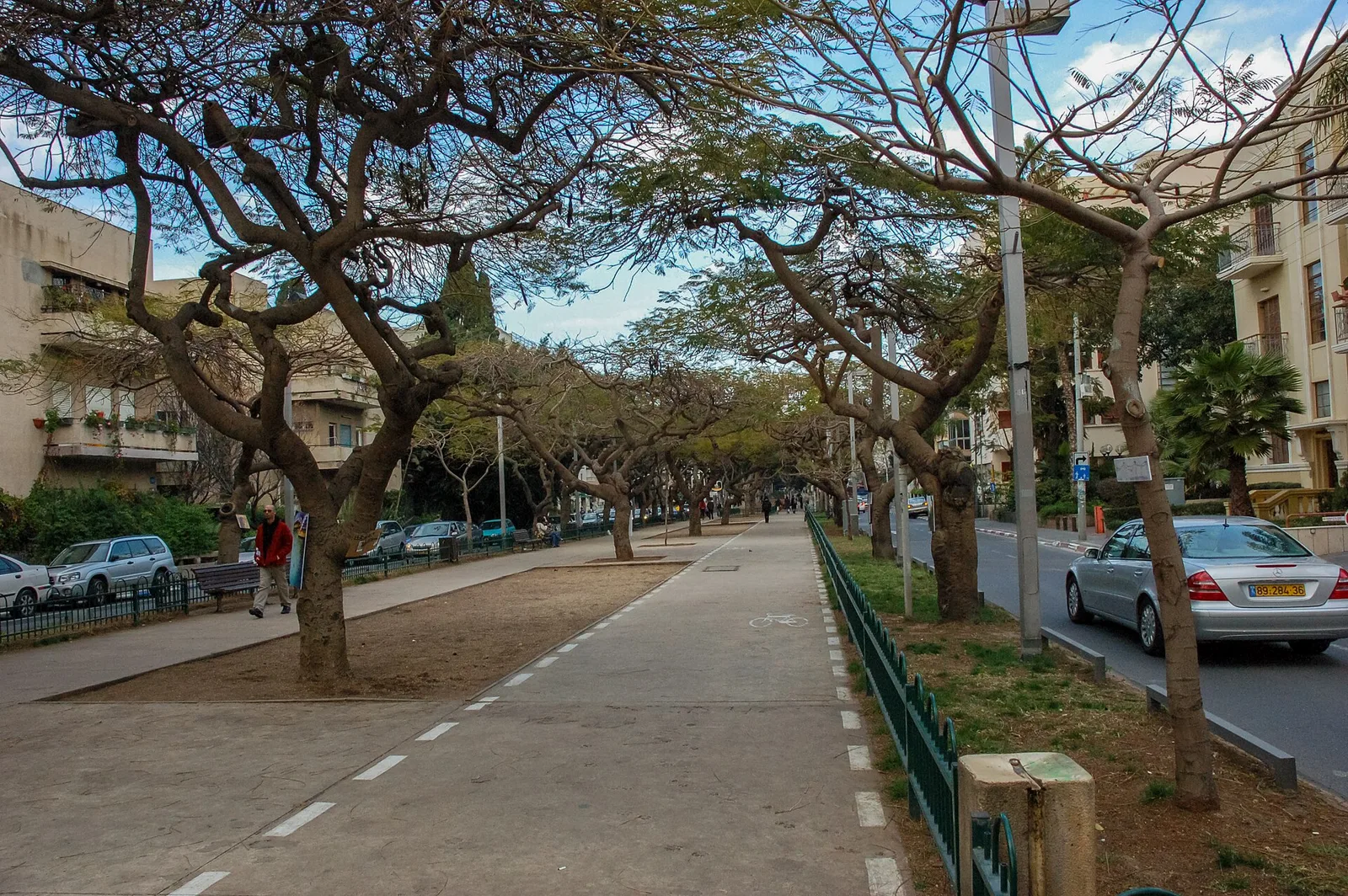
Rothschild Boulevard serves as the central artery of Tel Aviv, representing a unique blend of historical significance and contemporary urban life. As one of the most prominent places to visit in the city, the boulevard stretches from the historic Neve Tzedek neighborhood to the Habima National Theatre. Visitors can expect to find a lush, tree-lined central promenade featuring dedicated walking and cycling paths, historic kiosks, and ample seating. The area is renowned for its exceptional concentration of International Style architecture, which contributed to Tel Aviv's designation as a UNESCO World Heritage site, the 'White City.' As you explore the boulevard, you will encounter a mix of high-end culinary establishments, leading financial institutions, and significant cultural landmarks. It is a quintessential spot for those looking for trip ideas that capture the essence of Tel Aviv's social fabric, where professionals, residents, and travelers converge. Whether you are interested in the origins of the State of Israel or modern urban design, the boulevard offers a comprehensive look at the city's evolution.
General information
Rothschild Boulevard serves as the central artery of Tel Aviv, representing a unique blend of historical significance and contemporary urban life. As one of the most prominent places to visit in the city, the boulevard stretches from the historic Neve Tzedek neighborhood to the Habima National Theatre. Visitors can expect to find a lush, tree-lined central promenade featuring dedicated walking and cycling paths, historic kiosks, and ample seating. The area is renowned for its exceptional concentration of International Style architecture, which contributed to Tel Aviv's designation as a UNESCO World Heritage site, the 'White City.' As you explore the boulevard, you will encounter a mix of high-end culinary establishments, leading financial institutions, and significant cultural landmarks. It is a quintessential spot for those looking for trip ideas that capture the essence of Tel Aviv's social fabric, where professionals, residents, and travelers converge. Whether you are interested in the origins of the State of Israel or modern urban design, the boulevard offers a comprehensive look at the city's evolution.
Did you know
- Rothschild Boulevard was one of the first five streets established in the Ahuzat Bayit neighborhood, which later became Tel Aviv.
- Independence Hall, located at number 16, is the site where David Ben-Gurion proclaimed the Declaration of Independence in 1948.
- The kiosks along the boulevard were some of the first commercial structures in the city, with the first one opening in 1910.
- The boulevard is a primary showcase for Bauhaus architecture, featuring functional, asymmetrical designs with flat roofs.
History
Established in 1909 as part of the original Ahuzat Bayit neighborhood, Rothschild Boulevard was named in honor of Baron Edmond James de Rothschild. Initially, the area was a sandy valley, and the boulevard was created by filling it with sand to level the terrain. Over the decades, it evolved from a quiet residential street into the city's financial and cultural core. Its most pivotal historical moment occurred on May 14, 1948, at the home of Tel Aviv’s first mayor, Meir Dizengoff. Inside this building, now known as Independence Hall, the founding leaders gathered to sign the Declaration of Independence, officially establishing the State of Israel. The street has also been a focal point for social movements, most notably the 2011 social justice protests.
Cultural significance
Rothschild Boulevard is the cultural heartbeat of Tel Aviv, symbolizing the city's transition from a small Mediterranean outpost to a global tech and financial hub. It represents the 'White City' aesthetic, reflecting the Modernist architectural movement brought by Jewish architects fleeing Europe in the 1930s. Culturally, it is a site of constant activity—a place for public discourse, leisure, and high-end dining. It bridges the gap between the city's humble beginnings in Neve Tzedek and its grand cultural aspirations at the Habima Theatre complex. The boulevard remains a symbol of Israeli democracy and civic engagement, serving as the traditional site for both celebrations and demonstrations.
Geography and landscape
The boulevard is characterized by its unique three-tier layout: a central pedestrian and bicycle promenade flanked by two vehicular lanes and sidewalks. It follows a gentle slope from the southwest near the Mediterranean coast toward the northeast. The landscape is dominated by mature Poinciana and Ficus trees that provide a dense canopy, offering shade in the Mediterranean climate. The urban landscape is a museum of architectural styles, ranging from Eclectic-style buildings of the 1920s to the clean lines of the Bauhaus period and modern glass skyscrapers. The promenade is dotted with small gardens, public art installations, and historic kiosks that serve as local landmarks.
Visitor links
Nearby attractions
- Mazeh water tower Tel-Aviv - 129 m
- The Edmond de Rothschild Center Tel-Aviv - 302 m
- Berlin House Tel Aviv - 456 m
- Bet Eliyahu Tel Aviv - 529 m
- Muzeʼon Bet ha-Tanakh ʻa. sh. Daṿid Ben Guryon Tel-Aviv - 683 m
- Joseph Bau House Tel-Aviv - 693 m
- Herzlilinblum Museum Tel Aviv - 738 m