Denkmal für die Schlacht von Leipheim
DE
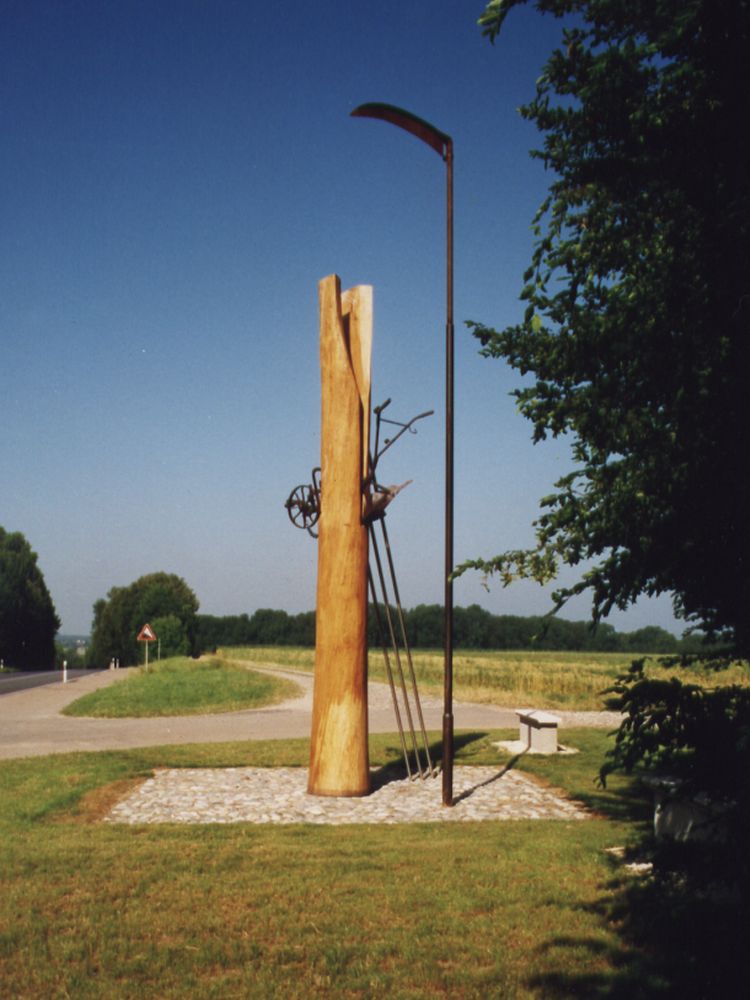
- Location
- DE
- Category
- heritage historic sites
- Coordinates
- 48.4359406, 10.187401
- Best time
- Morning or early afternoon
- Weather tip
- Check the local forecast before visiting.
Overview
The Denkmal für die Schlacht von Leipheim serves as a historical marker commemorating the Battle of Leipheim, a significant engagement that occurred during the German Peasants' War in 1525. Situated in the region of Bavaria, this monument provides visitors with a tangible connection to the social and political upheavals of the early 16th century. For those seeking meaningful places to visit, this site offers a quiet space for reflection on the historical trajectory of the Swabian League and the peasant uprisings that defined the era. Visitors can expect a well-maintained memorial that stands as a testament to the lives lost during this violent clash. The site is best enjoyed during the morning or early afternoon, allowing for optimal lighting to view the inscriptions and the surrounding landscape. As you plan your itinerary, consider this site as one of the essential trip ideas for history enthusiasts exploring the rural landscapes of Southern Germany. While the monument is modest in scale, its presence in the local topography provides a crucial reference point for understanding the regional history of the Reformation period. Visitors are advised to check the local weather forecast before visiting, as the site is located outdoors and remains exposed to the elements. The monument remains a focal point for those studying the complexities of 16th-century power struggles in the Holy Roman Empire.
General information
The Denkmal für die Schlacht von Leipheim serves as a historical marker commemorating the Battle of Leipheim, a significant engagement that occurred during the German Peasants' War in 1525. Situated in the region of Bavaria, this monument provides visitors with a tangible connection to the social and political upheavals of the early 16th century. For those seeking meaningful places to visit, this site offers a quiet space for reflection on the historical trajectory of the Swabian League and the peasant uprisings that defined the era. Visitors can expect a well-maintained memorial that stands as a testament to the lives lost during this violent clash. The site is best enjoyed during the morning or early afternoon, allowing for optimal lighting to view the inscriptions and the surrounding landscape. As you plan your itinerary, consider this site as one of the essential trip ideas for history enthusiasts exploring the rural landscapes of Southern Germany. While the monument is modest in scale, its presence in the local topography provides a crucial reference point for understanding the regional history of the Reformation period. Visitors are advised to check the local weather forecast before visiting, as the site is located outdoors and remains exposed to the elements. The monument remains a focal point for those studying the complexities of 16th-century power struggles in the Holy Roman Empire.
Did you know
- The Battle of Leipheim, fought on April 4, 1525, was the first major battle of the German Peasants' War.
- The peasant army, known as the 'Leipheimer Haufen,' was decisively defeated by the troops of the Swabian League.
- The monument serves as a reminder of the thousands of casualties suffered by the peasant forces during this conflict.
History
The Battle of Leipheim took place on April 4, 1525, during the German Peasants' War. The uprising saw a large group of peasants, known as the 'Leipheimer Haufen,' organized against the secular and ecclesiastical authorities of the time. The Swabian League, a defensive alliance of cities and rulers, mobilized its forces under the command of Georg Truchsess von Waldburg-Zeil to suppress the rebellion. The engagement at Leipheim was characterized by the superior military training and artillery of the Swabian League forces, which led to the rapid collapse of the peasant lines. The battle effectively crushed the uprising in the region, leading to significant political consequences for the local peasant population and reinforcing the authority of the Swabian League in the area.
Cultural significance
The monument acts as a site of collective memory regarding the German Peasants' War, an event central to the socio-political history of the Holy Roman Empire. It represents the struggle for rights and the rejection of serfdom that characterized the 16th-century uprisings. Culturally, the memorial signifies the transition from medieval social structures toward the early modern period. It is a place of historical inquiry for scholars and local residents alike, fostering an understanding of the regional identity shaped by these conflicts. By preserving the memory of the battle, the monument invites ongoing dialogue regarding social justice, authority, and the historical legacy of the Reformation era in Southern Germany.
Geography and landscape
The Denkmal für die Schlacht von Leipheim is located in the vicinity of Leipheim, a town in the district of Günzburg in Bavaria, Germany. The landscape is characterized by the fertile plains and river valleys of the Danube region. The site itself is situated in an open, rural setting that allows for a clear view of the surrounding agricultural fields and the gentle topography typical of the Swabian Jura foothills. The memorial is integrated into the local environment, providing a quiet, contemplative atmosphere that contrasts with the violent historical events it commemorates. The area is accessible via local roads and remains a part of the cultural landscape that has been transformed by centuries of human settlement and agricultural development.
More facts
- Imported from OSM batch