Brennender Berg
DE
- Location
- DE
- Category
- iconic bucket list
- Coordinates
- 49.2880841, 7.0534759
- Best time
- Morning or early afternoon
- Weather tip
- Check the local forecast before visiting.
Overview
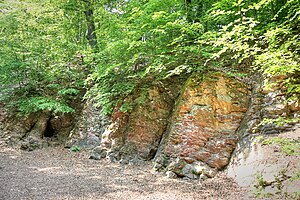
The Brennender Berg, or 'Burning Mountain,' is a unique geological site located near Dudweiler in the Saarland region of Germany. This natural phenomenon is defined by a coal seam fire that has been smoldering underground for centuries, dating back to at least 1668. Visitors to this site can observe the effects of the subterranean combustion, including steam vents, scorched earth, and the distinct scent of sulfur emanating from the fissures in the rock. It serves as a fascinating destination for those interested in industrial history and natural anomalies, offering a stark contrast to the surrounding forested landscape. The site is accessible via a network of walking trails, making it an excellent inclusion for those seeking unique places to visit while exploring the Saarland. As you traverse the paths, you will encounter remnants of the area's mining heritage, which provides essential context for the fire's origins. Whether you are a geology enthusiast or a curious traveler, the Brennender Berg offers a rare glimpse into a self-sustaining underground fire that has captivated observers for generations. When planning your trip, consider that the site is best experienced during the morning or early afternoon to take full advantage of the natural light, and always check the local forecast before heading out to ensure the best conditions for your hike through this historic geological landmark.
General information
The Brennender Berg, or 'Burning Mountain,' is a unique geological site located near Dudweiler in the Saarland region of Germany. This natural phenomenon is defined by a coal seam fire that has been smoldering underground for centuries, dating back to at least 1668. Visitors to this site can observe the effects of the subterranean combustion, including steam vents, scorched earth, and the distinct scent of sulfur emanating from the fissures in the rock. It serves as a fascinating destination for those interested in industrial history and natural anomalies, offering a stark contrast to the surrounding forested landscape. The site is accessible via a network of walking trails, making it an excellent inclusion for those seeking unique places to visit while exploring the Saarland. As you traverse the paths, you will encounter remnants of the area's mining heritage, which provides essential context for the fire's origins. Whether you are a geology enthusiast or a curious traveler, the Brennender Berg offers a rare glimpse into a self-sustaining underground fire that has captivated observers for generations. When planning your trip, consider that the site is best experienced during the morning or early afternoon to take full advantage of the natural light, and always check the local forecast before heading out to ensure the best conditions for your hike through this historic geological landmark.
Did you know
- The fire at Brennender Berg has been burning continuously since at least 1668.
- The famous German writer Johann Wolfgang von Goethe visited the site in 1770 and described it in his autobiography.
- The fire was originally ignited by a shepherd, according to local legend, though the exact cause remains a subject of historical debate.
History
The history of the Brennender Berg is rooted in the early coal mining activities of the Saarland region. Records indicate that the coal seam fire became active around 1668, potentially caused by the accidental ignition of coal exposed at the surface. Throughout the 18th and 19th centuries, the site became a point of scientific and tourist interest, drawing notable figures such as Goethe. While efforts were made to extinguish the fire over the centuries, the depth and extent of the seam made complete suppression difficult. The site stands today as a testament to the intersection of human industrial activity and geological processes, serving as a rare example of a long-term, self-sustaining underground coal fire.
Cultural significance
The Brennender Berg holds a distinct place in German cultural and literary history. Its inclusion in the writings of Johann Wolfgang von Goethe elevated its status from a mere geological curiosity to a site of intellectual pilgrimage. The mountain represents the early industrialization of the Saarland, acting as a physical manifestation of the region's deep connection to coal mining. It serves as a reminder of the environmental impact of early mining techniques and the unpredictable nature of subterranean fires. Today, it is recognized as a heritage site that bridges the gap between historical industrial landscape and natural environment, attracting those interested in the cultural legacy of the German mining industry.
Geography and landscape
The Brennender Berg is situated within a forested, hilly landscape near the town of Dudweiler. The terrain is characterized by undulating woodland paths that lead visitors to the primary site of the fire. The immediate area surrounding the fissures is marked by altered soil composition and vegetation, where the heat and sulfurous gases have prevented typical forest growth. This creates a striking, barren aesthetic in the heart of a lush green environment. The geological structure consists of Carboniferous coal-bearing rock layers, which provide the fuel for the ongoing subterranean combustion. The landscape is part of a larger network of trails that highlight the mining heritage of the Saarland region.
More facts
- Imported from OSM batch
Visitor links
Nearby attractions
- Ostschacht 2 446 m
- Stollen Am Neuhauser Weg 1783 m
- Tagschacht Flöz 8 2363 m
- Tagschacht 2370 m
- Dreibannstein 3281 m
- Stollenmundloch Netzbach 3768 m
- Fischbachbad 4553 m
- Saarwaldverein Ortsgruppe Quierschied 4966 m