American Gothic House
US
- Location
- US
- Category
- iconic bucket list
- Coordinates
- 40.921528, -92.213842
- Best time
- Morning or early afternoon
- Weather tip
- Check the local forecast before visiting.
Overview
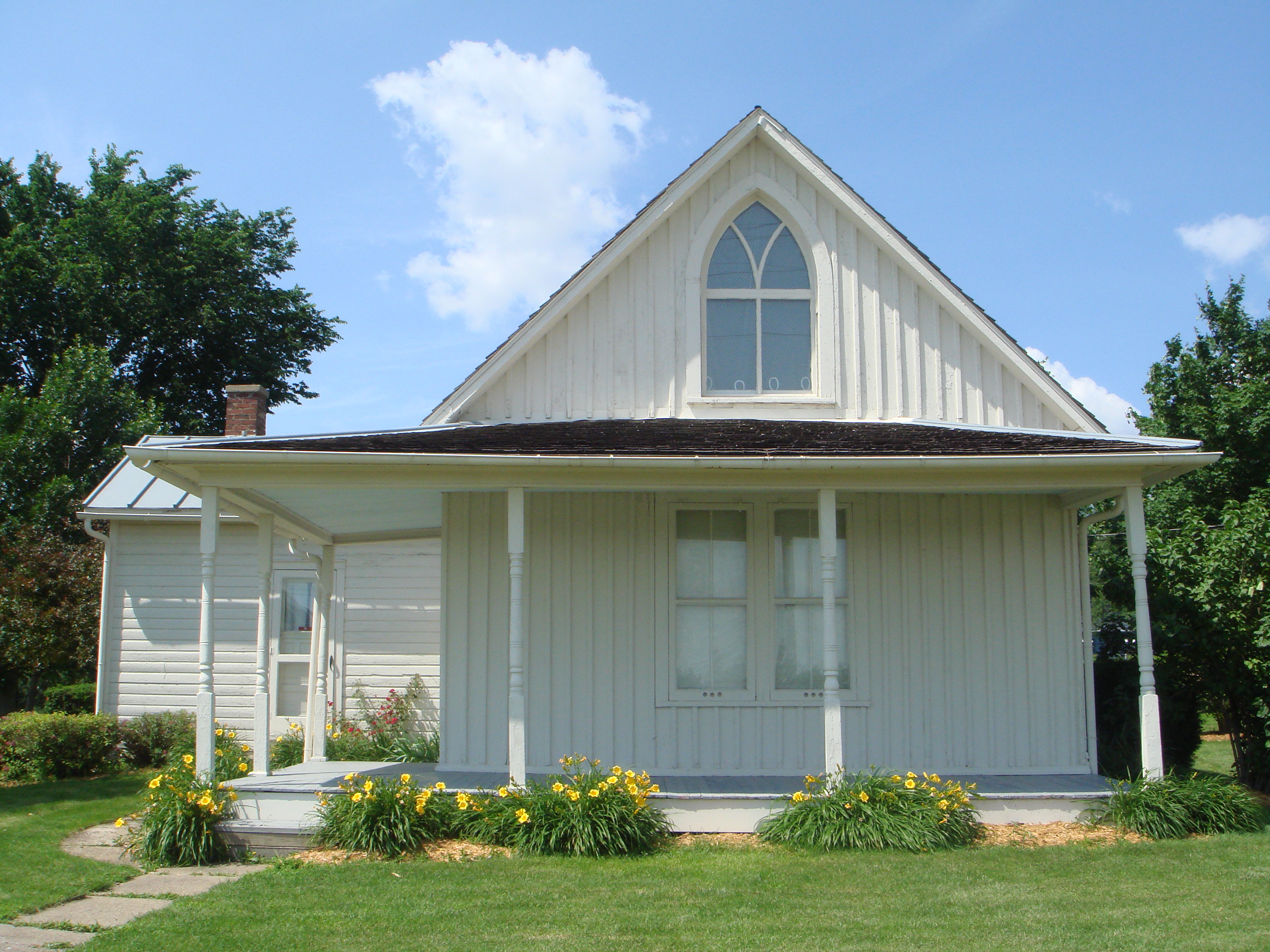
The American Gothic House, located in Eldon, Iowa, is a site of significant cultural interest, primarily recognized as the backdrop for Grant Wood’s 1930 painting, 'American Gothic.' This modest white cottage, characterized by its distinctive Carpenter Gothic architecture and its iconic arched window, serves as a pilgrimage site for art enthusiasts and historians alike. Visitors to this site can explore the adjacent visitor center, which provides historical context regarding the painting's creation and the house's role in American visual culture. The property is maintained to preserve its mid-19th-century appearance, offering a tangible connection to the rural American aesthetic that Wood immortalized. For those planning their trip ideas, the site offers a unique opportunity to engage with one of the most recognizable images in American art history. Beyond the house itself, the surrounding region offers several local attractions that reflect the quiet, pastoral character of the Midwestern landscape. Whether you are an art historian or simply a traveler interested in iconic American landmarks, the American Gothic House provides a compelling look at the intersection of architecture, art, and national identity. It is recommended to visit during the morning or early afternoon to take advantage of the best lighting for photography, and as with any outdoor-focused excursion, be sure to check the local forecast before visiting to ensure a pleasant experience.
General information
The American Gothic House, located in Eldon, Iowa, is a site of significant cultural interest, primarily recognized as the backdrop for Grant Wood’s 1930 painting, 'American Gothic.' This modest white cottage, characterized by its distinctive Carpenter Gothic architecture and its iconic arched window, serves as a pilgrimage site for art enthusiasts and historians alike. Visitors to this site can explore the adjacent visitor center, which provides historical context regarding the painting's creation and the house's role in American visual culture. The property is maintained to preserve its mid-19th-century appearance, offering a tangible connection to the rural American aesthetic that Wood immortalized. For those planning their trip ideas, the site offers a unique opportunity to engage with one of the most recognizable images in American art history. Beyond the house itself, the surrounding region offers several local attractions that reflect the quiet, pastoral character of the Midwestern landscape. Whether you are an art historian or simply a traveler interested in iconic American landmarks, the American Gothic House provides a compelling look at the intersection of architecture, art, and national identity. It is recommended to visit during the morning or early afternoon to take advantage of the best lighting for photography, and as with any outdoor-focused excursion, be sure to check the local forecast before visiting to ensure a pleasant experience.
Did you know
- The house was built in the early 1880s by Catherine and George Dibble.
- Grant Wood spotted the house while driving through Eldon and sketched it on the back of an envelope.
- The painting 'American Gothic' was first exhibited at the Art Institute of Chicago in 1930.
- The house is listed on the National Register of Historic Places.
History
The American Gothic House was constructed in 1881–1882 by Catherine and George Dibble. It was designed in the Carpenter Gothic style, notable for its steep gables and the singular, pointed-arch window on the upper story. In August 1930, Iowa artist Grant Wood visited Eldon and was struck by the house's appearance. He obtained permission from the owners to sketch the structure. Wood later returned to his studio in Cedar Rapids, where he used the house as the background for his famous painting, featuring his sister, Nan Wood Graham, and his dentist, Dr. Byron McKeeby, as the models for the figures. The house was designated a National Historic Landmark in 1991.
Cultural significance
The house is a primary icon of American regionalism. Its cultural significance stems from the enduring legacy of Grant Wood’s 1930 painting, which has been parodied, referenced, and reproduced extensively in popular culture. The image has become a shorthand for American rural life, though interpretations of the work vary widely—ranging from a celebration of stoic virtue to a satire of provincial narrow-mindedness. The site serves as a physical archive of this debate, allowing the public to engage with the reality behind the canvas. It stands as a testament to how art can transform an ordinary structure into a globally recognized symbol of national identity.
Geography and landscape
The American Gothic House is situated in the small rural community of Eldon, Iowa, within Wapello County. It is located on a quiet residential street, surrounded by the rolling, agricultural landscape typical of the American Midwest. The immediate terrain is relatively flat, characterized by open grassy plots and mature trees that frame the cottage. The setting remains largely unchanged from its 19th-century origins, maintaining a sense of isolation and quietude that complements the somber, austere tone of the famous painting. The surrounding region is defined by its proximity to the Des Moines River, which influences the local topography and rural character.
More facts
- Imported from OSM batch